Updated August 2026
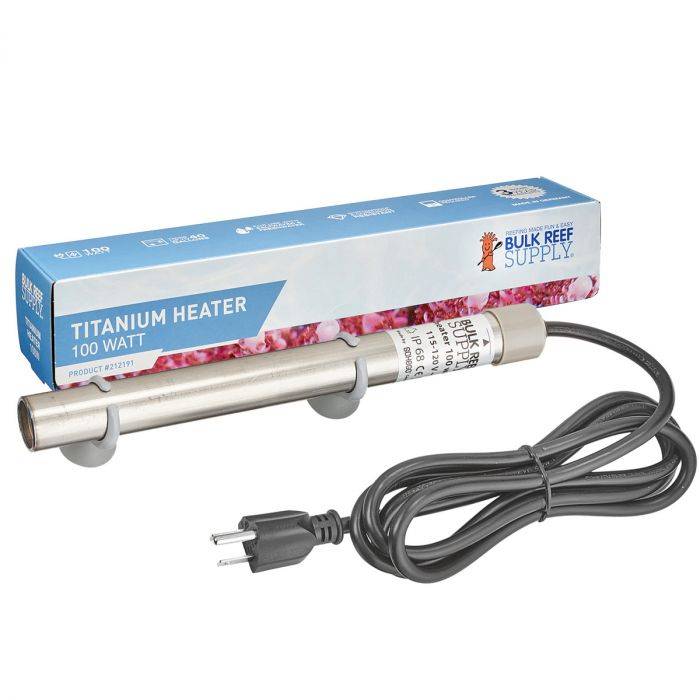
My top aquarium heater recommendation is a properly sized BRS Titanium Heater Element paired with a separate temperature controller. It costs more than a basic glass heater once you add the controller, but the shatterproof body, replaceable control strategy, and audible temperature protection make it the system I trust most.

My top recommendation
BRS Titanium Heater Element + controller
Titanium heater elements are the closest thing on this list to a workhorse. The body will not shatter like glass, but the element has no thermostat of its own. It is a “dumb” heater by design, so a compatible temperature controller is required—not optional.
Best for: Reef keepers who want the most durable heating element and are willing to build a controlled heating system.
The four aquarium heaters I recommend
These are four heater types, not four individual wattages. Choose the heater design first, then select the correct wattage for your aquarium’s actual water volume, the coldest room temperature, and how many degrees the heater must raise the water.
| Heater | My pick for | Temperature control | Construction | Available range |
|---|---|---|---|---|
| BRS Titanium | Best overall heating system | Separate controller required | Corrosion-resistant titanium | 100W–600W |
| AquaReady Preset | Easiest plug-and-play option | Preset to 77°F | Plastic at 6W–30W; glass at 50W–300W | 6W–300W |
| Eheim Jager TruTemp | Proven adjustable budget heater | Adjustable 65°F–93°F | Laboratory glass | 25W–300W |
| Sicce Jolly Preset | Nano and pico aquariums | Preset to 77°F | Virtually unbreakable plastic | 6W–35W; up to 9.2 gallons |
Preset, adjustable, or controller-driven?
Controller-driven titanium separates the heating element from the thermostat, which is my preferred strategy. Preset heaters remove calibration decisions and are easy to use, but you cannot choose a different setpoint. Adjustable heaters are flexible and affordable, but their onboard dial still leaves one device responsible for both heating and deciding when to stop.
I personally place a separate temperature controller between the wall and every aquarium heater—even models with their own thermostat. It gives me an independent cutoff plus an audible or Wi-Fi warning when the tank becomes too hot or too cold.
Choose the controller before buying a titanium element
The BRS Titanium Heater Element cannot regulate itself. These two Inkbird controllers solve different problems, and neither is automatically “better” for every room.
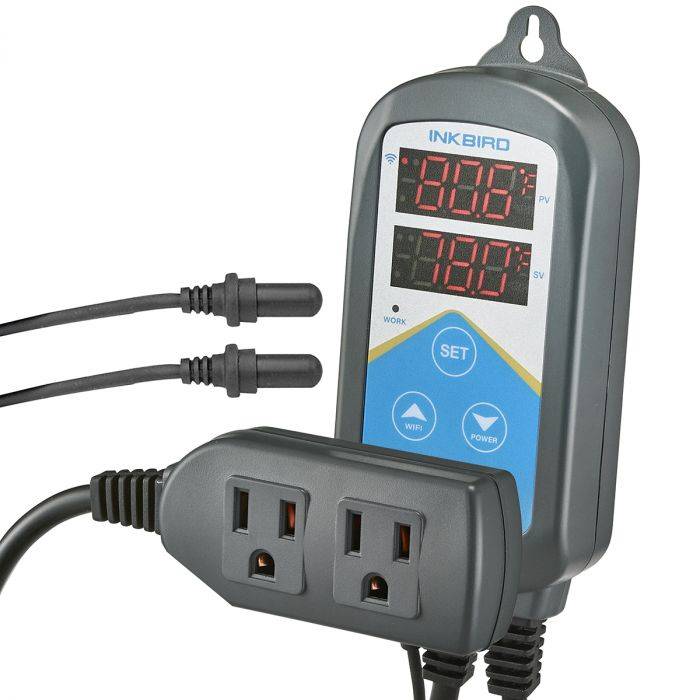
Inkbird ITC-306A WiFi
Choose this for heating redundancy. It has two temperature probes, two heating outlets, dual power relays, alarms, and app notifications. It cannot control a cooling fan.
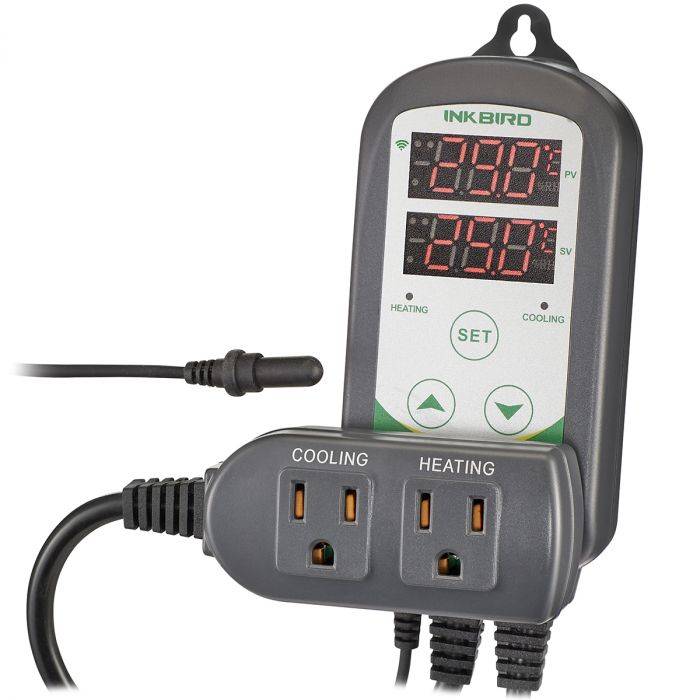
Inkbird ITC-308 WiFi
Choose this when you also need cooling. It uses one temperature probe and provides one heating outlet plus one cooling outlet for a fan or chiller. This is the controller I prefer in Palm Desert.
How I chose these aquarium heaters
I care about much more than whether a heater can make water warm. I compare construction, wattage choices, controller strategy, calibration, temperature alarms, physical length, dry-run protection, warranty, and how forgiving the heater will be when something eventually goes wrong.
I have run these elements and recommend them because the titanium body removes the glass-breakage problem. They still depend completely on a separate controller.
I have owned these heaters but have not run them long term. I like the straightforward 77°F preset design and the broad wattage range; I am not presenting this as years of personal AquaReady testing.
I have owned and used dozens over the years. They are affordable and dependable, but I calibrate them, protect them with a controller, and treat the glass carefully.
I have had one in my possession and can vouch for how tough the plastic housing feels. The recommendation is specifically for tiny aquariums where its compact, preset design makes sense.
1. Best overall
BRS Titanium Heater Element
My experience: I use BRS titanium elements and consider this the strongest heating-element option here. The titanium body is shatterproof; the separate controller is what provides all temperature logic and protection.
100W, 200W, 300W, 600W
Up to 40, 75, 100, or 200 gallons
Corrosion-resistant titanium
3 years
Why I recommend it
- The body cannot shatter like a glass heater.
- Separating the element from the controller makes either part easier to replace.
- It is fully submersible and comes with a six-foot cord and mounting hardware.
- Four wattages cover many common aquarium sizes.
What to know first
- It will not work safely by itself; the temperature controller is a required separate purchase.
- It is a heating element, not a complete heater system.
- The 100W–300W versions are 10.25 inches long; the 600W is 14 inches, so measure the chamber before ordering.
My verdict: This is what I would buy when durability and an independent control strategy matter more than the lowest initial price.
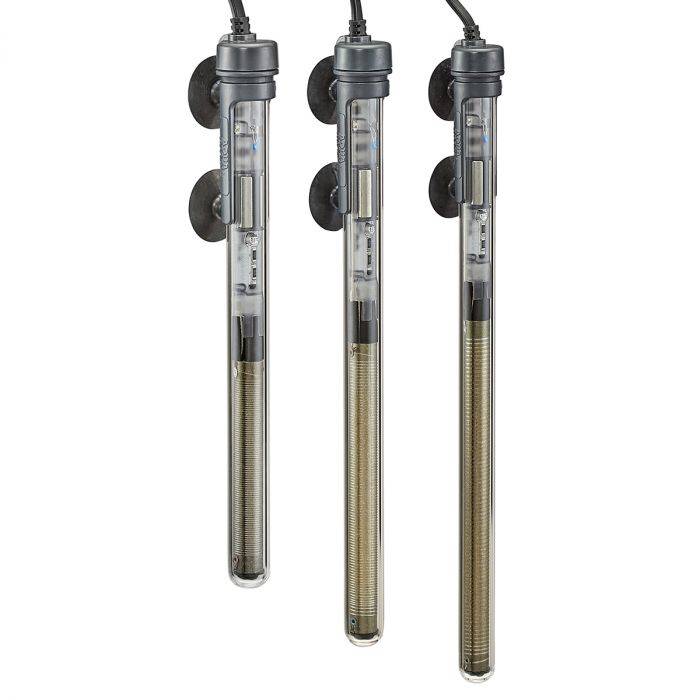
2. Easiest plug-and-play
AquaReady Preset Aquarium Heater
My experience: I have owned and handled AquaReady preset heaters, but I have not run them long term. I recommend the design because it removes dial calibration and offers practical sizes from pico aquariums through larger tanks.
Preset to 77°F
6W–300W
Plastic 6W–30W; glass 50W–300W
2 years plastic; 5 years glass
Why I recommend it
- No calibration or onboard programming is required.
- The 77°F preset is sensible for many tropical saltwater aquariums.
- Small models have reinforced plastic casings; larger models use shatter-resistant glass.
- Thermal protection shuts the heater off when it is not submerged.
What to know first
- You cannot choose a different temperature setpoint.
- Do not assume every wattage is plastic: models from 50W through 300W are glass.
- I would still use a separate temperature controller for an independent cutoff and alarm.
My verdict: This is the simplest recommendation for someone who wants to choose a wattage, plug the heater in, and avoid calibrating a temperature dial.
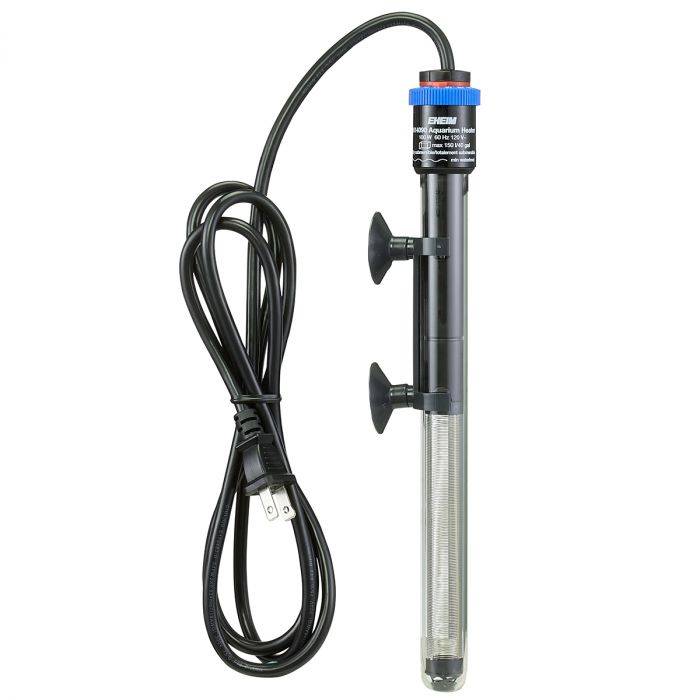
3. Proven adjustable value
Eheim Jager TruTemp Aquarium Heater
My experience: I have owned and used dozens of Eheim Jager heaters. They are affordable, reliable, and capable of lasting for years. They are also long glass heaters, and I never treat their onboard thermostat as my only protection.
65°F–93°F
25W–300W
Laboratory glass
TruTemp adjustable calibration
Why I recommend it
- The line has nine wattages and a long history in the aquarium hobby.
- The onboard thermostat is adjustable and can be calibrated.
- Thermo safety control shuts it off when it is not submerged.
- It remains one of the most affordable heaters I trust.
What to know first
- The glass can break, especially during maintenance or if the heater is handled carelessly.
- Calibration can take trial and error; verify the actual water temperature with a separate thermometer.
- Larger wattages are physically long—the 300W model is 19.6 inches.
- Like other thermostatic heaters, it can eventually fail or stick on, which is why I use a controller.
My verdict: This is my proven budget choice when someone wants a traditional adjustable heater and understands the extra care that glass and onboard calibration require.
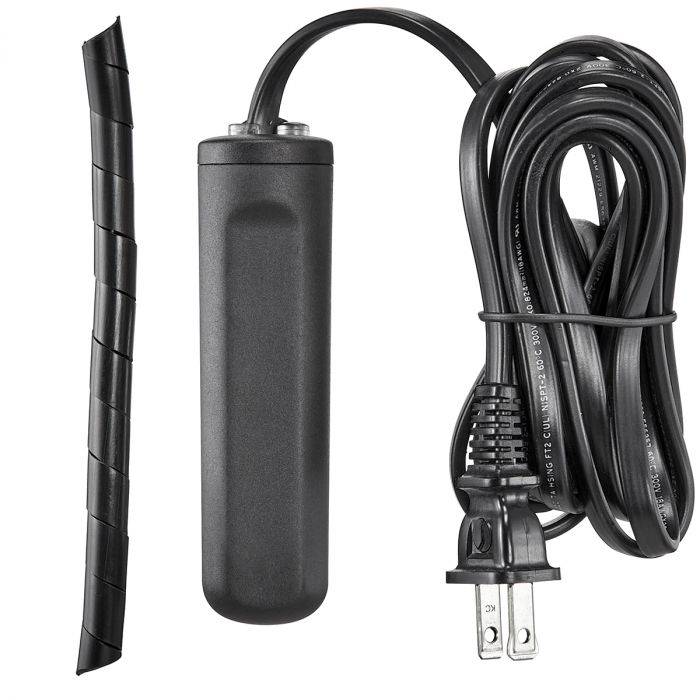
4. Best for nano tanks
Sicce Jolly Preset Heater
My experience: I have handled a Sicce Jolly but have not personally run one in an aquarium. Its virtually unbreakable plastic housing is the reason it earns a place here for nano and pico systems.
Preset to 77°F
6W, 12W, 25W, 35W
Up to 1.6–9.2 gallons
Virtually unbreakable plastic
Why I recommend it
- The plastic body avoids the glass-breakage problem.
- Its compact 3.9- or 6.3-inch body can fit small aquariums.
- The preset design requires no dial calibration.
- It includes dry-run thermal protection, an LED indicator, and suction cups.
What to know first
- The largest model is rated only for aquariums up to 9.2 gallons.
- The 77°F setpoint is fixed.
- I have inspected this heater, but this is not a claim of long-term personal use.
- I would still add a controller when the aquarium and available equipment allow it.
My verdict: Choose the Jolly when a small aquarium needs a compact preset heater and avoiding a fragile glass body is the priority.
The broken-heater lesson I do not want you to learn firsthand
In 2026, I reached into a sump while cleaning and cut myself on a glass heater that had broken without me realizing it. The cut was bad enough; a compromised electrical device in saltwater can also create a shock hazard. That experience is one reason I rank the titanium element first.
- Unplug heaters and other submerged equipment before putting your hands into the aquarium or sump.
- Use GFCI protection and a proper drip loop.
- Keep the heater fully submerged to the manufacturer’s required level and place it where water moves around it.
- Never run a heater dry, and allow it to cool before removal.
- Inspect glass, seals, cords, plugs, and mounts during routine maintenance.
- Use a separate controller and temperature alarm; no heater should be trusted forever.
How to choose the correct heater wattage
Use the manufacturer’s current sizing guidelines. Heater designs and wattage recommendations vary, so there is no reliable one-size-fits-all gallons-per-watt rule.
Which aquarium heater should you buy?
Use this final table to match the heater to the decision that matters most in your aquarium. On a phone, swipe inside the table to see every column.
| Heater | Best for | Avoid it when | Temperature control | Material | Wattages | Current option |
|---|---|---|---|---|---|---|
| BRS Titanium | Durability and a controller-based system | You want one inexpensive self-contained heater | Separate controller required | Titanium | 100W–600W | Check BRS price |
| AquaReady Preset | Simple 77°F plug-and-play heating | You need an adjustable setpoint | Preset 77°F | Plastic or glass by wattage | 6W–300W | Check BRS price |
| Eheim Jager | Affordable adjustable control with a proven history | Your chamber is short or glass breakage is unacceptable | Adjustable 65°F–93°F | Glass | 25W–300W | Check BRS price |
| Sicce Jolly | A durable preset heater for nano and pico tanks | Your aquarium exceeds 9.2 gallons | Preset 77°F | Plastic | 6W–35W | Check BRS price |
Product ranges and availability can change. Confirm the current wattage, tank-size chart, dimensions, and warranty on the retailer page before ordering.
Saltwater aquarium heater FAQ
What is the best aquarium heater for a saltwater tank?
My top recommendation is a properly sized BRS Titanium Heater Element paired with a separate temperature controller. The titanium body avoids glass breakage, while the controller supplies the temperature cutoff and alarms. It is a system rather than a one-piece heater.
Does the BRS Titanium Heater work without a controller?
No. It is only a heating element and has no thermostat or temperature-setting dial. A compatible controller is required to turn it on and off safely.
Which Inkbird controller should I use?
Choose the ITC-306A WiFi when you want two heating outlets, two probes, and heating redundancy. Choose the ITC-308 WiFi when you want one heating outlet and one cooling outlet for a fan or chiller. I use the heating-and-cooling arrangement in Palm Desert because summer room temperatures can make active cooling necessary.
Is a titanium heater better than a glass heater?
Titanium removes the glass-shattering risk and is my preferred heating-element material. It does not eliminate controller failure, wiring problems, poor placement, or incorrect wattage, so the overall heating system still matters.
Should I use a temperature controller with a preset or adjustable heater?
I do. A heater’s onboard thermostat remains the primary control, while the separate controller can act as an independent high-temperature cutoff and alarm. Set the two devices so they do not fight each other during normal operation.
Should a reef tank use one heater or two?
Two appropriately sized heaters can provide redundancy in a larger system, especially when a controller can manage the total load. Do not blindly double the recommended wattage. A spare heater kept dry and tested can also be valuable when space or controller capacity is limited.
Where should an aquarium heater be placed?
Place it where it will remain submerged and receive consistent water movement, often in a sump chamber or near a pump return. Follow the exact model’s orientation and submersion instructions, keep it away from contact with acrylic, and unplug it before maintenance.
Finish the heating plan before ordering
Use the aquarium calculators to estimate actual water volume, then review the beginner aquarium safety and backup plan. When the heater and controller are chosen, return to the complete Gear Guide library for the rest of the system.