Saltwater fish stocking guide
How Many Fish Can You Put in a Saltwater Aquarium?
The old rule that assigns one inch of fish to a fixed number of gallons does not work for saltwater aquariums. A useful stocking plan has to consider three things together: the fish, the habitat, and the filtration system.
The practical answer
Use tank size to begin the plan—not to finish it.
For the five example systems in this guide, I would begin with roughly 1–3 small fish in 15 gallons, 5–10 small fish in a 25-gallon lagoon, 10–16 fish in a 45–50 gallon tank, 14–22 fish in an 80-gallon system, and 25–40 carefully selected fish in a 150-gallon peninsula.
Those are planning ranges, not guarantees or goals. The high end only makes sense when many of the animals are genuinely tiny fish—such as masked gobies—and when territory, feeding, oxygen, nutrient export, and maintenance all support the list.
Watch the original walkthrough
Why the number changes from tank to tank
This video explains the reasoning behind the original article. The updated guide below keeps that same tank-by-tank approach while making the limits, trade-offs, and compatibility warnings clearer.
Key considerations
The three factors that determine stocking capacity
The fish
Consider adult size, diet, feeding frequency, temperament, social needs, and habitat preference. Fish that use different zones can often coexist more successfully than fish competing for the same cave or swimming lane.
The habitat
Tank dimensions matter as much as volume. Horizontal swimming room, sand depth, caves, open water, and visual barriers decide whether each fish can find an appropriate place to live.
The filtration
Mechanical, biological, and chemical filtration must keep up with feeding and waste. A skimmer, refugium, or automatic water changes can increase nutrient-export capacity—but none of them can fix territorial aggression or create swimming room.
Quick comparison
Five example stocking plans
| Display size | Planning range | What makes the plan work | Main caution |
|---|---|---|---|
| 15 gallons | 1–3 very small fish | One simple plan, modest feeding, frequent maintenance | Almost no margin for territory or missed maintenance |
| 25-gallon lagoon | 5–10 small fish | Long footprint, tiny gobies, fish using different zones | Ten only makes sense when several fish are truly tiny |
| 45–50 gallons | 10–16 fish | More footprint, varied habitat, strong nutrient export | Species risks matter more than the total count |
| 75–85 gallons | 14–22 fish | Greater volume, sump, mature biology, careful order | Height adds water but not the same territory as length |
| 150-gallon peninsula | 25–40+ fish | Large footprint, mature filtration, many small species | Large fish and heavy feeding consume capacity quickly |
These ranges describe the specific communities discussed below. They are not universal safe limits for every aquarium with the same gallon label.
Recommendations by tank size
What a realistic community can look like
Affiliate disclosure: Some tank and livestock links below are Impact affiliate links. If you purchase through one, I may earn a commission at no additional cost to you. The stocking advice does not depend on making a purchase.

HelloReef: one deliberately small fish plan
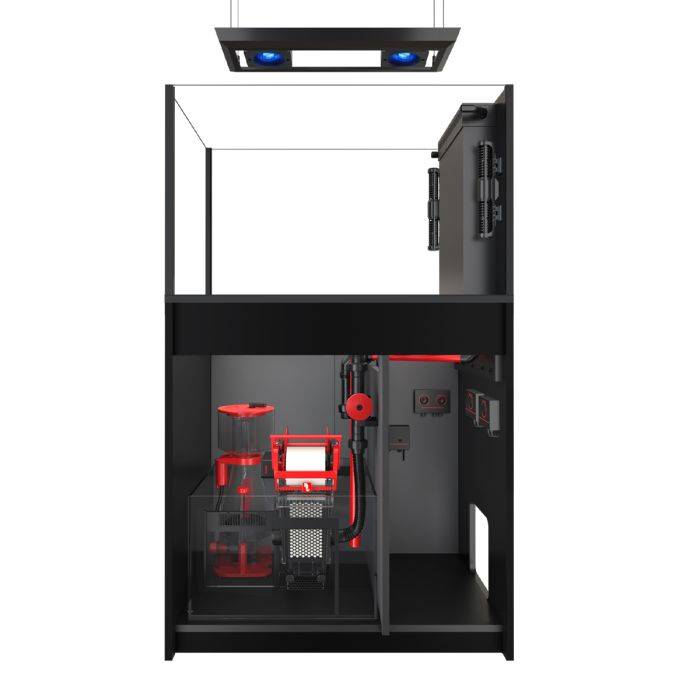
The HelloReef kit has a rear filtration chamber with mechanical and biological media, plus enough display space for a compact reef-rock structure and sandbed. With regular filter maintenance and roughly a 20–30% weekly water change, it can support a small, carefully chosen plan.
Two reasonable directions:
- One captive-bred ocellaris clownfish, with the possibility of a carefully selected pair; or
- One tiny goby such as a Yasha goby, optionally paired with a pistol shrimp.
I would treat the original three-fish example—a clownfish pair plus a goby—as the upper edge, not the automatic starting point. A tank this small has little room for territory, oxygen loss, or maintenance mistakes.
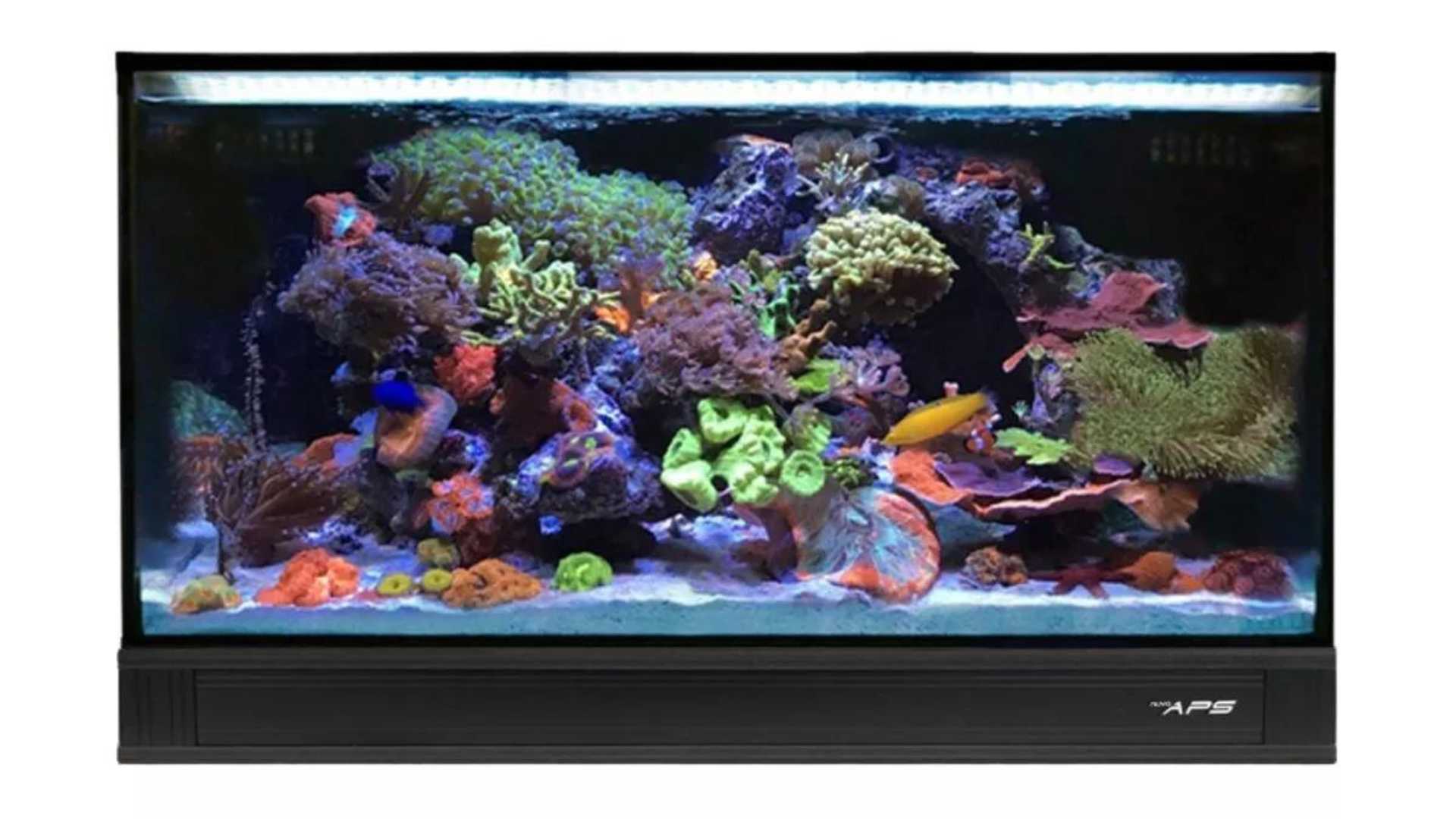
Innovative Marine 25 Lagoon: more useful horizontal room
The lagoon shape provides much more horizontal territory than a small cube. The rear filtration chamber can hold mechanical and biological media and still leaves upgrade room, while a shallow sandbed and structured rockwork create separate zones.
Example community:
- A pair of ocellaris clownfish
- Three to five tiny masked gobies
- One Banggai or pajama cardinalfish
- One Yasha goby with a pistol shrimp
- Optionally, one tailspot blenny instead of pushing the list further
The original list used a six-line wrasse. I would not make that my default beginner choice in this footprint because six-lines can become territorial. The reason the total can approach ten is the group of exceptionally small masked gobies—not because any ten saltwater fish will fit.

A medium lagoon or RF-45: a real small community
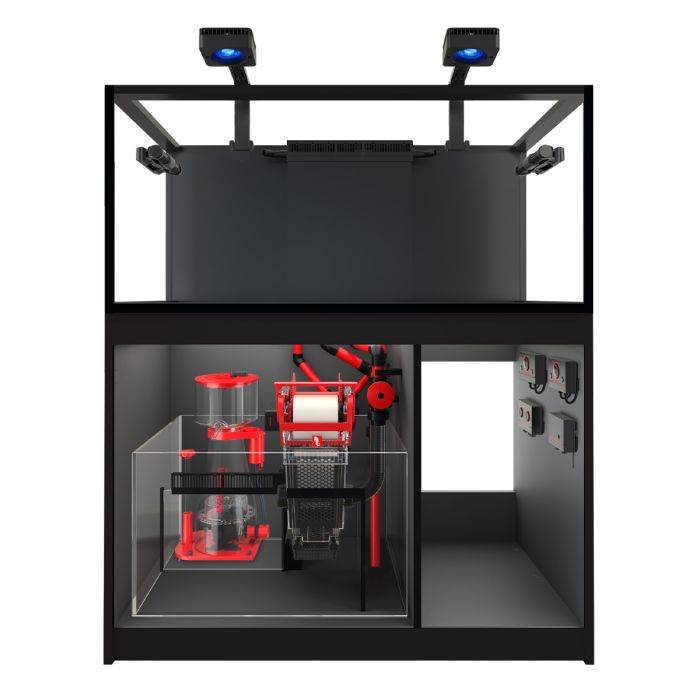
This size creates enough footprint to combine bottom dwellers, rock-oriented fish, and open-water fish without forcing every animal into the same territory. A sump or roomy rear filtration chamber also makes mechanical filtration, skimming, and other nutrient export easier.
Example community:
- Two ocellaris clownfish
- Two pajama cardinalfish
- One sand-sifting goby
- One firefish
- One appropriately selected fairy wrasse
- Four to six masked gobies
- One algae-eating blenny
- Optionally, one Aiptasia-eating filefish or one longnose hawkfish
Filefish may nip coral, and hawkfish may eat ornamental shrimp. Those are meaningful compatibility decisions, not footnotes. I would choose one of those specialty fish only when its trade-off fits the aquarium.

More water volume—but footprint still matters
The original example used an 82-gallon AquaForest aquarium. A similar tank can provide excellent stability and a useful sump, but additional height does not create the same territory as additional length. The aquascape and adult behavior still decide whether the plan works.
Example community:
- Two clownfish
- Three pajama cardinalfish
- One sand-sifting goby
- One firefish
- One fairy wrasse
- Eight to ten masked gobies
- One algae-eating blenny
- One carefully considered filefish or hawkfish
- Two clown gobies
The high end assumes that nearly half the list consists of tiny masked gobies. Replace those with larger, more active, or more territorial fish and the sensible count drops quickly.

A large community still needs a deliberate plan
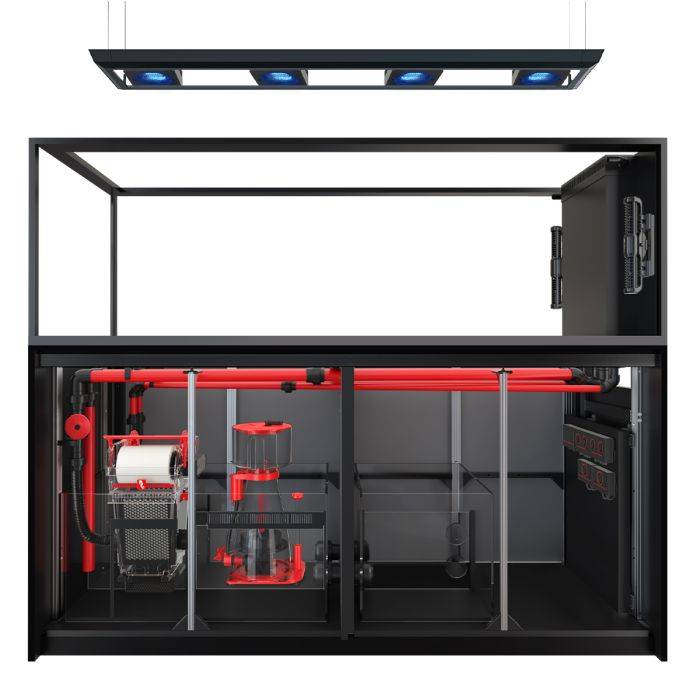
A five-foot peninsula with a large sump can support substantially more fish, larger species, and heavier feeding than the smaller systems above. Strong mechanical filtration, skimming, oxygenation, and a mature nutrient-export plan become essential as the community grows.
One possible community framework:
- Two appropriately selected tangs
- Three to five anthias, with a feeding plan that matches the species
- Two clownfish
- One rabbitfish
- Five or six chromis
- One dwarf angelfish, accepting possible coral-nipping risk
- A mixture of gobies, blennies, firefish, cardinalfish, and other smaller compatible species
- A large group of tiny masked gobies only if the tank, feeding, and filtration support them
The original 52-fish list demonstrated what a large, heavily filtered system might hold when many fish are tiny. I would not publish 52 as a universal target. Large tangs, rabbitfish, anthias, and other heavy feeders use capacity much faster than the raw count suggests.
Copperband butterflyfish and mandarin dragonets require specialized planning and are not automatic beginner additions. Add those only when the aquarium is mature and you can meet their feeding needs.
Before you buy another fish
Build the community on paper first
Choose the right species
Compare adult behavior, feeding needs, and the tanks that fit common beginner fish.
Plan compatibility and order
Introduce peaceful fish first and leave territorial species until the social structure is established.
Study fish before shopping
Use the livestock flashcards to learn common species and make a more deliberate list.
Feed the community well
See the dry, frozen, algae-based, and live foods I still use for saltwater fish.
Track water quality
Use a repeatable testing setup to catch changes before adding another animal.
Choose the complete system
Compare beginner aquariums, trade-offs, and what each tank still needs.
Saltwater stocking FAQ
Common questions
Is there a saltwater fish-per-gallon rule?
No. Gallons do not describe adult behavior, swimming pattern, territory, feeding, or aquascape. Use tank volume as one input, then build a species-specific community plan.
Does better filtration mean I can keep more fish?
Better filtration can process more feeding and waste, but it cannot create territory, eliminate aggression, or replace oxygen. Filtration raises nutrient-export capacity—not every other limit.
Why do some example counts look high?
Several of the original communities include groups of masked gobies, which remain extremely small. Replace them with larger or more active fish and the practical number falls.
How quickly should I add fish?
Add one decision at a time. Watch appetite, aggression, oxygenation, and water quality before adding the next animal. The aquarium’s response matters more than a fixed calendar.
What matters more: gallons or footprint?
Both matter, but horizontal footprint is often more useful for swimming lanes and territories. A tall aquarium and a long aquarium with the same volume may support very different communities.
Updated substantially in 2026 from Matthew’s original tank-by-tank stocking article. These communities are educational examples, not guarantees. Verify the adult size, temperament, diet, and minimum habitat for every fish before purchase.