Updated August 2026
The best beginner saltwater aquariums are not automatically the biggest or the cheapest. The right one fits your space, budget, livestock goals, and appetite for choosing equipment. These are the seven tanks I would recommend today—and the reasons I would choose each one.
Best overall for beginners
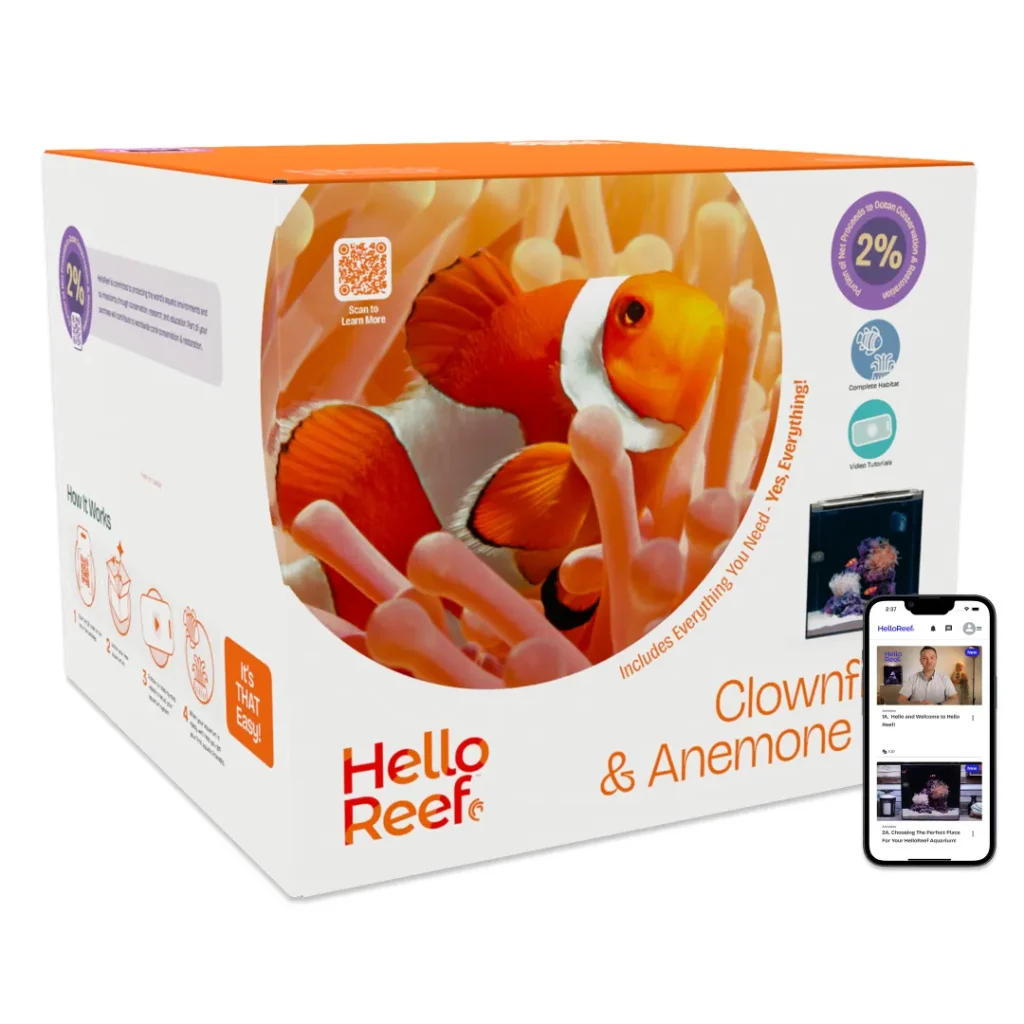
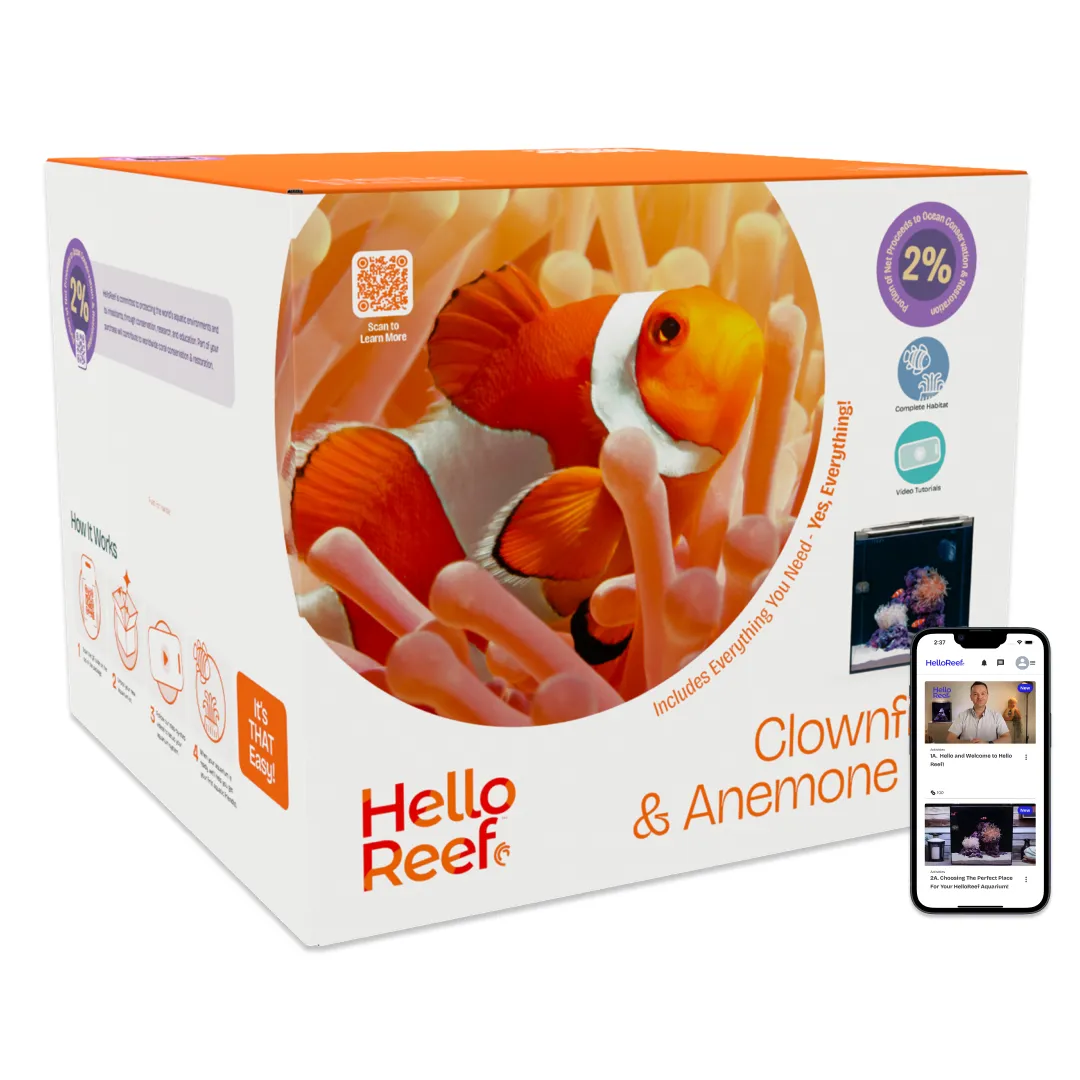
HelloReef 15-Gallon Kit
If you want the fewest equipment decisions and the clearest plan, this is my number-one recommendation. HelloReef is the only option here that is genuinely designed as a complete beginner setup: aquarium, compatible core equipment, rock, sand, salt, bacteria, food, starter tools, and step-by-step education.
I helped develop HelloReef and created much of its educational material, so I want to be transparent about that connection. I am biased—but I also know exactly what the system was built to solve.
Compare the best beginner saltwater tanks
No tank is best for everyone. Use this quick comparison to find the format that best matches how you want to start.
Tank names are underlined—click one to jump directly to its full review.
| Best for | Aquarium | Size | What makes it different |
|---|---|---|---|
| Best overall | HelloReef | 15 gallons | The most complete and guided beginner package |
| Smallest footprint | DeskMate Bundle | 4.8 gallons | A remarkably complete pico bundle, but less forgiving |
| Long, shallow layout | NUVO Fusion 20 Long | 20 gallons | More horizontal swimming and aquascaping space |
| Large peninsula display | Fiji Cube Peninsula | 38 gallons | Beautiful two-sided viewing and more water volume |
| Beginner peninsula | NUVO 20 Peninsula | 20 gallons | Manageable size, long viewing panels, included pedestal |
| Tank and stand package | JBJ RF-45 | 45 gallons | The only larger option here with a dedicated stand included |
| Low, wide footprint | NUVO 25 Lagoon | About 25 gallons | Excellent surface area and aquascaping room |
How I chose these aquariums
I did not choose these tanks from product listings alone. I looked at build quality, useful horizontal space, rear-filtration capacity, included equipment, the cost of finishing the system, furniture requirements, and how forgiving each aquarium will be for a beginner. I have personally built or owned versions of six of the seven recommendations.
I helped create the system and its educational course, so I know exactly what it was designed to solve for a first-time hobbyist.
I built this bundle for BRS. See the complete DeskMate build and video.
I have built several NUVO Fusion systems and consistently like their quality, useful rear chambers, included gear, and long or lagoon-style footprints.
This is the only exact aquarium here I have not owned. I have owned Fiji Cube tanks and trust their quality; I chose this one as a strong larger peninsula from a respected brand.
I used the 14-gallon version for my Caribbean Biotope build series. This 20-gallon model offers the same beautiful format with more room.
I built this aquarium throughout my 12-part BRS Saltwater Aquarium Beginner’s Guide.
I have built several Innovative Marine Fusion and Lagoon systems. Their glass, filtration layouts, and overall build quality have been consistently dependable for me.
Complete kit or aquarium platform?
HelloReef is the only truly complete starter system on this list. The DeskMate bundle comes next and includes an impressive amount for its size. The other five are all-in-one aquariums in the filtration sense—the rear filtration is built into the tank—but they are not complete reef setups. You should expect to add items such as a reef light, heater, rock, sand, salt, test kits, maintenance tools, and an auto top-off.
That distinction matters. Compare the cost of the finished system, not only the price of the empty aquarium.
1. HelloReef Clownfish & Anemone Aquarium Kit — 15 Gallons
Best overall
My experience: Co-creator of HelloReef and its educational course.
The easiest way to start with a plan
HelloReef is what I recommend when a new hobbyist does not want to assemble a dozen separate shopping lists. The 15-inch cube includes the aquarium, return pump, wavemaker, heater, AquaIllumination Blade light, rock, live sand, salt, bacteria, food, and starter tools. HelloReef Connect then explains what to do with those pieces in order.
That education is the real differentiator. Beginners often do not fail because the glass box is wrong; they fail because nobody explains the cycle, the pace of stocking, or what to watch after setup.
15 × 15 × 15 inches
165 pounds
- Best for: A true beginner who wants compatible equipment and step-by-step help.
- Still plan for: A very sturdy surface, testing supplies, ongoing maintenance supplies, and livestock.
- Watch out for: The 15-gallon volume still limits fish choices and requires consistent top-off and maintenance.
My verdict: If you want the most straightforward path from unopened box to a healthy first saltwater aquarium, buy this one.
2. Eshopps DeskMate Nano Bundle — 4.8 Gallons
Best tiny desktop option
My experience: I owned and built this aquarium for the BRS DeskMate build and video.
A lot of aquarium in a very small footprint
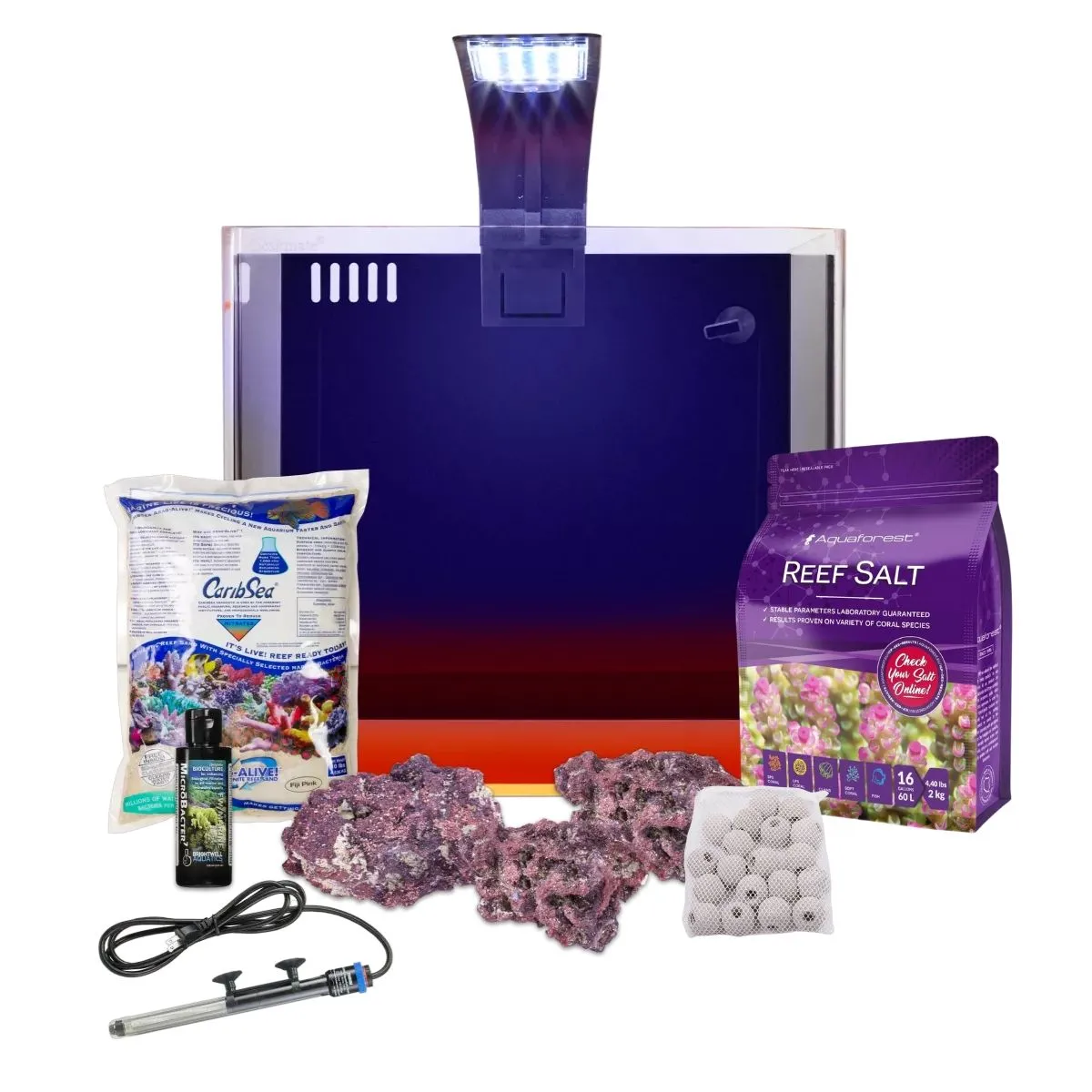
The DeskMate bundle is the second-closest option to a complete setup. It includes the acrylic AIO aquarium, return pump, filter sock, LED light, rock, sand, biological media, bacteria, salt, and a 25-watt heater. The total volume is 4.8 gallons, with about 3.8 gallons in the display.
That tiny size is both the selling point and the warning label. Temperature, salinity, and nutrients can change quickly. I had a lot of fun building one, but I do not consider a pico tank automatically easier just because it is small.
11 × 12 × 10 inches
About 3.8 gallons
- Best for: Very limited space and a careful owner willing to check the tank frequently.
- Still plan for: A light timer, test kits, maintenance tools, and an extremely conservative livestock plan.
- Watch out for: Faster evaporation, temperature swings, and very little margin for missed maintenance.
My verdict: A clever and unusually complete nano bundle, but the smallest tank here is not the most forgiving.
3. Innovative Marine 20 NUVO Fusion AIO Long
Best long, shallow tank
My experience: I have built several Innovative Marine NUVO Fusion aquariums, including long and lagoon-style systems.
More useful horizontal space without a huge tank
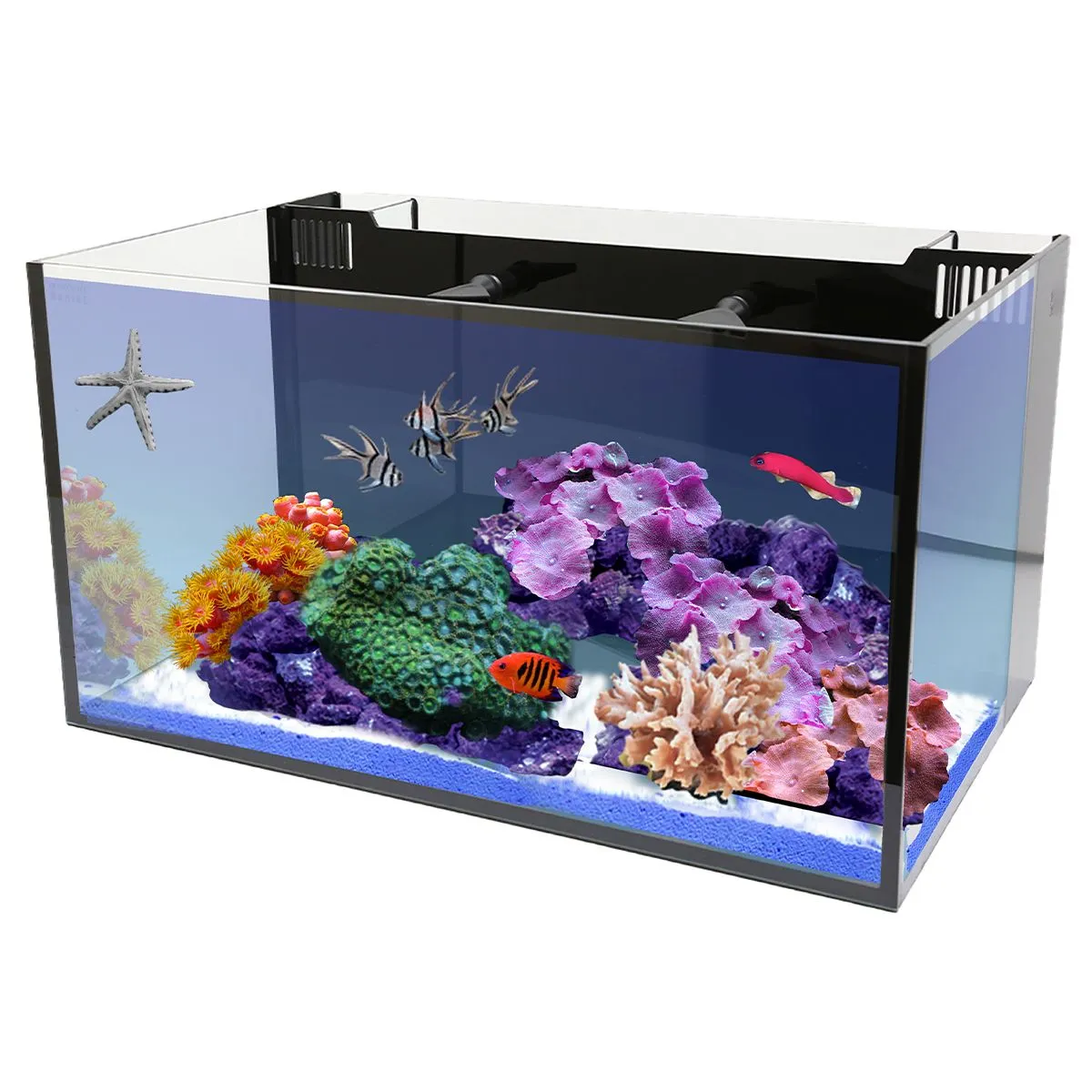
I have owned this aquarium, and the proportions are the reason it belongs here. At roughly 24 inches long and 13 inches tall, it gives you more horizontal swimming and aquascaping space than a tall aquarium with a similar volume. For most reef livestock, useful footprint matters more than extra empty height.
The current version includes two adjustable 130 GPH DC return pumps, two filter socks, return plumbing, and a leveling mat. It is a solid AIO foundation, but it is not a complete reef kit.
23.6 × 15 × 13 inches
About 45 pounds
- Best for: Someone who wants a low-profile tank with useful swimming and coral-placement space.
- Still plan for: Light, heater, rock, sand, salt, testing, maintenance gear, and livestock.
- Watch out for: It still needs a strong, level cabinet or tabletop that can safely support the completed system.
My verdict: One of the most useful shapes in the 20-gallon category, especially if you prefer length over height.
4. Fiji Cube 38-Gallon Peninsula Pro
Best large peninsula
My experience: I have owned Fiji Cube aquariums, but this is the only exact model on this list I have not personally owned.
A beautiful display from two long sides
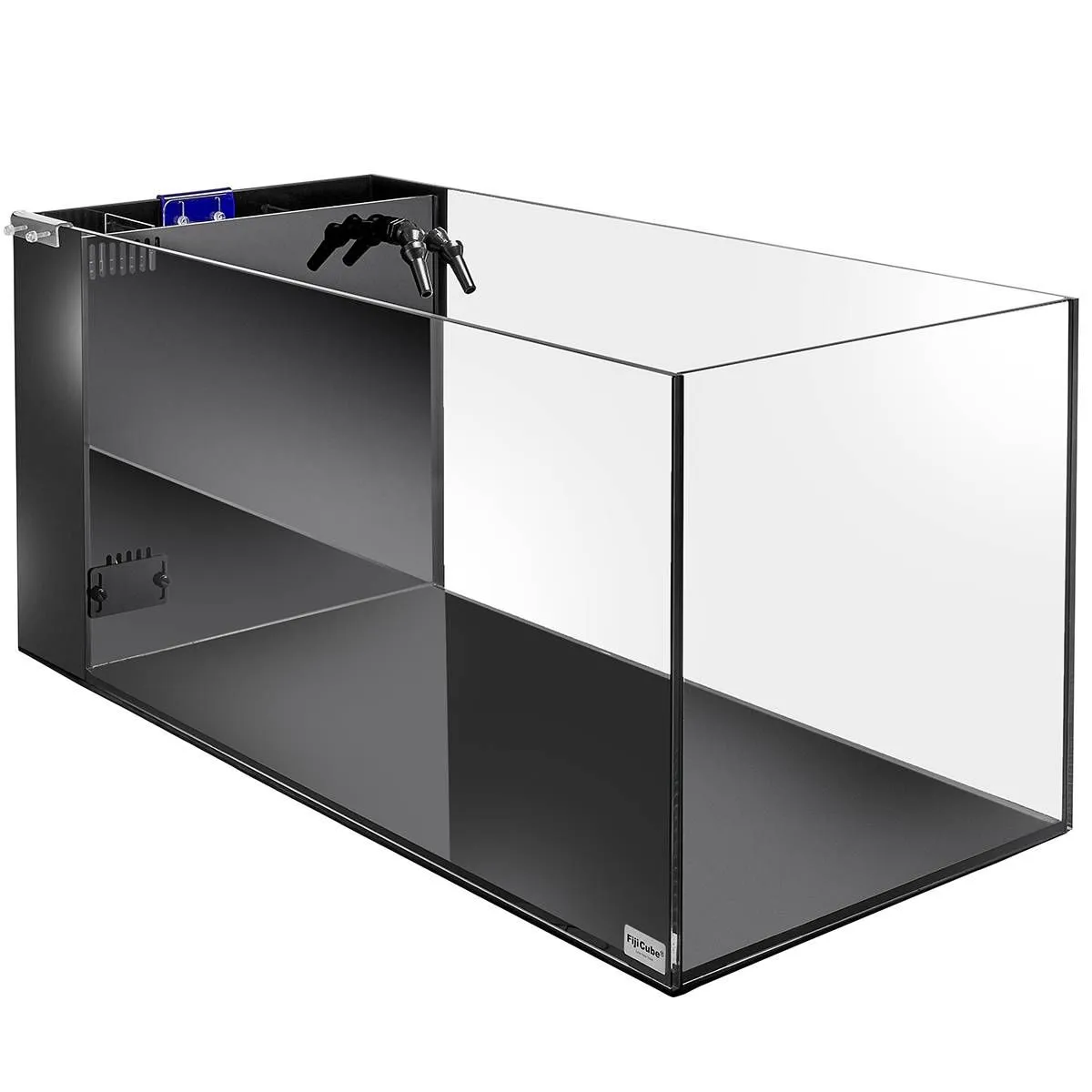
I love peninsula aquariums because you can see the tank from both long panels. This 38-gallon Fiji Cube gives you that dramatic viewing format while keeping the filtration in a rear chamber at one short end. The Pro package includes a media basket, filter sock, leveling mat, and a controllable 550 GPH DC return pump.
The trade-off is support and filtration space. The rear chamber is relatively compact, and a finished 38-gallon reef is heavy. Water alone weighs about 317 pounds before you add the glass, rock, sand, and equipment.
35.43 × 15.75 × 15.75 inches
8 mm low-iron rimless display
- Best for: A larger peninsula centerpiece with excellent viewing angles.
- Still plan for: Light, heater, aquascape, salt, testing, maintenance equipment, and a properly engineered stand.
- Watch out for: I could not find a clearly matched dedicated cabinet stand in the current BRS/Fiji listings, so solve the support question before ordering.
My verdict: Gorgeous format and useful volume, but it asks more of the beginner than the 20-gallon peninsula below.
5. Innovative Marine 20 NUVO Fusion Peninsula with APS Pedestal
Best beginner peninsula
My experience: I built the smaller 14-gallon version for my Caribbean Biotope series; this 20-gallon model uses the same format with more room.
The peninsula shape I would choose for a first tank
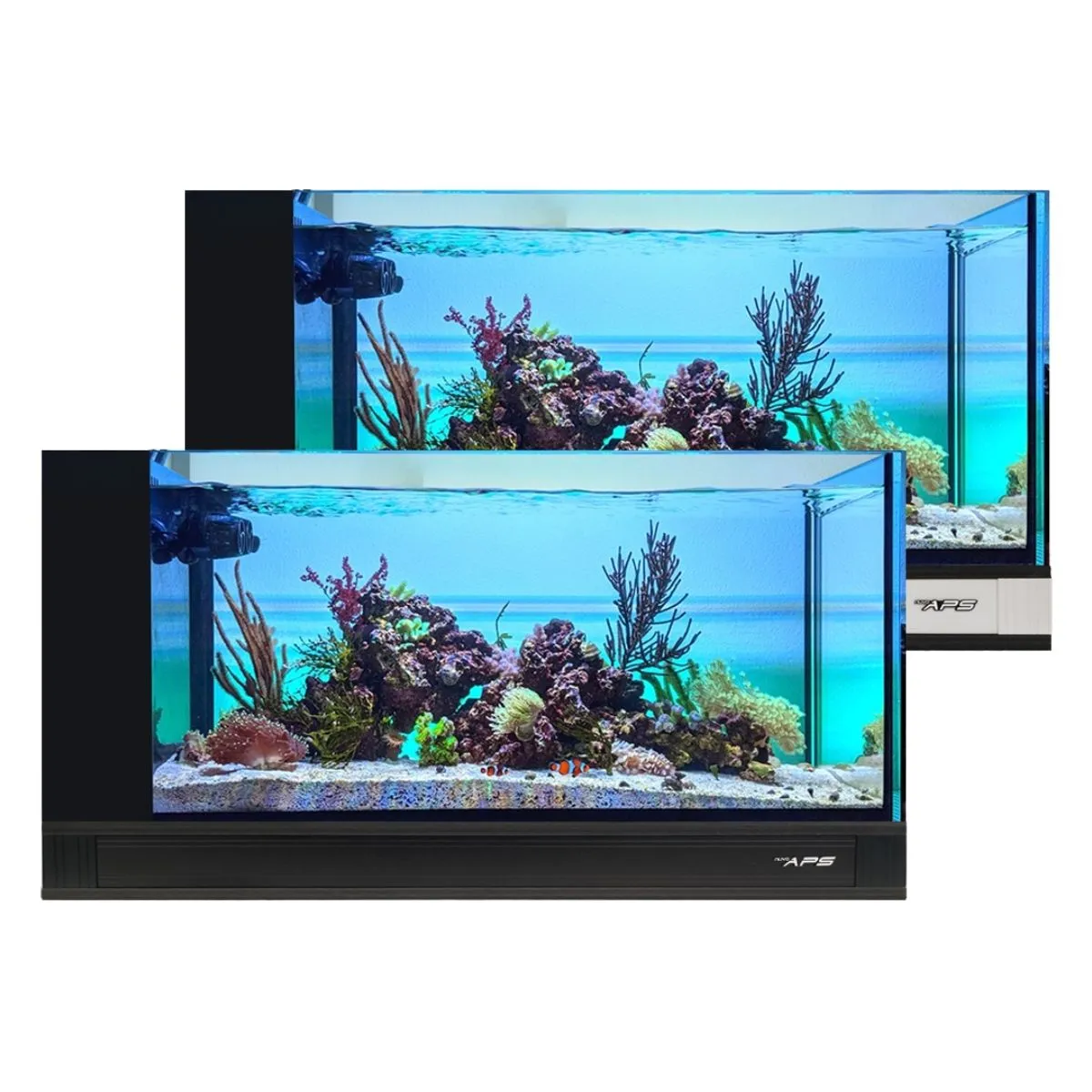
This is probably the better beginner peninsula than the 38-gallon Fiji Cube. It is more manageable at 20 gallons, stretches about 30 inches long, and comes with an APS pedestal that creates a clean, level base on a sturdy desk or cabinet. The pedestal is not a storage stand.
The package includes a controllable MightyJet 326 GPH DC return pump, filter sock, media caddy and filter media, mesh lid, magnetic glass cleaner, return nozzles, and water-level risers. I have owned many Innovative Marine aquariums and keep coming back to their simple, customizable AIO layout.
30 × 11.8 × 13 inches
About 2.5 inches
- Best for: A beginner who wants two long viewing panels and is comfortable selecting a light and heater.
- Still plan for: Light, heater, rock, sand, salt, testing, maintenance tools, and storage for supplies.
- Watch out for: The long, narrow footprint needs continuous, level support from very sturdy furniture.
My verdict: My favorite peninsula choice for a beginner who wants flexibility without jumping to a much heavier system.
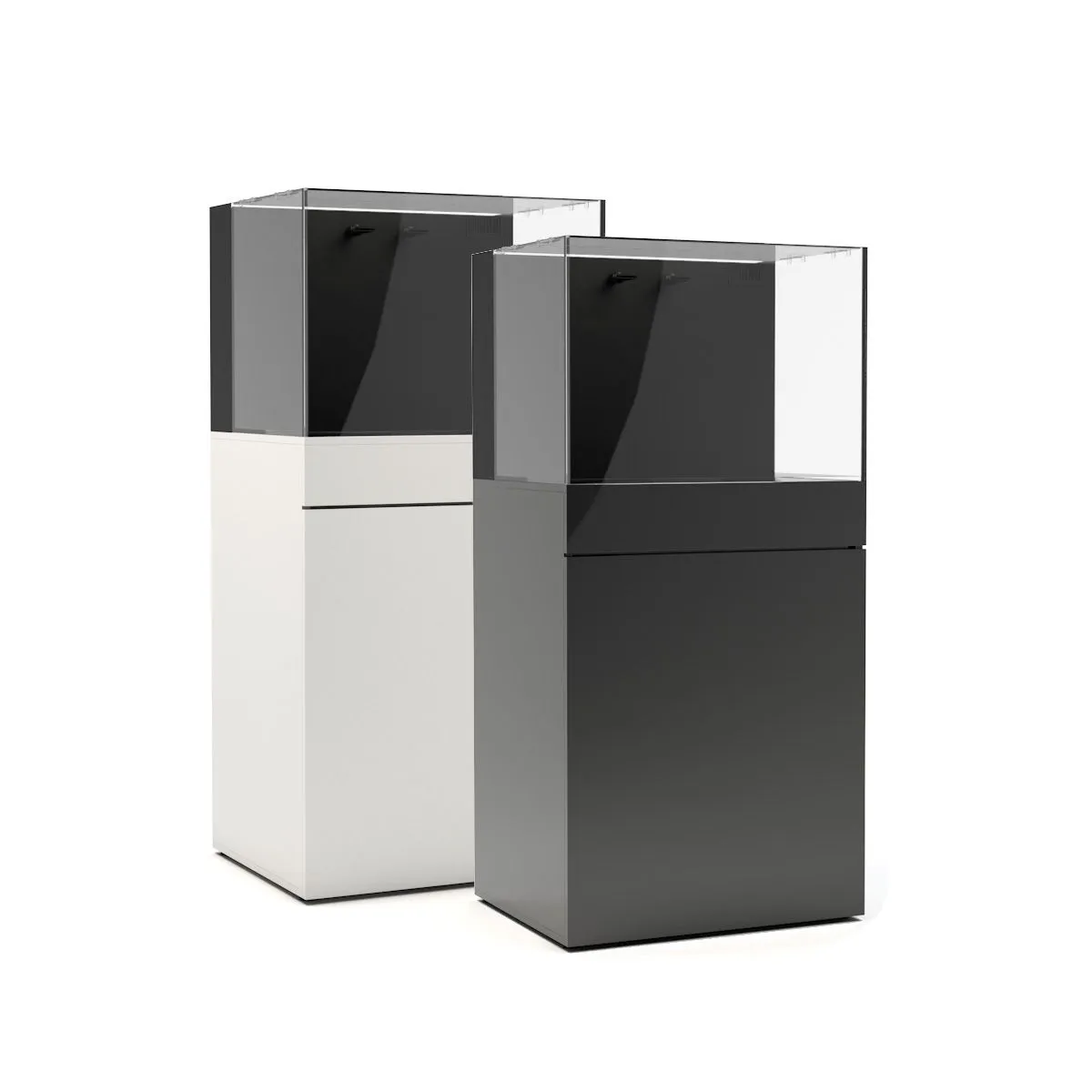
6. JBJ RF-45 Rimless Flat Panel Aquarium with Stand
Best tank-and-stand package
My experience: I built and documented this aquarium throughout the 12-part BRS Saltwater Aquarium Beginner’s Guide.
More room to grow, with support already solved
The JBJ RF-45 has been one of my repeat recommendations because it gives you a substantially larger AIO display and includes the dedicated cabinet stand. That removes one of the biggest uncertainties in buying a heavier aquarium. The package also includes two return pumps and two filter socks.
More water volume can make day-to-day parameters more stable, but this is also a larger commitment. The aquarium is about 88 pounds dry, before water, rock, and sand. It belongs in a permanent location on a suitable floor.
26.5 × 22 × 19 inches
36 inches
- Best for: A beginner who wants a larger display and a purpose-built stand in one purchase.
- Still plan for: Light, heater, aquascape, salt, tests, maintenance gear, and help moving the system.
- Watch out for: Higher total cost and less flexibility to change locations once the aquarium is running.
My verdict: The most sensible larger option here when you want the stand question answered from the start.
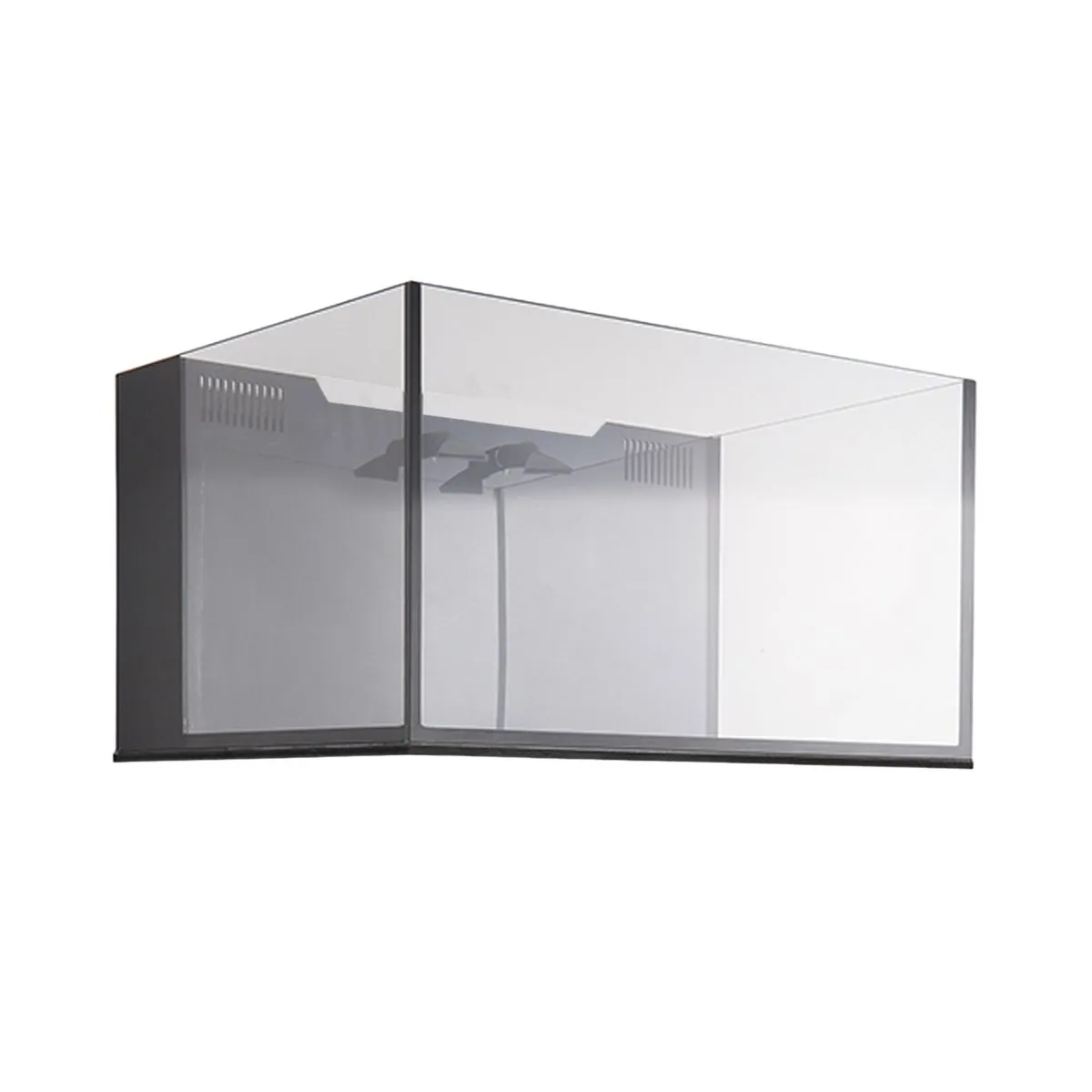
7. Innovative Marine 25 NUVO Fusion Lagoon
Best lagoon footprint
My experience: I have built several Innovative Marine Fusion and Lagoon aquariums and have consistently found them to be high-quality, dependable systems.
Low and wide, with excellent aquascaping room
A lagoon-style aquarium is shorter and wider than a conventional tank. That means more horizontal surface area for rockwork, coral placement, and livestock movement without adding unnecessary vertical height. Innovative Marine lists this system at approximately 25 gallons, with a footprint just under 24 by 20 inches.
The aquarium includes two adjustable 130 GPH DC return pumps, two proprietary filter socks, return plumbing, and a leveling mat. The large return area gives you options, but this is still an aquarium platform that needs a full equipment plan.
23.6 × 19.7 × 11.8 inches
About 65 pounds
- Best for: A low, wide reef with more useful surface area than a tall aquarium.
- Still plan for: Light, heater, rock, sand, salt, tests, maintenance gear, and a strong support surface.
- Watch out for: Proprietary filter socks can be less convenient, and a finished 25-gallon system is near the point where I prefer dedicated aquarium furniture.
My verdict: A strong choice for aquascapers who understand that width is often more valuable than height.
Do not underestimate aquarium weight
A gallon of saltwater weighs roughly 8.34 pounds, but that is only the water. The tank, rock, sand, equipment, and cabinet all add weight. The furniture must be level, resistant to water, and designed to hold the completed system continuously—not merely survive someone sitting on it for a minute. If there is any doubt, use a purpose-built aquarium stand or have the support evaluated.
Which beginner saltwater aquarium should you buy?
Here is the fastest way to compare the practical differences. On a phone, swipe inside the table to see every column.
| Aquarium | Dimensions | Price point | Best for | Avoid it when | Current option |
|---|---|---|---|---|---|
| HelloReef 15 | 15 × 15 × 15 in. | $ | The clearest guided start and the fewest separate equipment decisions | You want a larger fish list or prefer to choose every component yourself | Check BRS price |
| DeskMate 4.8 | 11 × 12 × 10 in. | $ | A tiny desktop reef for a careful owner with very limited space | You want multiple fish or a forgiving maintenance schedule | Check BRS price |
| NUVO Fusion 20 Long | 23.6 × 15 × 13 in. | $ | A low, long display with useful swimming and aquascaping space | You want a complete starter kit rather than an aquarium platform | Check BRS price |
| Fiji Cube 38 Peninsula | 35.43 × 15.75 × 15.75 in. | $$ | A larger peninsula centerpiece with two long viewing sides | You have not already solved the stand and total-weight question | Check BRS price |
| NUVO 20 Peninsula | 30 × 11.8 × 13 in. | $ | The most manageable peninsula option for a beginner | You need every startup item included or want a storage cabinet | Check BRS price |
| JBJ RF-45 with stand | 26.5 × 22 × 19 in. | $$ | A larger display with its purpose-built support already included | Your space or budget favors a smaller, easier-to-move system | Check BRS price |
| NUVO 25 Lagoon | 23.6 × 19.7 × 11.8 in. | $ | A low, wide reef with excellent coral-placement room | Your furniture is too narrow or proprietary filter socks bother you | Check BRS price |
Price points are relative and can change. Use the links for current pricing and availability.
Beginner saltwater tank FAQ
What size saltwater aquarium is easiest for a beginner?
There is no magic size. More water volume changes more slowly, but larger tanks cost more and require stronger support. For many beginners, 15 to 25 gallons is a manageable middle ground when the equipment and maintenance plan are clear.
Is an all-in-one aquarium a complete kit?
Usually not. “All-in-one” normally means the filtration chambers are built into the back of the aquarium. It does not guarantee that a light, heater, rock, sand, salt, tests, or maintenance tools are included. HelloReef is the complete starter kit in this list; the other AIOs need additional equipment.
Is a smaller saltwater tank easier?
Smaller tanks cost less to fill and take up less room, but temperature, salinity, and nutrients can change faster. A pico aquarium such as the 4.8-gallon DeskMate rewards consistency and is less forgiving of missed maintenance.
Are long or lagoon aquariums better than tall tanks?
They are often more useful for reef livestock because horizontal space creates more swimming length, gas-exchange surface, and room for coral placement. A tall tank may hold similar gallons while providing less practical footprint.
What should I budget for besides the aquarium?
Budget for a stand or support surface, light, heater, water movement, auto top-off, rock, sand, salt, source water, test kits, maintenance tools, and livestock. Always compare the cost of the finished, functioning aquarium.
Build the rest of the system before you buy
Working with a firm starting-package budget? Compare my three beginner saltwater tanks under $1,000. That shortlist explains what the price ceiling covers and what you still need to budget for.
Once you know which aquarium fits, use the saltwater aquarium build guides to see the rest of the equipment you will need. You can also compare lights, heaters, test kits, and more in the complete gear guide library, then use the aquarium calculators to estimate salt, sand, and water volume.