Beginner saltwater fish treatment
Saltwater Fish Medication: What to Know Before You Treat
When one of my fish looks sick, I understand the urge to grab the first medication that mentions the symptom on the box. You want to help the fish, and doing something feels better than waiting.
The problem is that the wrong medication can waste time, stress the fish, damage the biological filter, or kill coral and invertebrates. So before we pick a bottle, let’s slow down just enough to check the aquarium, look at the whole fish, and make a better decision.
A quick word before we start
A Symptom Does Not Automatically Tell You Which Medication to Use
White spots, cloudy eyes, heavy breathing, hiding, and a lost appetite can each have more than one cause. The same medication will not fix all of them.
I’m sharing what I would check as an experienced hobbyist. This guide can help you understand the common medication categories, set up a safer treatment tank, and read the label more carefully. It cannot diagnose a fish from one picture, and it cannot give one dose that works for every product and every aquarium.
Understand the categories
Start With the Problem, Not the Brand Name
These categories will help you understand what the different medications are trying to do. They are not a shortcut to picking a bottle. The fish, the suspected problem, the treatment tank, and the current label all matter.
External protozoan parasites
Copper and other organism-specific approaches may be used for selected external protozoans. Copper must be measured with a compatible test method and kept away from invertebrates and porous display materials. A white spot alone is not enough to choose it.
Flukes and susceptible worms
Praziquantel has a narrower role than “general parasite treatment” suggests. The suspected organism, oxygenation, treatment setting, label directions, and the limits of the course all matter.
Selected internal or protozoal problems
Metronidazole is not a universal antibiotic or parasite cure. The supported problem, whether the fish is eating, and the approved route for the exact product affect the plan.
Bacterial disease
Injury, parasites, poor water quality, and transport stress can all come first. A red mark or damaged fin cannot tell you which antibiotic will work. If the problem is severe, keeps coming back, or does not respond, better diagnostics may completely change the plan.
Formalin, dyes, and oxidizers
These are not interchangeable “stronger” options. Species sensitivity, ventilation, handling, treatment setting, and the exact label matter. They should not be improvised or combined casually.
Botanical and supportive remedies
“Natural,” “reef safe,” and “broad spectrum” are marketing phrases, not diagnoses. A supportive product should never delay a supported treatment when the fish is deteriorating.
The medication reference
What the Most Common Fish Medications Actually Are
This is the part of the old guide I wanted to keep. There are a lot of fish medications, and the names get confusing fast. Some products share an ingredient. Some combine several ingredients. Some are antibiotics, while others are binders, botanical remedies, dyes, or broad external treatments.
This is not a shopping list. It is a reference you can use to figure out what is actually in the bottle, what it is meant to do, and what you still need to check before you use it.
Current manufacturer information found means I found a current first-party product page or technical record during this review. It does not mean I am recommending that product for your fish, and it does not mean the FDA has approved it. Primary label required means the product still appears to be sold, but I could not verify enough first-party information to treat the listing as complete. In either case, the label on the exact bottle you own is the final set of directions.
I. Parasites and External Disease
Copper, Praziquantel, Metronidazole, and External Treatments
This section covers medications commonly discussed for external parasites, flukes, worms, and selected protozoal problems. These products are not interchangeable, and “parasite medication” is much too broad to choose a bottle safely.
Current manufacturer information found
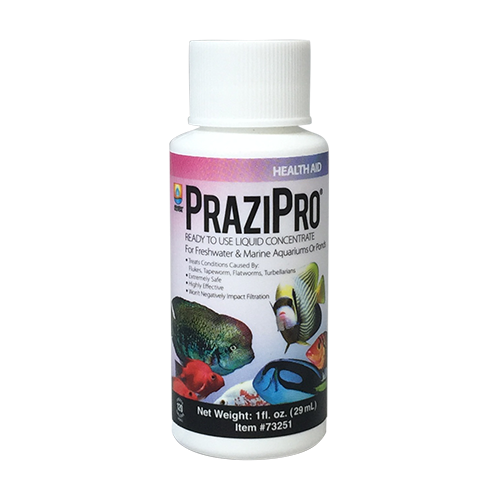
Hikari PraziPro
Active ingredient: praziquantel
PraziPro is aimed at praziquantel-susceptible flatworms, including flukes and tapeworms. It is not a treatment for marine ich, velvet, or a bacterial infection.
Watch for: the exact label’s filtration and sulfur/sulfinate-based water-conditioner restrictions, worm-like invertebrates, and the fact that confirming success may require microscopic examination.
Current manufacturer information found
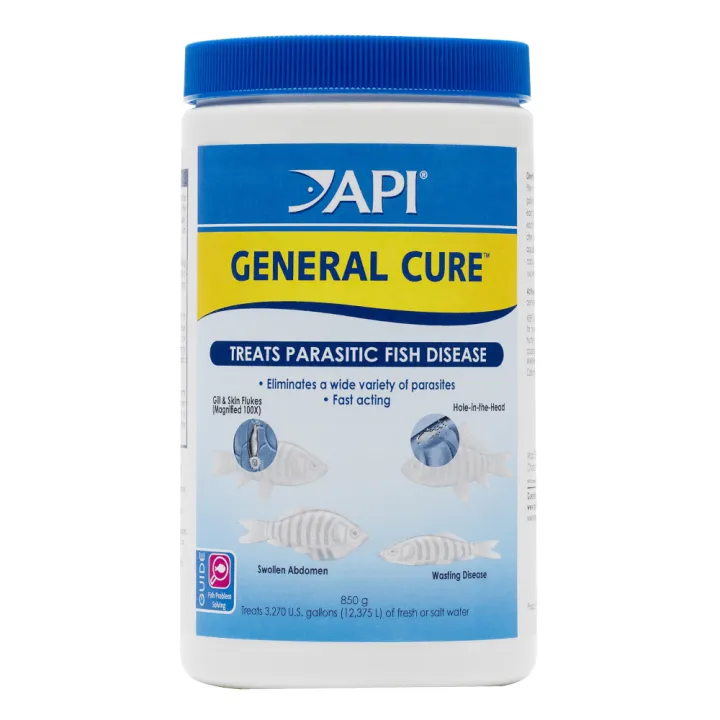
API General Cure
Active ingredients: praziquantel and metronidazole
This combination is commonly discussed for susceptible flukes, worms, and selected protozoal problems. It is not “general” enough to treat every parasite, and it is not a replacement for diagnosing ich, velvet, or bacterial damage.
Watch for: duplicate praziquantel or metronidazole, removal of activated carbon as directed, continued aeration, and the current label’s metronidazole handling warning.
Current technical sheet found
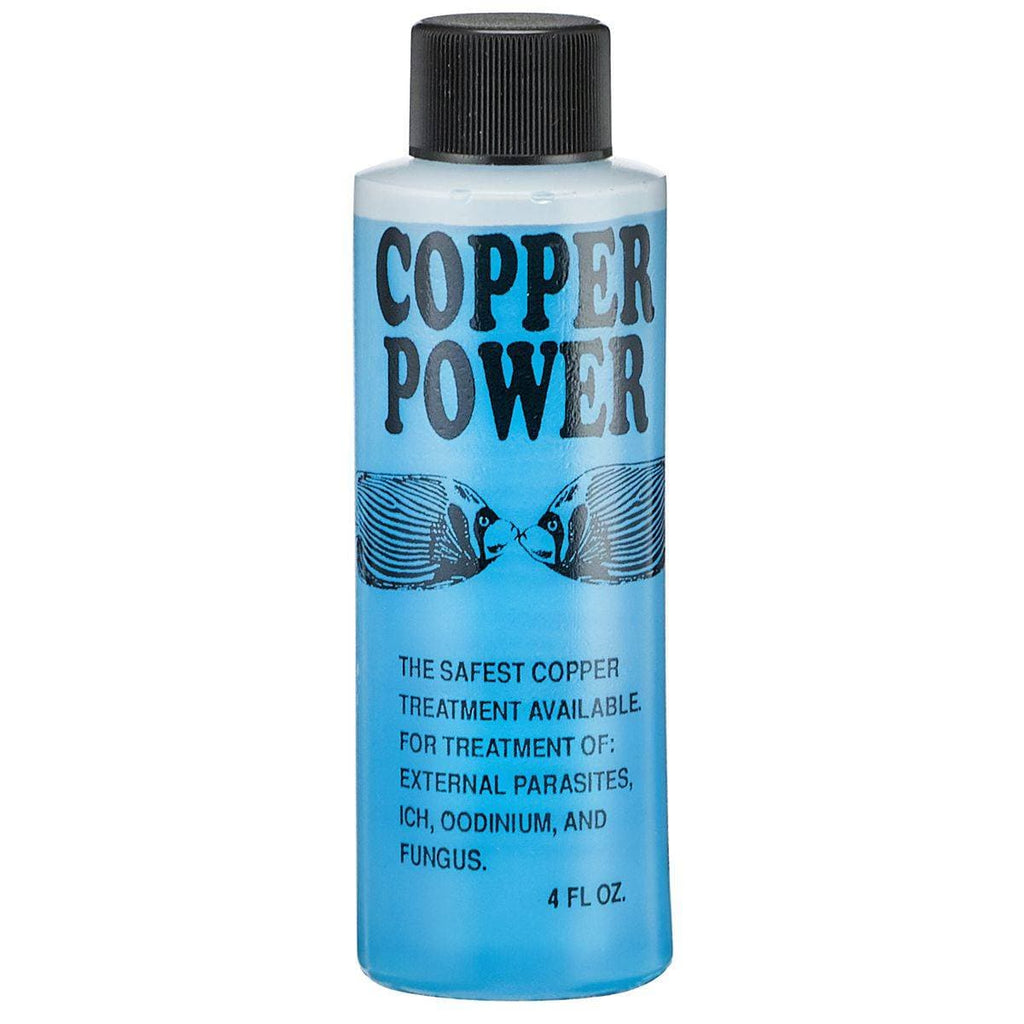
Copper Power for Saltwater
Medication class: coordinated copper solution
Copper Power is one copper option used against selected external protozoan parasites. It belongs in a fish-only hospital aquarium where the copper level can be measured with a compatible test method.
Watch for: fish sensitivity, invertebrates, porous materials, actual water volume, the exact test method, and the current finished-product directions. Never estimate copper by dose alone.
Current label record found
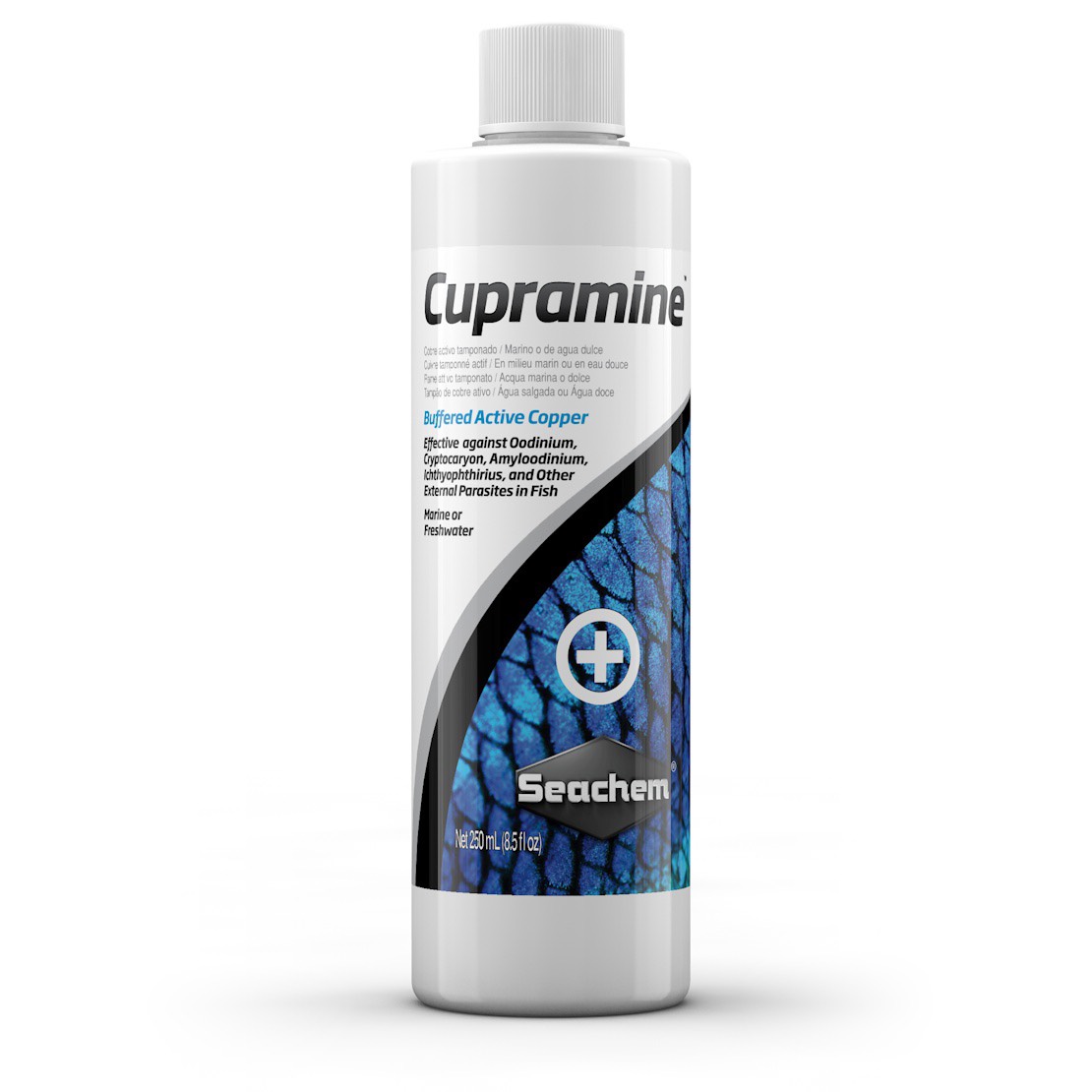
Seachem Cupramine
Medication class: copper-based external parasite treatment
Cupramine is another copper formulation. It is not interchangeable with Copper Power or Coppersafe, and it requires the test method and directions that match this exact formulation.
Watch for: invertebrates, chemical filtration, UV, reducing agents, previous copper use, and accidental mixing with other medications.
Current label record found
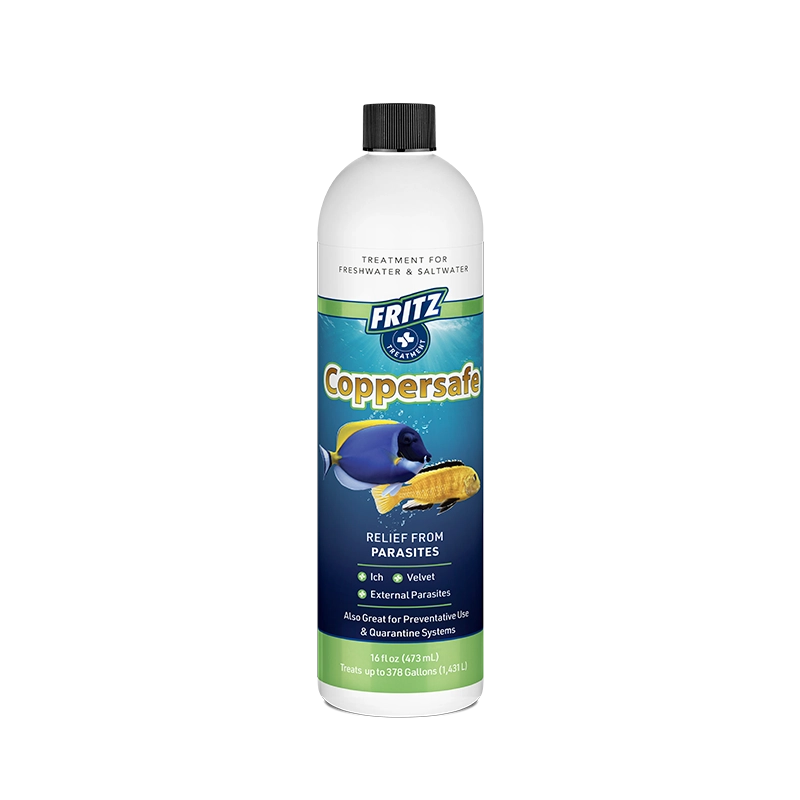
Fritz Mardel Coppersafe
Medication class: copper-based external parasite treatment
Coppersafe is labeled for selected external parasites in ornamental fish. Like every copper product, it must be treated as its own formulation—not as a generic substitute for another bottle of copper.
Watch for: invertebrates, a compatible copper test, porous material, and the label’s legal-status and use limitations.
Current manufacturer information found
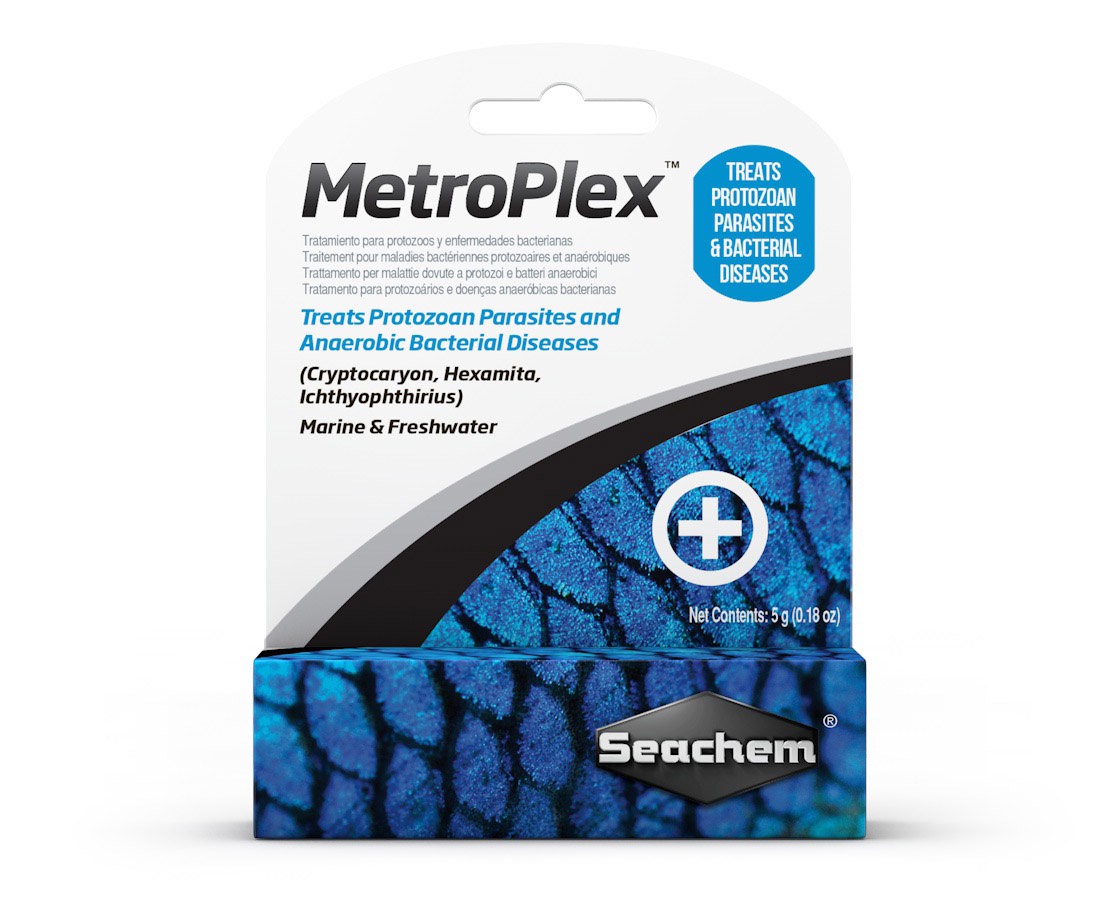
Seachem MetroPlex
Active ingredient: metronidazole (manufacturer lists 70%)
MetroPlex has a narrower role in selected protozoal and anaerobic bacterial problems. Whether medication goes into the water or food depends on the suspected problem, whether the fish is eating, and the current product directions.
Watch for: duplicate metronidazole in API General Cure and the difference between a medication and a food binder.
Current manufacturer information found
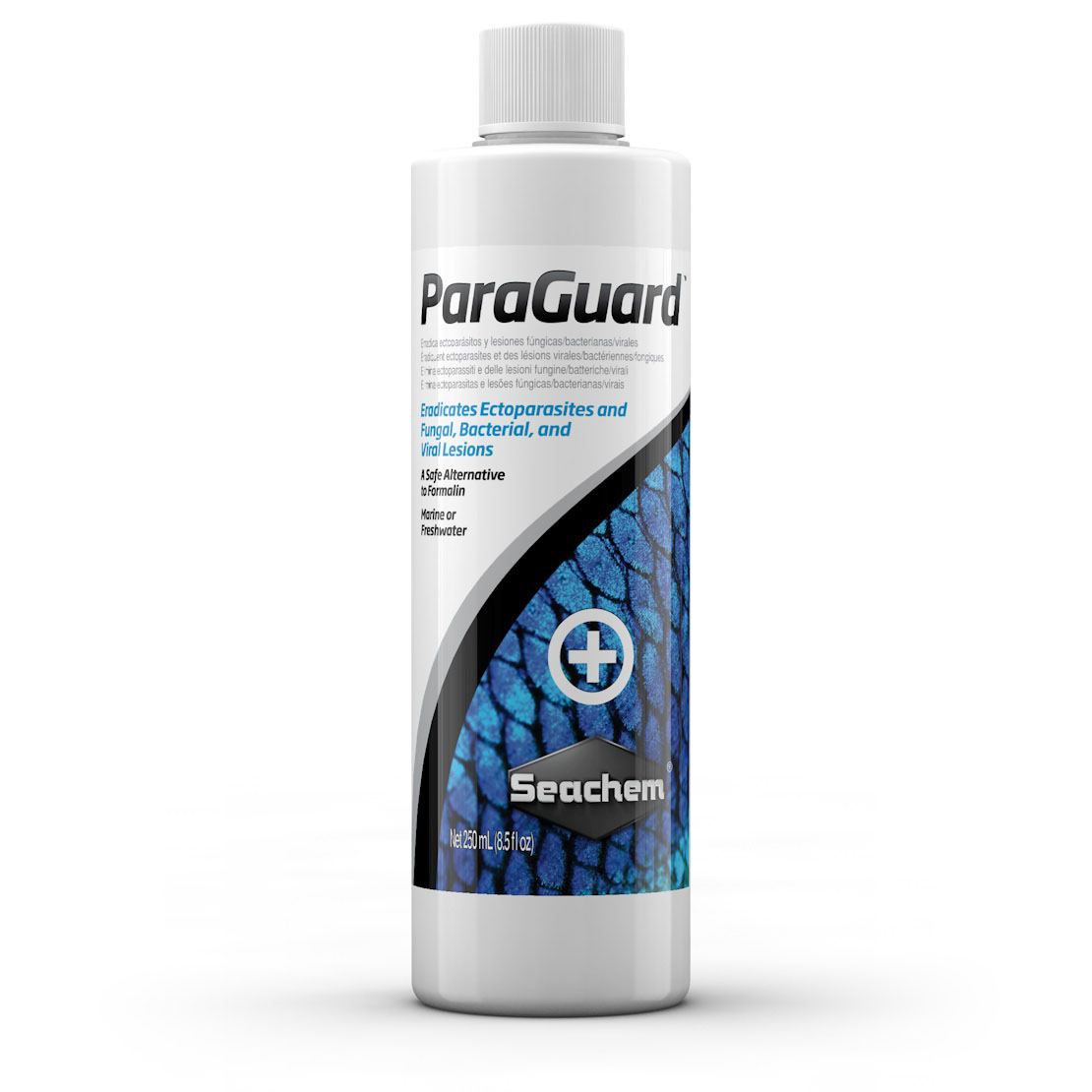
Seachem ParaGuard
Medication class: proprietary aldehydes, malachite green, and protective polymers
ParaGuard is positioned for selected external parasite, fungal-like, and bacterial surface problems. That broad description does not mean every visible skin problem belongs in the same treatment plan.
Watch for: species sensitivity, invertebrates, first-exposure reactions, aeration, and the manufacturer’s warning not to confuse this aldehyde blend with formalin.
Current product; primary label required
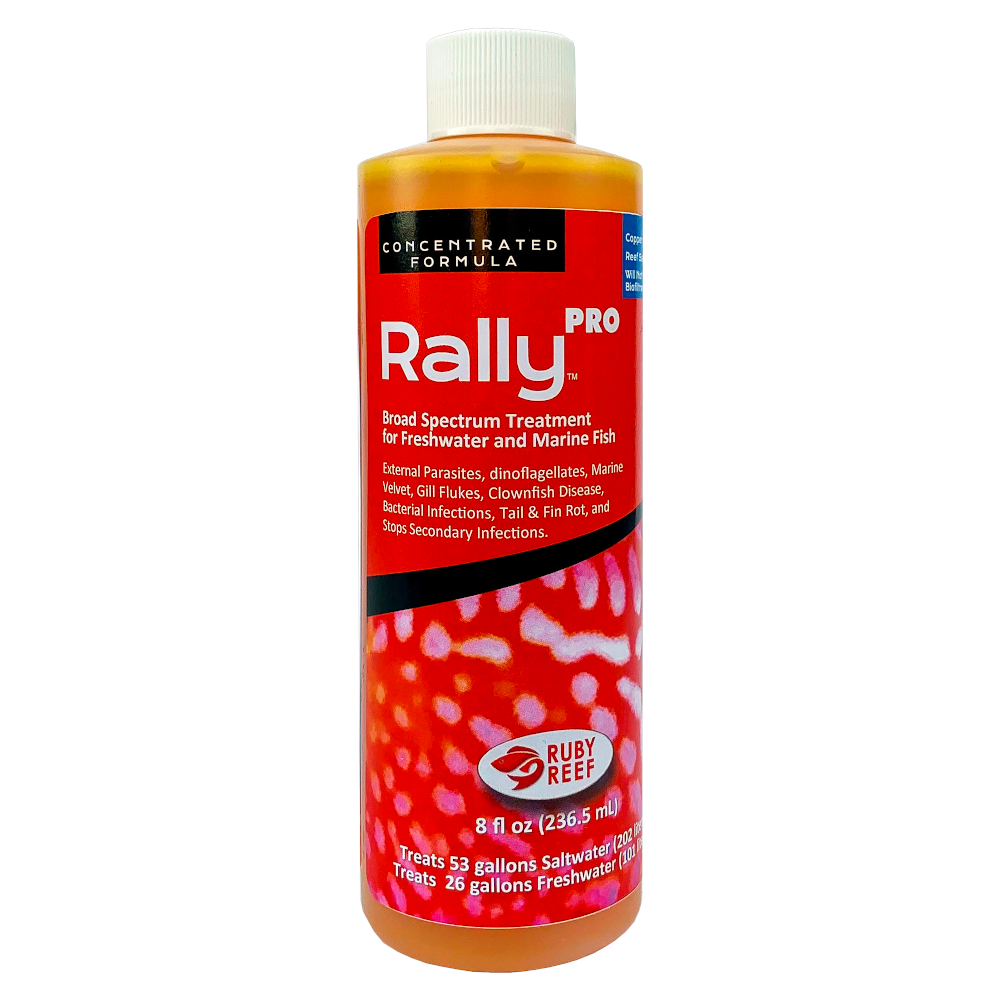
Ruby Reef Rally Pro
Retailer-listed active ingredients: acriflavine and aminoacridine
Rally Pro is still sold as a broad external treatment, but a complete current manufacturer label was not located during this review. It should not become a catch-all answer when the fish has rapid breathing, tissue loss, or an uncertain diagnosis.
Watch for: confirming the bottle’s current ingredient statement before publication, sensitive species, aeration, handling, treatment setting, and whether a more specific diagnosis changes the plan.
Polyplab Medic
Medication class: manufacturer-described oxidizing water conditioner
Polyplab currently markets Medic for marine ich and velvet and calls it reef safe. Those are manufacturer claims, not a diagnosis or independent proof that it will control a serious outbreak in a particular aquarium.
Watch for: the evidence boundary, current directions, oxygenation, and the difference between a display-compatible claim and established control of a confirmed parasite.
Hikari Ich-X Saltwater
Current formulation: proprietary water/formaldehyde formula (manufacturer lists less than 3% formaldehyde)
Hikari currently lists Ich-X SW for marine ich, velvet, selected metazoan problems, and external fungal issues, with separate-treatment-tank directions.
Watch for: never substituting the similarly named freshwater formula; actual water volume, aeration, water-conditioner incompatibilities, invertebrate sensitivity, staining, skin and eye exposure, and the warning not to mix it with other medications.
Product image courtesy of Chewy.
Current manufacturer information found
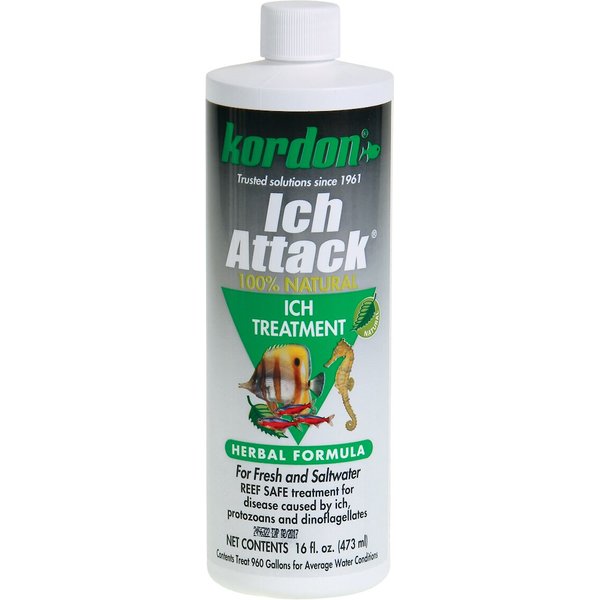
Kordon Ich Attack
Manufacturer-described active class: five herbal naphthoquinone-based ingredients
Kordon still sells Ich Attack for freshwater and saltwater external single-celled infections. The manufacturer describes it as an inhibitor for some infections, not an eliminator of viruses, bacteria, or multicellular organisms.
Watch for: “organic,” “natural,” and “safe with invertebrates” are manufacturer claims and do not prove that it will control a confirmed marine parasite quickly enough.

Current retail product; manufacturer label required
Ruby Reef Kick-Ich Pro
Exact active formulation not publicly verified in this review
Kick-Ich Pro remains available from retailers and is marketed as a display-tank marine-ich treatment. Because a complete current manufacturer label and active-ingredient statement were not located, it should not receive an affiliate link yet.
Watch for: no “reef safe” or display-tank claim should delay hospital treatment during a fast-moving outbreak, especially when the active formulation is not disclosed clearly.
II. Bacterial Disease
Antibiotics and Antibacterial Products
This section covers antibiotics and antibacterial products used for selected bacterial problems. A cloudy eye, red mark, or damaged fin cannot tell you which bacterium is present—or whether bacteria started the problem.
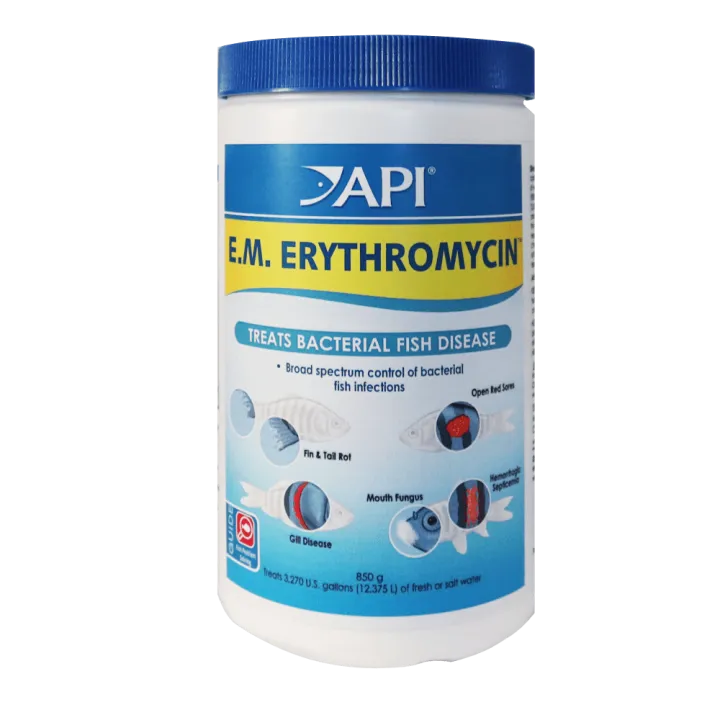
Current manufacturer listing found
API E.M. Erythromycin
Active ingredient: erythromycin
Erythromycin has activity against selected susceptible bacteria. It is not a parasite treatment or a universal answer for every marine bacterial infection.
Watch for: hospital-tank use, continued aeration, activated-carbon removal, ammonia, biological filtration, and the current label’s exact saltwater directions.
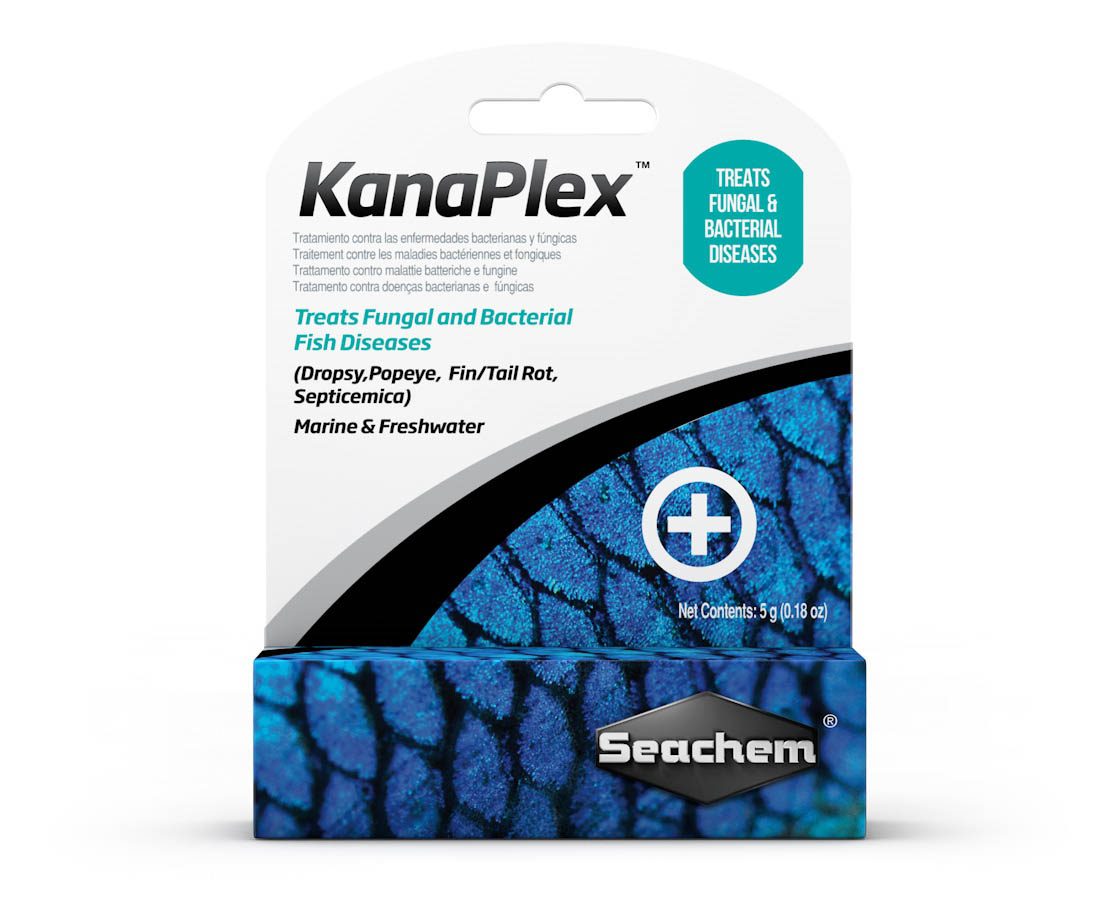
Current manufacturer information found
Seachem KanaPlex
Medication class: kanamycin-based antibiotic blend
KanaPlex is used for selected susceptible bacterial problems. Choosing it because a wound “looks bacterial” is not the same as knowing the organism or its susceptibility.
Watch for: water-versus-food delivery, appetite, combinations with other antibiotics, and the difference between manufacturer indications and a laboratory-supported diagnosis.

Current manufacturer information found
Seachem NeoPlex
Active ingredient: neomycin sulfate (manufacturer lists 43%)
NeoPlex is intended for selected susceptible bacterial infections. Its usefulness depends on the organism, the location of the infection, and how the finished product is used.
Watch for: water-versus-food delivery, removal of UV/ozone/chemical filtration as directed, delicate invertebrates, water quality, and failure to improve.
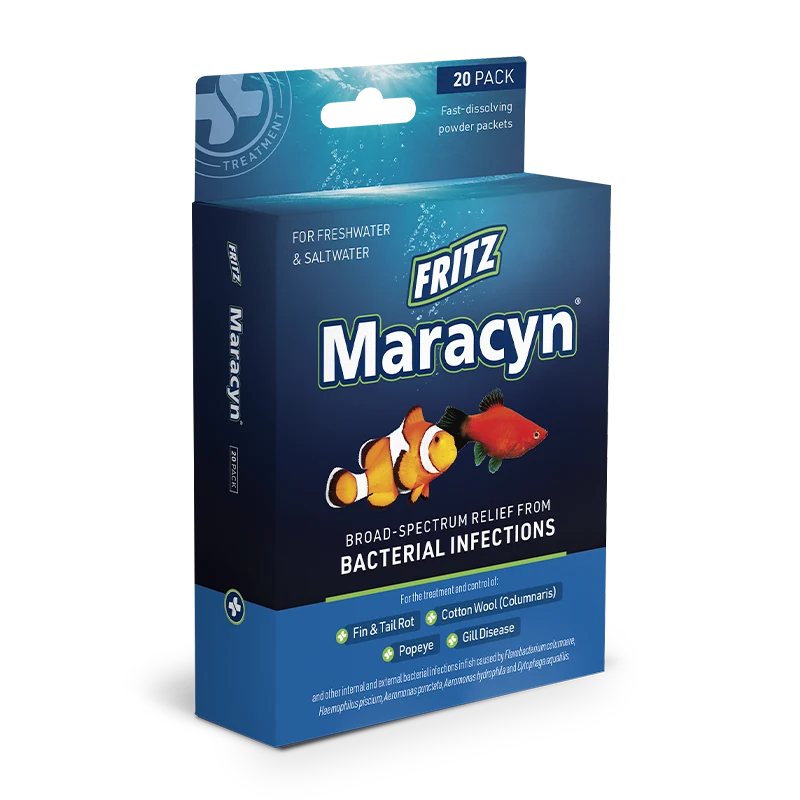
Current manufacturer information found
Fritz Maracyn
Active ingredient: erythromycin
Maracyn is another erythromycin product. It should not be stacked with API E.M. Erythromycin or treated as a separate medication class simply because the brand name is different.
Watch for: exact formulation, saltwater directions, duplicate therapy, aeration, and ammonia.
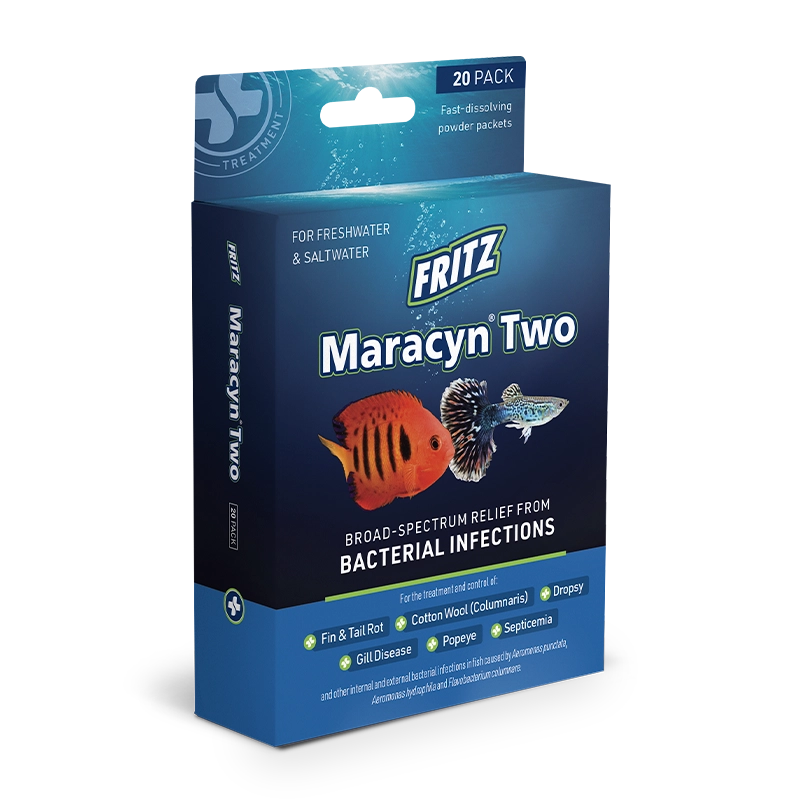
Current manufacturer information found
Fritz Maracyn Two
Active ingredient: minocycline
Maracyn Two is a different antibiotic from Maracyn. It may be considered for selected susceptible bacterial infections, but “different spectrum” does not mean the two should automatically be combined.
Watch for: current label, route, saltwater directions, biofilter and skimmer effects, and lack of response. The manufacturer permits some combinations, but this guide will not recommend combining antibiotics without a supported reason.
Current manufacturer information found
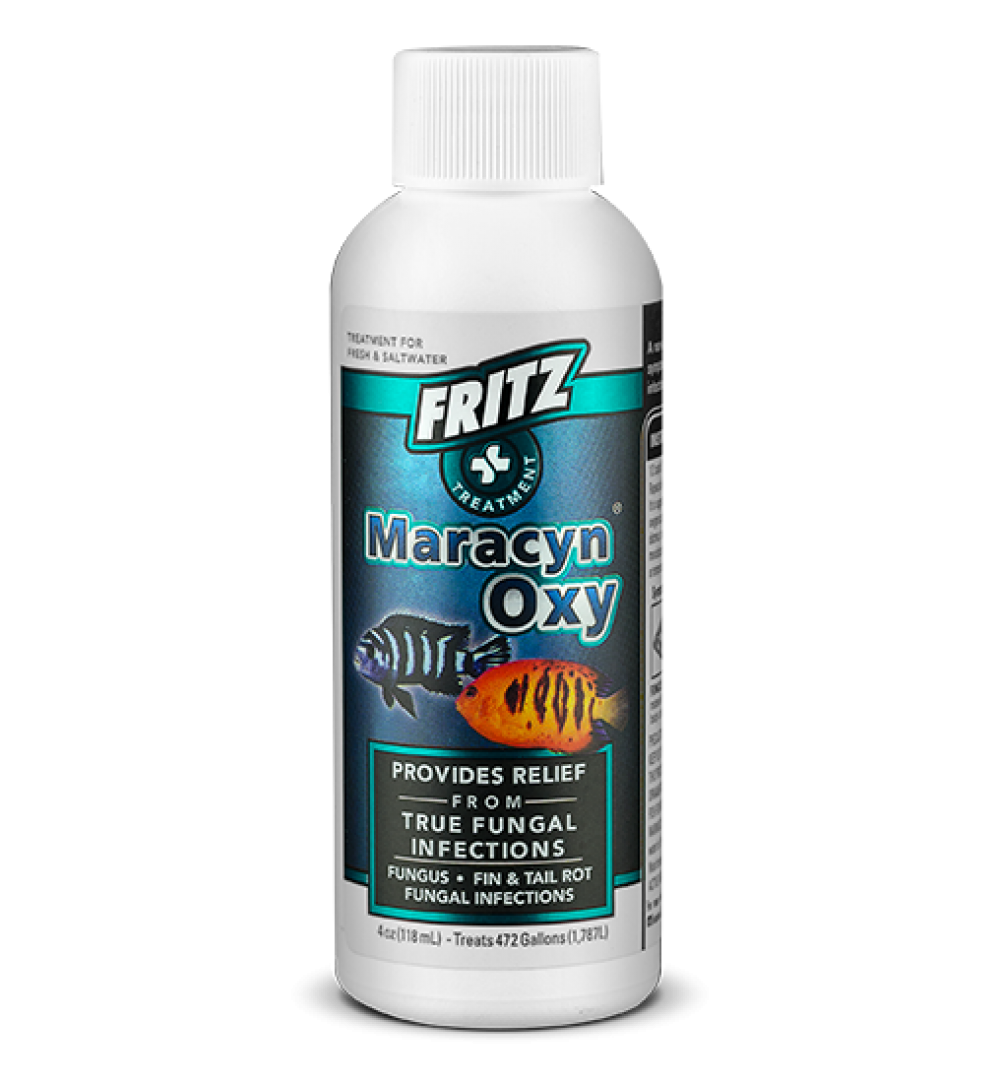
Fritz Maracyn Oxy
Medication class: non-antibiotic stabilized oxygen/chlorine treatment
Maracyn Oxy is a current freshwater and saltwater product positioned for true fungal infections and selected bacterial problems. It is different from both erythromycin-based Maracyn and minocycline-based Maracyn Two.
Watch for: confirming that the lesion is actually fungal, hospital-tank use, aeration, UV, starfish and related animals, human exposure, and stopping to reassess when the condition does not respond.
III. Supportive and Specialized Products
Binders, Botanical Remedies, Dyes, and Other Tools
This section covers binders, botanical remedies, dyes, and other specialized tools that do not fit neatly into the first two categories. They belong in the reference, but they should not be presented as if every one is a proven antibiotic or parasite medication.
Current manufacturer information found
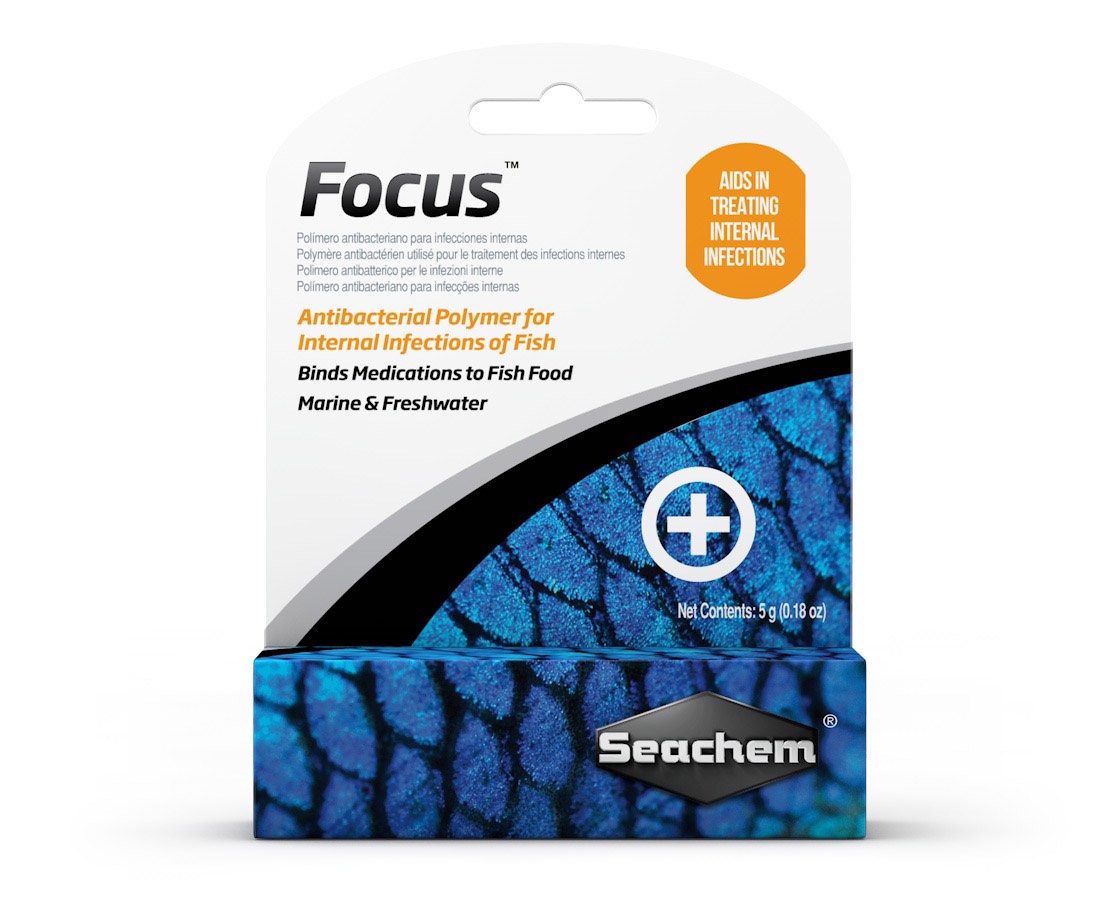
Seachem Focus
Active ingredient: polymer-bound nitrofurantoin (manufacturer lists 0.1%); primary role: medicated-food binder
The old guide treated Focus as though it were only an inert binder. Seachem currently describes it as an antibacterial polymer containing a small amount of bound nitrofurantoin that is primarily mixed with food and other compatible medications.
Watch for: both product labels, unintended animals eating the food, duplicate medication, the fish needing to eat, and guessing at internal disease from nonspecific signs.
Supportive/botanical remedy
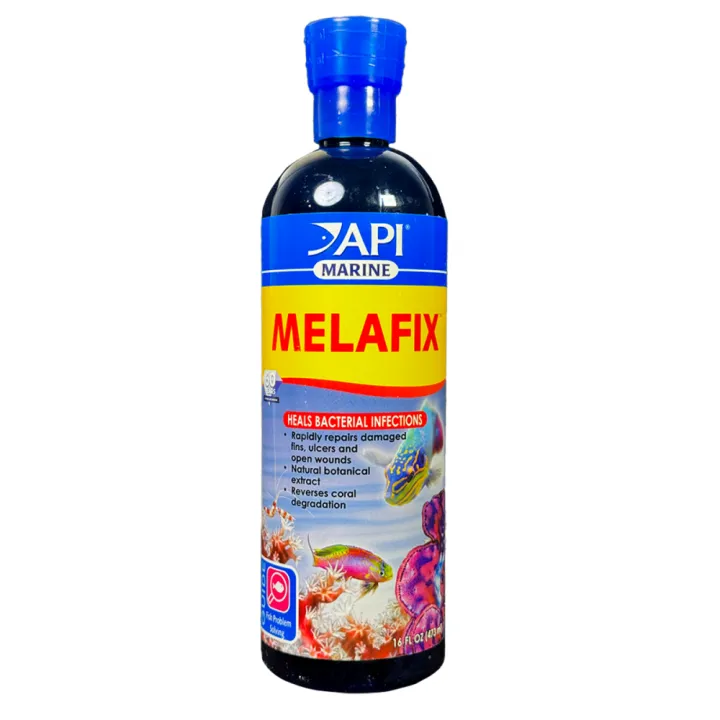
API Marine MelaFix
Product role: botanical antibacterial/wound-support remedy
The saltwater-specific Marine MelaFix—not the similarly named freshwater product—is the relevant listing for this guide. API currently markets it for fish wounds and bacterial problems as well as selected coral uses. Those claims should not replace a supported antibiotic plan for rapidly spreading lesions or systemic illness.
Watch for: the exact marine label, activated carbon, skimmer and aeration effects, foaming, worsening tissue damage, the label’s human-safety warning, and overstating “natural” as proof.
Supportive/botanical remedy
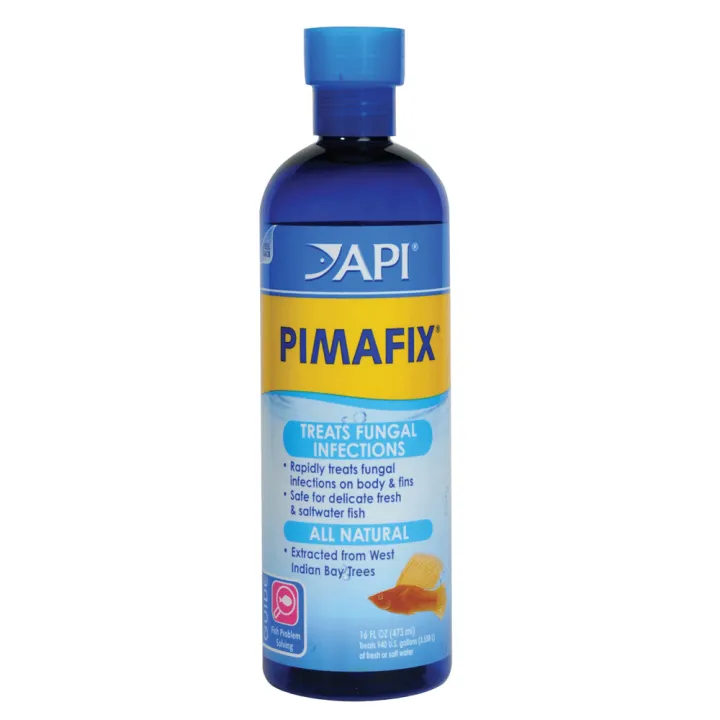
API PimaFix
Product role: botanical remedy marketed for fungal-like and bacterial problems
A cottony or pale lesion is not automatically fungus. PimaFix belongs in the reference as a supportive product, not as a substitute for diagnosing bacterial damage, parasites, or injured tissue.
Watch for: the current freshwater-and-saltwater label, activated carbon, aeration, skimming, the label’s beta-myrcene warning, and symptoms that continue to spread.

Product image courtesy of Ken’s Fish.
Current manufacturer information found
Kordon Methylene Blue
Active ingredient: zinc-free methylene blue chloride solution (manufacturer lists 2.303%)
Kordon currently lists this for superficial fungal infections, fish eggs and fry, selected external protozoans, and limited nitrite/cyanide-poisoning support. It is not a routine display-tank medication and interferes with nitrifying bacteria.
Watch for: the narrow role, staining, rock/coral absorption, biological filtration, treatment vessel, water-conditioner interactions, and human handling.
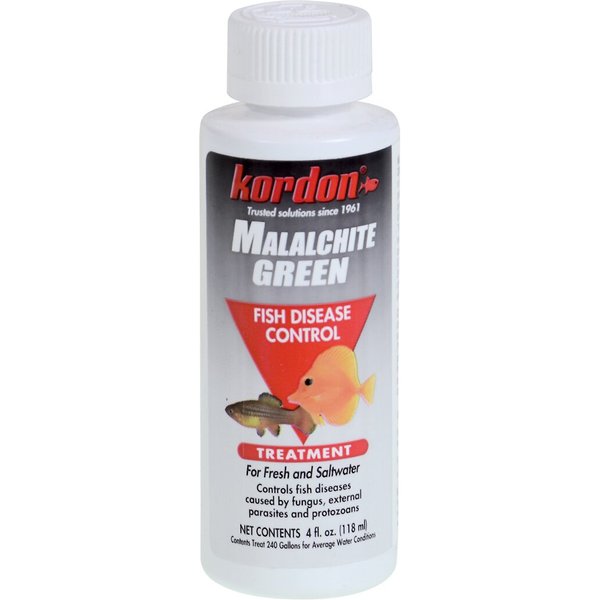
Product image courtesy of Chewy.
Current manufacturer information found
Kordon Malachite Green
Active ingredient: zinc-free malachite green chloride solution (manufacturer lists 0.038%)
Malachite green products have specialized external-treatment uses and significant species, invertebrate, handling, and formulation concerns. A freshwater product should never be substituted because the name is familiar.
Watch for: sensitive or scaleless fish, fry, invertebrates, porous material and staining, water-conditioner interactions, protective handling, and the manufacturer’s ornamental-fish-only limitation.

Product image courtesy of Ken’s Fish.
Current manufacturer information found
Kordon Rid-Ich Plus
Active ingredients: formalin and malachite green chloride
Rid-Ich Plus is a current finished product for selected external single-celled parasites in freshwater and saltwater. It is a better reference than telling a beginner to find generic formalin because the product supplies a defined formulation and label.
Watch for: invertebrates, oxygenation, carbon, porous material, water-conditioner interactions, staining, human exposure, and never substituting unlabeled formaldehyde.
The concentration printed on one bottle cannot safely be copied to another product, even when the names or active ingredients look similar. Formulations change, actual water volume matters, and some treatments must be measured with a compatible test instead of estimated from the amount poured into the tank. The current finished-product label wins every time.
Sources and Product Checks
This protected draft uses FDA, Merck Veterinary Manual, UF/IFAS, and current manufacturer information reviewed in July 2026. Manufacturer claims are identified as claims; finding a current product page does not prove that a product will work for a particular fish or that the FDA has approved it. No affiliate link should be added unless the exact finished product, current retailer destination, and reader-facing context have all been verified.
- FDA: Ornamental Fish Drugs and You
- FDA: Aquaculture and Aquaculture Drugs Basics
- Merck Veterinary Manual: Disorders and Diseases of Fish
- Merck Veterinary Manual: Management of Aquarium Fish
- UF/IFAS: Introduction to Fish Health Management
- Seachem: Current Medication Product Family
- Hikari: Current Product Data Sheets
- Fritz Aquatics: Current Product Information Sheets
- API: Current Saltwater Treatment Products
- Kordon: Current Product Directory