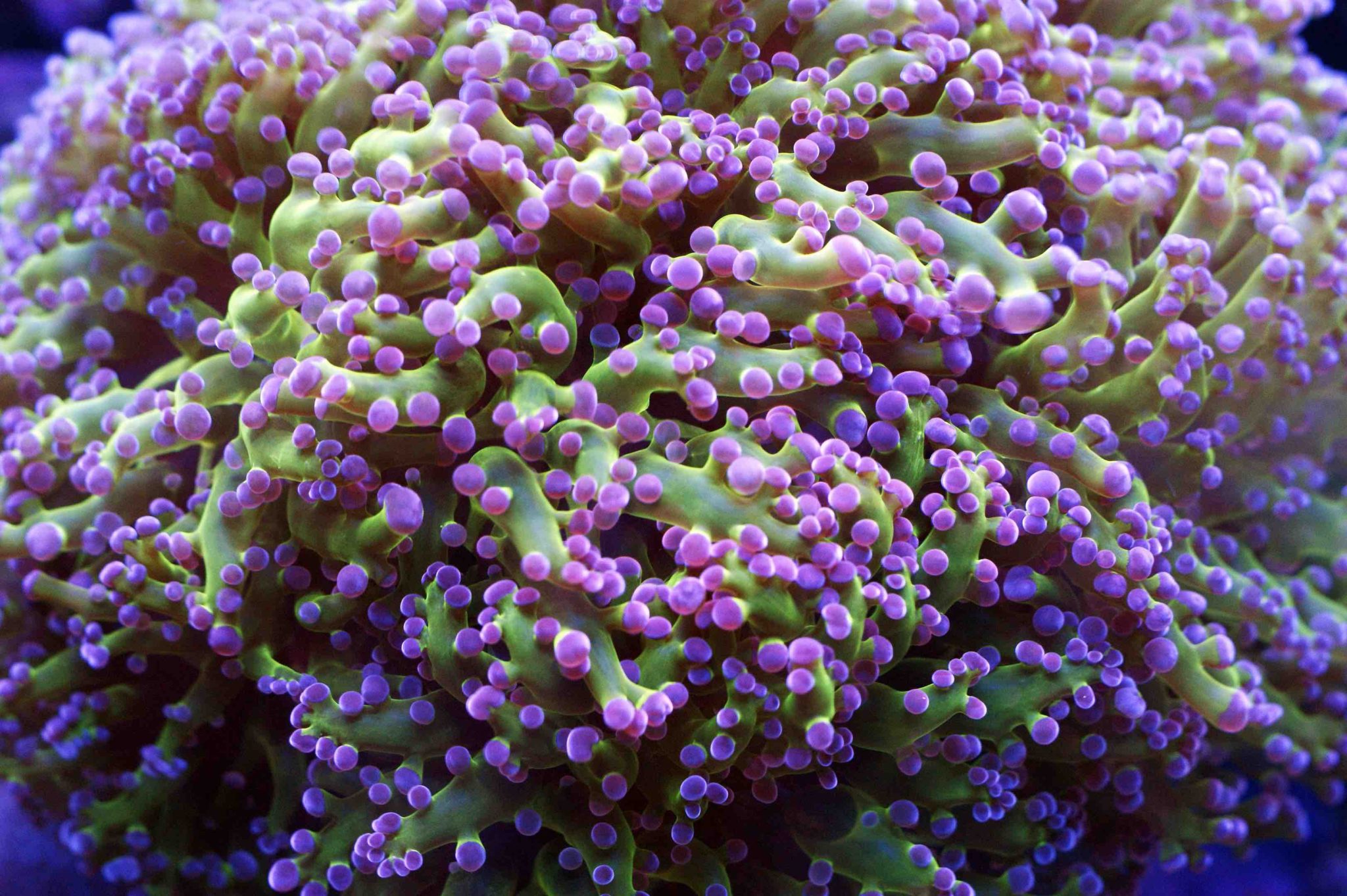
Corals and anemones may live in the same reef tank, but I would not choose them the same way. With a first coral, you are mainly thinking about light, flow, placement, growth, and whether the tank is stable. An anemone adds another layer because it can move—and it may wander straight toward a pump or another animal.
Start with whichever animal you are considering. And if your tank is not ready yet, that is okay. Waiting is usually much easier than trying to rescue an animal after it has already been added.
Coral path: fit, placement, growth, and compatibility.Anemone path: readiness, movement, and safety.
Let’s separate these two choices
What Are You Thinking About Adding?
If you want a first coral, start with the coral section. If you are thinking about a bubble-tip anemone, use the anemone section. And remember: clownfish do not need an anemone.
Coral path
I want to choose my first coral
The question is simple: which coral fits your tank and the exact spot where you plan to put it?
Confirm the aquarium is stable enough for coral
Compare soft coral, LPS, and SPS as broad starting groups
Match the exact animal to light, flow, and available space
Plan for adult growth, stinging reach, feeding, and pests
Finishing the cycle is important, but it does not automatically mean the tank is ready for every coral or anemone.
1Repeatable water conditionsLook for trends you understand and can maintain, not one isolated set of acceptable numbers.2Healthy current livestockResolve unexplained losses, persistent stress, or an unstable routine before adding another animal.3Animal-specific equipment fitConfirm the exact light, flow, open space, rockwork, and equipment-safety needs before purchasing.4A long-term care planKnow how you will test, maintain, feed if required, observe, and respond if the animal declines or moves.
A coral can be called beginner-friendly and still struggle in the wrong spot. Decide where it will go, then choose a coral that fits the light, flow, space, and neighbors in that exact location.
Do not buy from a generic list alone. Confirm the seller’s exact identification and current care guidance, then compare it with your aquarium.
Light at the intended locationUse the exact coral’s needs and the actual position in the aquarium. A reef-capable light does not make every location suitable.
Flow at the intended locationLook at how the coral’s tissue responds. Too little flow, direct blasting flow, and changing flow patterns can create different problems.
Space now and at adult sizeInclude growth direction, spreading behavior, sweeping tentacles, and whether nearby coral can be moved later.
Care and feeding commitmentUnderstand whether normal aquarium nutrition may be enough or whether the animal benefits from deliberate feeding—and how that affects nutrients.
Arrival, pests, and attachmentPlan inspection, acclimation, appropriate dipping when suitable, pest prevention, and secure mounting before opening the bag.
These groups are helpful—but they are only a starting point
Soft Coral, LPS, and SPS
Soft coral, LPS, and SPS are useful broad groups. But two corals in the same group can still have very different needs, so always research the exact coral you plan to buy.
Soft coral
Often forgiving, sometimes fast spreading
Many soft corals tolerate a wider range of conditions, but some can overgrow rockwork, shade neighbors, or be difficult to contain. Plan the island or boundary before adding a fast-spreading coral.
LPS coral
Visible movement with meaningful reach
Many large-polyp stony corals are approachable for beginners, but fleshy tissue, skeleton contact, placement, and nighttime stinging reach matter. Leave more room than the small store frag appears to need.
SPS coral
Usually less forgiving of inconsistency
SPS is not one uniform difficulty level, but many choices demand more consistent light, flow, chemistry, and observation. Do not use the label “beginner SPS” to skip the exact-care review.
Before you bring a coral home
Ask These Questions About Every Coral
LightTarget range, acclimation needs, and the real intensity at the planned location.
FlowDirection, strength, variability, and how the animal should look when comfortable.
PlacementRock or sand, attachment method, orientation, and room for cleaning access.
Adult growthFinal footprint, spreading speed, branching or encrusting pattern, and shading.
AggressionSweeper or stinging reach, chemical competition, and isolation options.
FeedingWhether deliberate feeding is useful, what the animal accepts, and nutrient tradeoffs.
Sourcing and healthAccurate identity, healed tissue, pests, recession, color, inflation, and seller support.
Your backup planWhere the coral can move if the first placement fails or it outgrows the space.
Decision
A stronger beginner fit
A reason to pause
Tank history
Conditions have been steady enough to recognize normal patterns.
Recent unexplained swings, losses, or major equipment changes.
Placement
One location clearly matches the exact light, flow, and space requirements.
The plan depends on moving the coral repeatedly until something works.
Growth and neighbors
Adult spread, stinging reach, and future access have been planned.
The store frag only fits if it remains the same size.
Identification and health
The exact animal is identified, expanded normally, and shows intact tissue.
The seller cannot identify it or the animal shows pests, recession, or damage.
Care capacity
The maintenance and observation needs fit the routine you already sustain.
The purchase requires a new routine you have not yet proven.
Bubble-tip anemone path
Make Sure the Tank Is Ready Before You Shop
A bubble-tip anemone can move across the tank, sting nearby animals, and reach a pump or intake. So you are not just choosing one good rock—you are deciding whether the entire aquarium is safe for it.
Clownfish do not need an anemone. Do not add one solely to complete a picture or meet a calendar milestone.
1. Sustained stabilityUse a trustworthy history of salinity, temperature, nutrients, and animal health—not one acceptable reading.
2. Light, flow, and usable spaceConfirm appropriate conditions plus room for the animal to expand or relocate.
3. Pump and intake protectionGuard hazards before arrival. Do not wait for the anemone to move before addressing them.
4. Movement and adult reachAssume the chosen spot may not remain the chosen spot. Protect coral and preserve an escape plan.
5. Healthy source and arrival planEvaluate attachment, inflation, mouth, tissue, color, damage, seller practices, transport, and acclimation.
6. Willingness to waitIf the aquarium or owner cannot pass every gate, the correct result is “not yet.”
Your tank may be ready
The aquarium has a sustained record you understand; livestock is healthy; light, flow, space, and guarded equipment fit; and you have a sourcing, arrival, movement, feeding, maintenance, and backup plan.
This means you are ready to evaluate a specific bubble-tip anemone—not that every individual is automatically suitable.
I would wait a little longer
Wait if stability is recent or unclear, pumps are exposed, current animals are struggling, the aquascape has no safe movement room, or the long-term routine is not yet sustainable.
Use the waiting period to fix the limiting factor. There is no penalty for choosing a healthy aquarium without an anemone.
Inspect every animal and understand what an appropriate dip can and cannot do. No dip replaces accurate identification, quarantine decisions, or observation.
Current library boundary: the launch path focuses on beginner coral decisions and bubble-tip anemone readiness. Other anemone species and coral species pages will be added only when each page can provide substantial, well-supported guidance—not merely fill a category grid.
Beginner questions
Coral and Anemone FAQ
Should I add coral or an anemone first?
For many beginners, a carefully selected coral is the more manageable first step. The right answer still depends on the exact animal, aquarium history, light, flow, placement, and maintenance routine. A bubble-tip anemone requires an additional movement and equipment-safety plan.
How old should my tank be before I add coral?
Tank age alone cannot prove readiness. Look for a completed cycle, stable and understandable trends, healthy current livestock, a repeatable maintenance routine, and a placement that fits the exact coral’s needs.
Can I add a bubble-tip anemone at Week 6?
Week 6 is a decision point in one specific HelloReef setup track, not a universal deadline. Add no anemone unless the aquarium passes the full stability, light, flow, space, pump-safety, health, sourcing, and long-term-care checks.
Do clownfish need a bubble-tip anemone?
No. Clownfish can live without an anemone. Do not purchase an anemone only because clownfish are present or because you hope to force a hosting relationship.
Are all soft corals easy and all SPS corals difficult?
No. Those groups are useful orientation labels, not guarantees. Care needs, growth, aggression, placement, and difficulty vary within every group. Evaluate the exact animal rather than relying on the label alone.
Should I feed every coral?
No universal feeding rule fits every coral. Some animals benefit from deliberate feeding, while others receive much of their energy from light and available nutrients. Verify the exact animal’s needs and account for how extra food affects water quality.
Before you bring it home
Stable care matters more than one perfect number
Before you buy the coral or anemone, make sure you can test consistently, top off evaporation, keep salinity steady, and make changes slowly. The maintenance plan is part of the animal-care plan.
To provide the best experiences, we use technologies like cookies to store and/or access device information. Consenting to these technologies will allow us to process data such as browsing behavior or unique IDs on this site. Not consenting or withdrawing consent, may adversely affect certain features and functions.
Functional
Always active
The technical storage or access is strictly necessary for the legitimate purpose of enabling the use of a specific service explicitly requested by the subscriber or user, or for the sole purpose of carrying out the transmission of a communication over an electronic communications network.
Preferences
The technical storage or access is necessary for the legitimate purpose of storing preferences that are not requested by the subscriber or user.
Statistics
The technical storage or access that is used exclusively for statistical purposes.The technical storage or access that is used exclusively for anonymous statistical purposes. Without a subpoena, voluntary compliance on the part of your Internet Service Provider, or additional records from a third party, information stored or retrieved for this purpose alone cannot usually be used to identify you.
Marketing
The technical storage or access is required to create user profiles to send advertising, or to track the user on a website or across several websites for similar marketing purposes.