My First Fish Tank Study Guides

Learn the animals you will actually see in the hobby.

Choose a deck, flip through the cards, and get comfortable recognizing common fish, corals, macroalgae, cleanup-crew animals, and other invertebrates. These cards are a starting point—not the last thing you should read before buying an animal.
How it works: The front is the identification side. Press Flip card to see the name, basic care facts, and the biggest thing I want you to know.
Fish70 cards
Ocellaris clownfish (Amphiprion ocellaris) in a saltwater aquarium; final wording depends on the cleared image.
Fish · Strong with a captive-bred fish

Ocellaris clownfish

Amphiprion ocellaris A forgiving first fish, especially when you choose a healthy captive-bred animal and do not assume it needs an anemone.
Adult size11 cm
TemperamentPeaceful to semi-aggressive
DietOmnivore
Reef safetyReef safe
Care levelBeginner-friendly with stated conditions
What I want you to know: A pair may defend its territory as it matures.

Explore more Ocellaris clownfish varieties at Bulk Reef SupplyAffiliate link

Photo: Nick Hobgood · CC BY-SA 3.0 · fit to the card without cutting off the subject

Percula clownfish (Amphiprion percula) in a saltwater aquarium; final wording depends on the cleared image.
Fish · Strong with a captive-bred fish

Percula clownfish

Amphiprion percula Very similar to an ocellaris clownfish from a beginner-care standpoint: hardy, recognizable, and usually easy to feed.
Adult size11 cm
TemperamentPeaceful to semi-aggressive
DietOmnivore
Reef safetyReef safe
Care levelBeginner-friendly with stated conditions
What I want you to know: Do not buy two random large clownfish and assume they will pair peacefully.

Explore more Percula clownfish varieties at Bulk Reef SupplyAffiliate link

Photo: ZooFari · Public domain · fit to the card without cutting off the subject

Clark's clownfish (Amphiprion clarkii) in a saltwater aquarium; final wording depends on the cleared image.BRS
Fish · Conditional

Clark’s clownfish

Amphiprion clarkii Hardy, but noticeably bolder and more territorial than the classic ocellaris path.
Adult size15 cm
TemperamentSemi-aggressive
DietOmnivore
Reef safetyReef safe
Care levelIntermediate / conditional
What I want you to know: Give the adult pair enough room and expect them to defend their area.

Explore more Clarkii clownfish varieties at Bulk Reef SupplyAffiliate link

Photo: Bulk Reef Supply · Used with permission; linked attribution required · BRS image recropped with permission

Maroon clownfish (Amphiprion biaculeatus) in a saltwater aquarium; final wording depends on the cleared image.BRS
Fish · Poor for most first tanks

Maroon clownfish

Amphiprion biaculeatus Beautiful and tough, but this is not the clownfish I would pick for a peaceful beginner community.
Adult size17 cm
TemperamentAggressive
DietOmnivore
Reef safetyReef safe
Care levelAdvanced / poor beginner fit
What I want you to know: Adults can become large, very territorial, and hard on tankmates.

Explore more maroon clownfish varieties at Bulk Reef SupplyAffiliate link

Photo: Bulk Reef Supply · Used with permission; linked attribution required · BRS image recropped with permission

Tomato clownfish (Amphiprion frenatus) in a saltwater aquarium; final wording depends on the cleared image.BRS
Fish · Conditional

Tomato clownfish

Amphiprion frenatus Hardy, bright, and full of personality, but it can take over more of the aquarium than a beginner expects.
Adult size14 cm
TemperamentSemi-aggressive to aggressive
DietOmnivore
Reef safetyReef safe
Care levelIntermediate / conditional
What I want you to know: Plan around adult territorial behavior, not the small fish in the store.

Explore more Tomato clownfish varieties at Bulk Reef SupplyAffiliate link

Photo: Bulk Reef Supply · Used with permission; linked attribution required · BRS image recropped with permission

Blue-green chromis (Chromis viridis) in a saltwater aquarium; final wording depends on the cleared image.
Fish · Conditional

Blue-green chromis

Chromis viridis A common open-water choice, but buying a group does not guarantee a peaceful long-term school.
Adult size10 cm
TemperamentGenerally peaceful
DietOmnivore / planktivore
Reef safetyReef safe
Care levelIntermediate / conditional
What I want you to know: Groups sometimes dwindle because the fish pick on one another or arrive in poor condition.

Photo: Citron · CC BY-SA 3.0 · fit to the card without cutting off the subject

Yellowtail damselfish (Chrysiptera parasema) in a saltwater aquarium; final wording depends on the cleared image.
Fish · Conditional

Yellowtail damselfish

Chrysiptera parasema One of the more manageable damsels, but still a damsel: small does not mean passive.
Adult size7 cm
TemperamentSemi-aggressive
DietOmnivore
Reef safetyReef safe
Care levelIntermediate / conditional
What I want you to know: Add it with a stocking plan so it does not claim the whole tank first.

Photo: Brian Ong · CC BY-SA 3.0 · fit to the card without cutting off the fish

Azure damselfish (Chrysiptera hemicyanea) in a saltwater aquarium; final wording depends on the cleared image.
Fish · Conditional

Azure damselfish

Chrysiptera hemicyanea Colorful, hardy, and usually manageable when the tank has enough rockwork and compatible neighbors.
Adult size7 cm
TemperamentSemi-aggressive
DietOmnivore
Reef safetyReef safe
Care levelIntermediate / conditional
What I want you to know: It can still become the aquarium bully if added too early.

Photo: Haplochromis (Alex Giltjes) · Public domain · fit to the card without cutting off the fish

Domino damselfish (Dascyllus trimaculatus) in a saltwater aquarium; final wording depends on the cleared image.
Fish · Poor for peaceful beginner communities

Domino damselfish

Dascyllus trimaculatus Cute when tiny, far less cute when it grows into the fish controlling the entire aquarium.
Adult size14 cm
TemperamentAggressive
DietOmnivore
Reef safetyReef safe
Care levelAdvanced / poor beginner fit
What I want you to know: Adult size and aggression are the real story here.

Photo: Philippe Bourjon via iNaturalist / Wikimedia Commons · CC BY-SA 4.0 · fit to the card without cutting off the fish

Blue damselfish (Chrysiptera cyanea) in a saltwater aquarium; final wording depends on the cleared image.
Fish · Conditional

Blue damselfish

Chrysiptera cyanea Hardy and bright blue, but not a harmless little community fish.
Adult size8.5 cm
TemperamentSemi-aggressive to aggressive
DietOmnivore
Reef safetyReef safe
Care levelIntermediate / conditional
What I want you to know: Plan the stocking order carefully because it may harass later additions.

Photo: Brian Gratwicke · CC BY 2.0 · fit to the card without cutting off the fish

Firefish (Nemateleotris magnifica) in a saltwater aquarium; final wording depends on the cleared image.
Fish · Strong with a tight lid

Firefish

Nemateleotris magnifica A gentle, beautiful beginner fish that spends time hovering near a bolt-hole.
Adult size9 cm
TemperamentPeaceful
DietPlanktivore / carnivore
Reef safetyReef safe
Care levelBeginner-friendly with stated conditions
What I want you to know: It is an excellent jumper, so a tight lid is not optional.

Photo: Rickard Zerpe · CC BY 2.0 · fit to the card without cutting off the fish

Purple firefish (Nemateleotris decora) in a saltwater aquarium; final wording depends on the cleared image.
Fish · Strong with a tight lid

Purple firefish

Nemateleotris decora A slightly fancier firefish with the same basic deal: peaceful, shy, and very capable of finding a gap in the lid.
Adult size9 cm
TemperamentPeaceful
DietPlanktivore / carnivore
Reef safetyReef safe
Care levelBeginner-friendly with stated conditions
What I want you to know: Do not combine random firefish and expect them to remain friendly.

Photo: TANAKA Juuyoh · CC BY 2.0 · fit to the card without cutting off the fish

Scissortail dartfish (Ptereleotris evides) in a saltwater aquarium; final wording depends on the cleared image.
Fish · Conditional

Scissortail dartfish

Ptereleotris evides A graceful open-water dartfish for a calm aquarium with secure cover.
Adult size14 cm
TemperamentPeaceful
DietPlanktivore / carnivore
Reef safetyReef safe
Care levelIntermediate / conditional
What I want you to know: It jumps, and a stressed group can become less peaceful than it looked in the store.

Photo: Poco a poco · CC BY-SA 4.0 · fit to the card without cutting off the fish

Hi-fin red-banded goby (Stonogobiops nematodes) in a saltwater aquarium; final wording depends on the cleared image.
Fish · Conditional

Hi-fin red-banded goby

Stonogobiops nematodes Tiny, fascinating, and best when you actually want to watch a goby-and-shrimp relationship.
Adult size6 cm
TemperamentPeaceful
DietCarnivore
Reef safetyReef safe
Care levelIntermediate / conditional
What I want you to know: Its tiny size makes feeding, tankmates, and overflow protection important.

Photo: Steve Childs · CC BY 2.0 · fit to the card without cutting off the fish

Yellow watchman goby (Cryptocentrus cinctus) in a saltwater aquarium; final wording depends on the cleared image.BRS
Fish · Strong

Yellow watchman goby

Cryptocentrus cinctus A personable bottom-dweller that can be a great first goby, especially if you enjoy the pistol-shrimp partnership.
Adult size10 cm
TemperamentPeaceful to territorial with similar gobies
DietCarnivore
Reef safetyReef safe
Care levelBeginner-friendly with stated conditions
What I want you to know: Secure the rockwork before a shrimp starts excavating underneath it.

Explore the Yellow watchman goby at Bulk Reef SupplyAffiliate link

Photo: Bulk Reef Supply · Used with permission; linked attribution required · BRS image recropped with permission

Diamond watchman goby (Valenciennea puellaris) in a saltwater aquarium; final wording depends on the cleared image.
Fish · Conditional

Diamond watchman goby

Valenciennea puellaris A tireless sand-sifter that can keep a mature sand bed moving.
Adult size20 cm
TemperamentGenerally peaceful
DietSand-sifting omnivore
Reef safetyReef safe with caveats
Care levelIntermediate / conditional
What I want you to know: It may starve in a new or too-small sand bed and can bury corals with sand.

Photo: No machine-readable author provided. Normann Z assumed (based on copyright claims). · Public domain · fit to the card without cutting off the fish

Yellow clown goby (Gobiodon okinawae) in a saltwater aquarium; final wording depends on the cleared image.
Fish · Strong with coral caveat

Yellow clown goby

Gobiodon okinawae A tiny, bright goby that fits a calm nano reef and spends much of its time perched where you can see it.
Adult size3.5 cm
TemperamentPeaceful
DietCarnivore
Reef safetyReef safe with SPS caveat
Care levelBeginner-friendly with stated conditions
What I want you to know: It may nip or nest in small-polyp stony corals.

Photo: Totti · CC BY-SA 4.0 · fit to the card without cutting off the fish

Neon goby (Elacatinus oceanops) in a saltwater aquarium; final wording depends on the cleared image.BRS
Fish · Strong

Neon goby

Elacatinus oceanops Small, useful, captive-bred options are common, and the cleaning behavior is genuinely fun to watch.
Adult size5 cm
TemperamentPeaceful
DietCarnivore
Reef safetyReef safe
Care levelBeginner-friendly with stated conditions
What I want you to know: Tiny fish still need gentle tankmates and protected intakes.

Explore the Neon goby at Bulk Reef SupplyAffiliate link

Photo: Bulk Reef Supply · Used with permission; linked attribution required · BRS image recropped with permission

Rainford's goby (Koumansetta rainfordi) in a saltwater aquarium; final wording depends on the cleared image.
Fish · Conditional

Rainford’s goby

Koumansetta rainfordi A beautiful little grazer for a mature, peaceful tank—not a fish I would use to solve a brand-new algae problem.
Adult size8.5 cm
TemperamentPeaceful
DietOmnivore / micrograzer
Reef safetyReef safe
Care levelIntermediate / conditional
What I want you to know: Some individuals struggle to accept enough prepared food.

Photo: Tappinen · CC BY-SA 3.0 · fit to the card without cutting off the fish

Hector's goby (Koumansetta hectori) in a saltwater aquarium; final wording depends on the cleared image.
Fish · Conditional

Hector’s goby

Koumansetta hectori A subtle, constantly browsing goby that does best when the aquarium already offers natural grazing.
Adult size8.5 cm
TemperamentPeaceful
DietOmnivore / micrograzer
Reef safetyReef safe
Care levelIntermediate / conditional
What I want you to know: A sterile new tank may not provide enough food.

Photo: Rob · CC BY 2.0 · fit to the card without cutting off the fish

Lawnmower blenny (Salarias fasciatus) in a saltwater aquarium; final wording depends on the cleared image.
Fish · Conditional

Lawnmower blenny

Salarias fasciatus A classic algae-grazing personality fish, but it is not an automatic cure for every kind of algae.
Adult size14 cm
TemperamentPeaceful to territorial with similar blennies
DietHerbivore / omnivore
Reef safetyReef safe with caveats
Care levelIntermediate / conditional
What I want you to know: Make sure it eats enough once the easy grazing is gone.

Photo: Wikimedia Commons contributor · CC BY-SA 4.0 · fit to the card without cutting off the fish

Tailspot blenny (Ecsenius stigmatura) in a saltwater aquarium; final wording depends on the cleared image.
Fish · Strong

Tailspot blenny

Ecsenius stigmatura Small, funny, and usually a much easier fit than the larger blennies for a beginner reef.
Adult size6 cm
TemperamentPeaceful
DietOmnivore / herbivore
Reef safetyReef safe with minor caveat
Care levelBeginner-friendly with stated conditions
What I want you to know: Watch body condition and make sure it gets food, not just whatever algae happens to grow.

Photo: User:Haplochromis · CC BY-SA 3.0 · fit to the card without cutting off the fish

Bicolor blenny (Ecsenius bicolor) in a saltwater aquarium; final wording depends on the cleared image.
Fish · Conditional

Bicolor blenny

Ecsenius bicolor A great personality fish, but some individuals nip coral or clam mantles.
Adult size11 cm
TemperamentPeaceful to territorial
DietOmnivore / herbivore
Reef safetyReef safe with caveats
Care levelIntermediate / conditional
What I want you to know: Reef safety is individual, not guaranteed.

Photo: Brian Gratwicke · CC BY 2.0 · fit to the card without cutting off the fish

Midas blenny (Ecsenius midas) in a saltwater aquarium; final wording depends on the cleared image.
Fish · Strong

Midas blenny

Ecsenius midas A bright, active blenny that swims more like an open-water fish than a typical bottom-perching blenny.
Adult size13 cm
TemperamentGenerally peaceful
DietPlanktivore / omnivore
Reef safetyReef safe
Care levelBeginner-friendly with stated conditions
What I want you to know: It needs a secure lid and may spar with similarly shaped fish.

Photo: BEDO (Thailand) · CC BY-SA 4.0 · fit to the card without cutting off the fish

Starry blenny (Salarias ramosus) in a saltwater aquarium; final wording depends on the cleared image.
Fish · Conditional

Starry blenny

Salarias ramosus A bigger algae-grazing blenny with loads of personality and a need for real feeding after the algae thins out.
Adult size14 cm
TemperamentPeaceful to territorial
DietHerbivore / omnivore
Reef safetyReef safe with caveats
Care levelIntermediate / conditional
What I want you to know: Do not assume the tank will grow enough food forever.

Photo: Felicia Svedlund · CC BY-SA 3.0 · fit to the card without cutting off the fish

Royal gramma (Gramma loreto) in a saltwater aquarium; final wording depends on the cleared image.
Fish · Strong

Royal gramma

Gramma loreto Colorful, hardy, and happiest when it gets a cave it can call its own.
Adult size8 cm
TemperamentPeaceful with territorial caveat
DietCarnivore / planktivore
Reef safetyReef safe
Care levelBeginner-friendly with stated conditions
What I want you to know: Its open-mouth threat display looks dramatic, but the real concern is crowding it with cave competitors.

Photo: Smithsonian Institution from United States · No restrictions · fit to the card without cutting off the fish

Orchid dottyback (Pseudochromis fridmani) in a saltwater aquarium; final wording depends on the cleared image.BRS
Fish · Conditional

Orchid dottyback

Pseudochromis fridmani Captive-bred orchid dottybacks are one of the more manageable ways to enjoy this bold fish family.
Adult size6.3 cm
TemperamentSemi-aggressive
DietCarnivore
Reef safetyReef safe
Care levelIntermediate / conditional
What I want you to know: It can still bully timid fish and hunt very small ornamental crustaceans.

Explore the Orchid dottyback at Bulk Reef SupplyAffiliate link

Photo: Bulk Reef Supply · Used with permission; linked attribution required · BRS image recropped with permission

Bicolor dottyback (Pictichromis paccagnellae) in a saltwater aquarium; final wording depends on the cleared image.
Fish · Poor for peaceful beginner communities

Bicolor dottyback

Pictichromis paccagnellae Bright and hardy, but much more likely to become a problem than its size suggests.
Adult size7 cm
TemperamentAggressive
DietCarnivore
Reef safetyReef safe with invert caveat
Care levelAdvanced / poor beginner fit
What I want you to know: It may terrorize shy fish and eat small shrimp.

Photo: Jenny (JennyHuang) from Taipei · CC BY 2.0 · fit to the card without cutting off the fish

Pajama cardinalfish (Sphaeramia nematoptera) in a saltwater aquarium; final wording depends on the cleared image.BRS
Fish · Strong

Pajama cardinalfish

Sphaeramia nematoptera A calm, odd-looking fish that works well in a peaceful beginner community.
Adult size8.5 cm
TemperamentPeaceful
DietCarnivore / planktivore
Reef safetyReef safe
Care levelBeginner-friendly with stated conditions
What I want you to know: A group still needs enough room and cover; peaceful does not mean no social hierarchy.

Explore the Pajama cardinalfish at Bulk Reef SupplyAffiliate link

Photo: Bulk Reef Supply · Used with permission; linked attribution required · BRS image recropped with permission

Banggai cardinalfish (Pterapogon kauderni) in a saltwater aquarium; final wording depends on the cleared image.
Fish · Strong with captive-bred fish

Banggai cardinalfish

Pterapogon kauderni A bold, easy-to-see cardinalfish; choose captive-bred whenever possible and plan its social arrangement before buying multiples.
Adult size8.6 cm
TemperamentPeaceful with conspecific caveat
DietCarnivore
Reef safetyReef safe
Care levelBeginner-friendly with stated conditions
What I want you to know: Unmatched groups can turn on weaker fish as they mature.

Photo: Rickard Zerpe · CC BY 2.0 · fit to the card without cutting off the fish

Falco hawkfish (Cirrhitichthys falco) in a saltwater aquarium; final wording depends on the cleared image.
Fish · Conditional

Falco hawkfish

Cirrhitichthys falco A tough, entertaining perch-and-pounce fish for a tank without tiny shrimp.
Adult size8 cm
TemperamentSemi-aggressive
DietCarnivore
Reef safetyReef safe with invert caveat
Care levelIntermediate / conditional
What I want you to know: It may eat ornamental crustaceans and harass smaller fish.

Photo: q phia · CC BY 2.0 · fit to the card without cutting off the fish

Longnose hawkfish (Oxycirrhites typus) in a saltwater aquarium; final wording depends on the cleared image.
Fish · Conditional

Longnose hawkfish

Oxycirrhites typus One of the coolest fish to watch perched in branching rock or coral, but shrimp are part of the risk calculation.
Adult size13 cm
TemperamentSemi-aggressive
DietCarnivore
Reef safetyReef safe with invert caveat
Care levelIntermediate / conditional
What I want you to know: It can jump and may eat ornamental crustaceans.

Photo: Diego Delso · CC BY-SA 4.0 · fit to the card without cutting off the fish

Coral beauty angelfish (Centropyge bispinosa) in a saltwater aquarium; final wording depends on the cleared image.
Fish · Conditional

Coral beauty angelfish

Centropyge bispinosa A hardy dwarf angel with beautiful color, but reef safety is always a calculated risk.
Adult size11.5 cm
TemperamentSemi-aggressive
DietOmnivore
Reef safetyReef safe with caution
Care levelIntermediate / conditional
What I want you to know: Any individual may nip coral or clam mantles.

Photo: Jenny (JennyHuang) from Taipei · CC BY 2.0 · fit to the card without cutting off the fish

Flame angelfish (Centropyge loriculus) in a saltwater aquarium; final wording depends on the cleared image.
Fish · Conditional

Flame angelfish

Centropyge loriculus Stunning color and constant movement, with the same dwarf-angel warning: some are model citizens and some nip coral.
Adult size15 cm
TemperamentSemi-aggressive
DietOmnivore
Reef safetyReef safe with caution
Care levelIntermediate / conditional
What I want you to know: Reef safety is never guaranteed.

Photo: Andreas März from Darmstadt, Germany · CC BY 2.0 · fit to the card without cutting off the fish

Yellow wrasse (Halichoeres chrysus) in a saltwater aquarium; final wording depends on the cleared image.
Fish · Strong with sand and a lid

Yellow wrasse

Halichoeres chrysus A bright, active wrasse that is usually one of the easier Halichoeres choices for a reef.
Adult size12 cm
TemperamentPeaceful
DietCarnivore
Reef safetyReef safe with small-invert caveat
Care levelBeginner-friendly with stated conditions
What I want you to know: It needs a sand bed for sleeping and a tight lid for jumping.

Photo: Sushi Girl1995 · CC BY-SA 3.0 · fit to the card without cutting off the fish

Six-line wrasse (Pseudocheilinus hexataenia) in a saltwater aquarium; final wording depends on the cleared image.
Fish · Conditional

Six-line wrasse

Pseudocheilinus hexataenia Hardy, active, and useful in some tanks—but famous for becoming the fish that makes every later addition miserable.
Adult size10 cm
TemperamentSemi-aggressive to aggressive
DietCarnivore
Reef safetyReef safe with invert caveat
Care levelIntermediate / conditional
What I want you to know: Its aggression often increases after it is established.

Photo: Brian Gratwicke · CC BY 2.0 · fit to the card without cutting off the fish

Leopard wrasse (Macropharyngodon meleagris) in a saltwater aquarium; final wording depends on the cleared image.
Fish · Advanced

Leopard wrasse

Macropharyngodon meleagris A gorgeous specialist for a mature reef, not a fish to add because the photo looked irresistible.
Adult size15 cm
TemperamentPeaceful
DietCarnivore / microfauna feeder
Reef safetyReef safe with small-invert caveat
Care levelAdvanced
What I want you to know: Shipping stress, feeding transition, and the need for a mature sand bed make this a poor first-fish choice.

Photo: Mark Rosenstein · CC BY 3.0 · fit to the card without cutting off the fish

Carpenter's flasher wrasse (Paracheilinus carpenteri) in a saltwater aquarium; final wording depends on the cleared image.
Fish · Strong with a tight lid

Carpenter’s flasher wrasse

Paracheilinus carpenteri Colorful, active, and generally reef friendly—provided every opening in the lid is covered.
Adult size8 cm
TemperamentPeaceful
DietCarnivore / planktivore
Reef safetyReef safe
Care levelBeginner-friendly with stated conditions
What I want you to know: It is an exceptional jumper and benefits from regular feeding.

Photo: Gdiggers · CC BY-SA 3.0 · fit to the card without cutting off the fish

Yellow-banded possum wrasse (Wetmorella nigropinnata) in a saltwater aquarium; final wording depends on the cleared image.
Fish · Strong in a calm tank

Yellow-banded possum wrasse

Wetmorella nigropinnata A tiny, secretive wrasse that fits smaller peaceful reefs better than most wrasses.
Adult size8 cm
TemperamentPeaceful and shy
DietCarnivore
Reef safetyReef safe
Care levelBeginner-friendly with stated conditions
What I want you to know: It can disappear or miss meals when housed with aggressive feeders.

Photo: Jeffrey T. Williams · Copyrighted free use · fit to the card without cutting off the fish

Green mandarin (Synchiropus splendidus) in a saltwater aquarium; final wording depends on the cleared image.
Fish · Advanced unless proven prepared-food eater

Green mandarin

Synchiropus splendidus Beautiful and peaceful, but the feeding plan—not the purchase price—is what determines whether this fish succeeds.
Adult size7 cm
TemperamentPeaceful
DietMicrocrustacean specialist
Reef safetyReef safe
Care levelAdvanced
What I want you to know: Many starve slowly in tanks without enough pods or a reliable prepared-food routine.

Explore the Blue Mandarin Dragonet at Bulk Reef SupplyAffiliate link

Photo: Luc Viatour · CC BY-SA 3.0 · fit to the card without cutting off the fish

Yellow tang (Zebrasoma flavescens) in a saltwater aquarium; final wording depends on the cleared image.
Fish · Conditional; needs a large long tank

Yellow tang

Zebrasoma flavescens A fantastic grazer and visible centerpiece once you have the swimming room and long-term budget for it.
Adult size20 cm
TemperamentSemi-aggressive
DietHerbivore
Reef safetyReef safe
Care levelIntermediate / conditional
What I want you to know: Do not use the small juvenile in the store to judge the adult space requirement.

Photo: Luc Viatour · CC BY-SA 3.0 · fit to the card without cutting off the fish

Kole tang (Ctenochaetus strigosus) in a saltwater aquarium; final wording depends on the cleared image.
Fish · Conditional; needs a large long tank

Kole tang

Ctenochaetus strigosus A hardworking bristletooth grazer that is often more manageable than the largest tangs, but it is still an active tang.
Adult size15.4 cm
TemperamentSemi-aggressive
DietHerbivore / detritivore
Reef safetyReef safe
Care levelIntermediate / conditional
What I want you to know: It needs mature surfaces to graze and enough swimming length.

Photo: KimonBerlin · CC BY-SA 2.0 · fit to the card without cutting off the fish

Blue tang (Paracanthurus hepatus) in a saltwater aquarium; final wording depends on the cleared image.
Fish · Poor for a typical beginner tank

Blue tang

Paracanthurus hepatus The famous blue tang is not a nano fish and not a sensible choice just because it is sold small.
Adult size31 cm
TemperamentGenerally peaceful with tang caveats
DietOmnivore
Reef safetyReef safe
Care levelAdvanced / poor beginner fit
What I want you to know: Adult size, swimming behavior, stress, and disease susceptibility require a genuinely large long-term system.

Photo: DerHans04 · CC BY-SA 3.0 · fit to the card without cutting off the fish

Foxface rabbitfish (Siganus vulpinus) in a saltwater aquarium; final wording depends on the cleared image.
Fish · Conditional

Foxface rabbitfish

Siganus vulpinus A useful algae grazer with calm behavior and venomous dorsal spines that deserve respect.
Adult size25 cm
TemperamentGenerally peaceful
DietHerbivore / omnivore
Reef safetyReef safe with caution
Care levelIntermediate / conditional
What I want you to know: It gets large, may nip coral, and must be handled carefully because of the spines.

Photo: Dr. Dwayne Meadows, NOAA/NMFS/OPR · Public domain · fit to the card without cutting off the fish

Copperband butterflyfish (Chelmon rostratus) in a saltwater aquarium; final wording depends on the cleared image.
Fish · Advanced

Copperband butterflyfish

Chelmon rostratus An iconic fish that can be incredibly rewarding—and incredibly difficult to establish on enough food.
Adult size20 cm
TemperamentPeaceful
DietSpecialized carnivore
Reef safetyReef safe with caution
Care levelAdvanced
What I want you to know: Do not buy one that you have not watched eat; long-term feeding is the main challenge.

Photo: Luc Viatour · CC BY-SA 3.0 · fit to the card without cutting off the fish

Yellowhead jawfish (Opistognathus aurifrons) in a saltwater aquarium; final wording depends on the cleared image.
Fish · Conditional

Yellowhead jawfish

Opistognathus aurifrons A burrow-building personality fish for a tank designed around deep sand and a sealed lid.
Adult size10 cm
TemperamentPeaceful
DietCarnivore
Reef safetyReef safe
Care levelIntermediate / conditional
What I want you to know: Without enough substrate, stable rockwork, and a tight lid, this fish is a poor fit.

Photo: http://en.wikipedia.org/wiki/Image:Opistognathus_aurifrons.jpg · CC BY-SA 3.0 · fit to the card without cutting off the fish

Valentini puffer (Canthigaster valentini) in a saltwater aquarium; final wording depends on the cleared image.
Fish · Conditional fish-only or carefully planned system

Valentini puffer

Canthigaster valentini A small puffer with a big personality—and teeth that make snails, shrimp, and coral a real gamble.
Adult size11 cm
TemperamentSemi-aggressive
DietCarnivore / omnivore
Reef safetyNot reliably reef safe
Care levelIntermediate / conditional
What I want you to know: This is not a cleanup-crew-friendly reef choice.

Photo: Karelj · Public domain · fit to the card without cutting off the fish

Lyretail anthias (Pseudanthias squamipinnis) in a saltwater aquarium; final wording depends on the cleared image.
Fish · Advanced for feeding and social plan

Lyretail anthias

Pseudanthias squamipinnis Bright, active, and best in a tank built for frequent feeding and a carefully managed group.
Adult size15 cm
TemperamentSemi-aggressive within group
DietPlanktivore
Reef safetyReef safe
Care levelAdvanced
What I want you to know: A casual mixed group can create relentless pressure on the weakest fish.

Photo: Diego Delso · CC BY-SA 4.0 · fit to the card without cutting off the fish

Snowflake moray (Echidna nebulosa) in a saltwater aquarium; final wording depends on the cleared image.
Fish · Conditional specialty system

Snowflake moray

Echidna nebulosa One of the more manageable morays, but it still needs a locked-down lid and tankmates too large to swallow.
Adult size100 cm
TemperamentPredatory
DietCarnivore
Reef safetyReef safe with fish/invert caveats
Care levelIntermediate / conditional
What I want you to know: It is an escape artist and will eat crustaceans and potentially small fish.

Photo: Brocken Inaglory . Original uploader was Brocken Inaglory · CC BY-SA 3.0 · fit to the card without cutting off the fish

Yellow assessor (Assessor flavissimus) in a saltwater aquarium; final wording depends on the cleared image.BRS
Fish · Strong in a calm tank

Yellow assessor

Assessor flavissimus A peaceful cave fish that may hover upside down under ledges—strange behavior that is completely normal for it.
Adult size6 cm
TemperamentPeaceful
DietCarnivore / planktivore
Reef safetyReef safe
Care levelBeginner-friendly with stated conditions
What I want you to know: Do not pair it with aggressive tankmates that keep it hidden and underfed.

Explore the Yellow assessor at Bulk Reef SupplyAffiliate link

Photo: Bulk Reef Supply · Used with permission; linked attribution required · BRS image recropped with permission

Aiptasia-eating filefish (Acreichthys tomentosus) identification photo from Bulk Reef Supply.BRS
Fish · Conditional reef choice

Aiptasia-eating filefish

Acreichthys tomentosus This is one of those fish people usually buy for a job—but you still have to want the fish after the Aiptasia are gone.
Adult size10 cm
TemperamentPeaceful
DietOmnivore
Reef safetyWith caution
Care levelBeginner care / conditional fit
What I want you to know: It may never eat your Aiptasia, and some individuals nip corals, feather dusters, shrimp, or other invertebrates.

Explore the Aiptasia-eating filefish at Bulk Reef SupplyAffiliate link

Photo: Bulk Reef Supply · Used with permission; linked attribution required · BRS image recropped with permission

Canary blenny (Meiacanthus oualanensis) identification photo from Bulk Reef Supply.BRS
Fish · Conditional beginner choice

Canary blenny

Meiacanthus oualanensis Bright yellow, active, and usually peaceful—the big detail beginners miss is that this is a venomous fang blenny.
Adult size11–13 cm
TemperamentPeaceful
DietOmnivore
Reef safetyReef safe
Care levelModerate
What I want you to know: The venomous bite is defensive, but it still matters. Give it rockwork, feed it more than once a day, and avoid similarly shaped blennies.

Explore the Canary blenny at Bulk Reef SupplyAffiliate link

Photo: Bulk Reef Supply · Used with permission; linked attribution required · BRS image recropped with permission

Chalk bass (Serranus tortugarum) identification photo from Bulk Reef Supply.BRS
Fish · Strong beginner choice

Chalk bass

Serranus tortugarum A small, hardy Atlantic bass that gives you plenty of color without bringing the usual bass-sized attitude.
Adult size8 cm
TemperamentPeaceful
DietMeaty foods
Reef safetyReef safe with small-shrimp caution
Care levelBeginner-friendly
What I want you to know: It can live alone or in a group, but introduce a group together—and remember that a larger Chalk bass may view a very small shrimp as food.

Explore the Chalk bass at Bulk Reef SupplyAffiliate link

Photo: Bulk Reef Supply · Used with permission; linked attribution required · BRS image recropped with permission

Lemon damsel (Pomacentrus moluccensis) identification photo from Bulk Reef Supply.BRS
Fish · Beginner-friendly with a damsel warning

Lemon damsel

Pomacentrus moluccensis This is one of the calmer damsels, but I still would not pretend that the word damsel suddenly stops mattering.
Adult size8 cm
TemperamentSemi-aggressive
DietOmnivore
Reef safetyReef safe
Care levelBeginner-friendly with stated conditions
What I want you to know: Plan the stocking order and give it places to claim. A peaceful juvenile can become much more territorial once it settles in.

Explore the Lemon damsel at Bulk Reef SupplyAffiliate link

Photo: Bulk Reef Supply · Used with permission; linked attribution required · BRS image recropped with permission

Neon dottyback (Pseudochromis aldabraensis) identification photo from Bulk Reef Supply.BRS
Fish · Conditional community choice

Neon dottyback

Pseudochromis aldabraensis The orange-and-blue color is incredible, but this is a fish I would choose only after thinking through every smaller tankmate.
Adult size9 cm
TemperamentSemi-aggressive
DietCarnivore
Reef safetyWith caution
Care levelIntermediate / conditional
What I want you to know: Add it late, give it rocky shelter, and do not trust it with tiny peaceful fish or small ornamental shrimp.

Explore the Neon dottyback at Bulk Reef SupplyAffiliate link

Photo: Bulk Reef Supply · Used with permission; linked attribution required · BRS image recropped with permission

Brazilian Longsnout Seahorse (Hippocampus reidi) identification photo from Bulk Reef Supply.BRS
Fish · Specialized care

Brazilian Longsnout Seahorse

Hippocampus reidi

Also called: Brazilian seahorse · Longsnout seahorse

Beautiful, slow-moving, and absolutely not a fish I would drop into a normal fast-paced community tank.
Adult sizeUp to 8 in
TemperamentPeaceful
DietCarnivore
Reef safetyReef safe with careful tankmates
Care levelModerate / specialized
What I want you to know: Plan a seahorse-first aquarium with gentle flow, plenty of hitching posts, peaceful tankmates, and time for deliberate frozen-food feedings.

Explore the Brazilian Longsnout Seahorse at Bulk Reef SupplyAffiliate link

Photo: Bulk Reef Supply · Used with permission; linked attribution required · BRS image fit to the card without cutting off the fish

Cinnamon clownfish (Amphiprion melanopus) identification photo from Bulk Reef Supply.BRS
Fish · Beginner care / conditional fit

Cinnamon clownfish

Amphiprion melanopus

Also called: Coral Sea clownfish · Red-and-black anemonefish

This is a hardy clownfish, but it grows into a much bolder and more territorial fish than the Ocellaris clownfish most beginners picture.
Adult sizeUp to 3.5 in
TemperamentSemi-aggressive to aggressive
DietOmnivore
Reef safetyReef safe
Care levelEasy care / plan for aggression
What I want you to know: Give it enough room, choose tankmates before you buy it, and expect the territorial behavior to become stronger as the fish matures.

Explore the Cinnamon clownfish at Bulk Reef SupplyAffiliate link

Photo: Bulk Reef Supply · Used with permission; linked attribution required · BRS image fit to the card without cutting off the fish

Elongate Dottyback (Pseudochromis elongatus) identification photo from Bulk Reef Supply.BRS
Fish · Beginner-friendly with conditions

Elongate Dottyback

Pseudochromis elongatus

Also called: Floppy-tail dottyback

A small, hardy dottyback that is usually less aggressive than its better-known cousins—but it is still a dottyback with a territory.
Adult sizeUp to 2 in
TemperamentSemi-aggressive
DietCarnivore
Reef safetyReef safe
Care levelEasy
What I want you to know: Give it plenty of rocky hiding places, and do not assume its small size means it cannot chase a timid fish away from its favorite cave.

Explore the Elongate Dottyback at Bulk Reef SupplyAffiliate link

Photo: Bulk Reef Supply · Used with permission; linked attribution required · BRS image fit to the card without cutting off the fish

Fire clownfish (Amphiprion ephippium) identification photo from Bulk Reef Supply.BRS
Fish · Beginner care / conditional community fit

Fire clownfish

Amphiprion ephippium

Also called: Red saddle clownfish · Saddle anemonefish

Hardy and striking, but this is one of the clownfish I would choose only after deciding exactly which other fish will share the tank.
Adult sizeUp to 4 in
TemperamentSemi-aggressive to aggressive
DietOmnivore
Reef safetyReef safe
Care levelEasy care / plan for aggression
What I want you to know: Adults defend their territory hard—especially a pair. A 30-gallon tank is the starting point, not a promise that every peaceful tankmate will work.

Explore the Fire clownfish at Bulk Reef SupplyAffiliate link

Photo: Bulk Reef Supply · Used with permission; linked attribution required · BRS image fit to the card without cutting off the fish

Harptail Blenny (Meiacanthus mossambicus) identification photo from Bulk Reef Supply.BRS
Fish · Beginner-friendly with two important cautions

Harptail Blenny

Meiacanthus mossambicus

Also called: Harptail fang blenny · Mozambique fang blenny

A peaceful, active blenny that spends more time out in the water column than the classic perch-and-hide blenny.
Adult sizeUp to 3.5 in
TemperamentPeaceful
DietOmnivore
Reef safetyReef safe
Care levelEasy
What I want you to know: It is a venomous fang blenny and it can jump. Use a tight-fitting lid, handle it thoughtfully, and plan on small meals two or three times a day.

Explore the Harptail Blenny at Bulk Reef SupplyAffiliate link

Photo: Bulk Reef Supply · Used with permission; linked attribution required · BRS image fit to the card without cutting off the fish

Kamohara Blenny (Meiacanthus kamoharai) identification photo from Bulk Reef Supply.BRS
Fish · Beginner-friendly with two important cautions

Kamohara Blenny

Meiacanthus kamoharai

Also called: Kamohara fang blenny · Kamoharai blenny

This is a small, active fang blenny with a ton of personality—and captive-bred fish are usually very willing to eat prepared foods.
Adult sizeUp to 4 in
TemperamentSemi-aggressive
DietOmnivore
Reef safetyReef safe
Care levelModerate
What I want you to know: It has venomous fangs and a fast metabolism. Handle it thoughtfully, use a secure lid, and plan on small feedings two or three times a day.

Explore the Kamohara Blenny at Bulk Reef SupplyAffiliate link

Photo: Bulk Reef Supply · Used with permission; linked attribution required · BRS image fit to the card without cutting off the fish

Marine Betta (Calloplesiops altivelis) identification photo from Bulk Reef Supply.BRS
Fish · Conditional / specialized community fit

Marine Betta

Calloplesiops altivelis

Also called: Comet · Marine comet

The Marine Betta is slow, shy, and gorgeous. It is not a bully—but it is still a predator with a surprisingly large mouth.
Adult sizeUp to 8 in
TemperamentShy but predatory
DietCarnivore
Reef safetyCoral safe; small fish and invertebrates are at risk
Care levelEasy care / careful stocking
What I want you to know: Do not pair it with tiny fish, shrimp, or anything else that could become dinner. Give it caves and overhangs, and make sure fast tankmates do not steal every meal.

Explore the Marine Betta at Bulk Reef SupplyAffiliate link

Photo: Bulk Reef Supply · Used with permission; linked attribution required · BRS image fit to the card without cutting off the fish

McCulloch's clownfish (Amphiprion mccullochi) identification photo from Bulk Reef Supply.BRS
Fish · Beginner care / aggressive community fit

McCulloch’s clownfish

Amphiprion mccullochi

Also called: McCullochi clownfish · McCulloch’s anemonefish

This is a hardy captive-bred clownfish, but it belongs to the bolder end of the clownfish spectrum—not the mellow Ocellaris end.
Adult sizeUp to 4.5 in
TemperamentSemi-aggressive to aggressive
DietOmnivore
Reef safetyReef safe
Care levelEasy care / plan for aggression
What I want you to know: Choose the rest of the fish list before you buy it. A mature fish or bonded pair can defend its territory hard, so I would give it more room than the bare minimum whenever possible.

Explore the McCulloch’s clownfish at Bulk Reef SupplyAffiliate link

Photo: Bulk Reef Supply · Used with permission; linked attribution required · BRS image fit to the card without cutting off the fish

Oman clownfish (Amphiprion omanensis) identification photo from Bulk Reef Supply.BRS
Fish · Beginner care / conditional community fit

Oman clownfish

Amphiprion omanensis

Also called: Oman anemonefish · Dhofar clownfish

Hardy, captive-bred, and genuinely unusual—but it is a fairly large clownfish that becomes more territorial as it settles in.
Adult sizeUp to 5 in
TemperamentSemi-aggressive
DietOmnivore
Reef safetyReef safe
Care levelEasy care / plan for territory
What I want you to know: A 20-gallon tank is the published minimum, not my favorite long-term community plan. Give a mature fish or pair extra room and clear territory boundaries.

Explore the Oman clownfish at Bulk Reef SupplyAffiliate link

Photo: Bulk Reef Supply · Used with permission; linked attribution required · BRS image fit to the card without cutting off the fish

Orange skunk clownfish (Amphiprion sandaracinos) identification photo from Bulk Reef Supply.BRS
Fish · Beginner-friendly with peaceful tankmates

Orange skunk clownfish

Amphiprion sandaracinos

Also called: Eastern skunk anemonefish · Orange anemonefish · Golden anemonefish

One of the gentler clownfish choices, with that unmistakable white stripe running from the mouth all the way down the back.
Adult sizeUp to 4 in
TemperamentPeaceful to mildly territorial
DietOmnivore
Reef safetyReef safe
Care levelModerate
What I want you to know: Its peaceful nature cuts both ways. Do not mix it with an aggressive clownfish or a tank full of pushy feeders that will keep it hiding and missing meals.

Explore the Orange skunk clownfish at Bulk Reef SupplyAffiliate link

Photo: Bulk Reef Supply · Used with permission; linked attribution required · BRS image fit to the card without cutting off the fish

Pink skunk clownfish (Amphiprion perideraion) identification photo from Bulk Reef Supply.BRS
Fish · Beginner-friendly with peaceful tankmates

Pink skunk clownfish

Amphiprion perideraion

Also called: Pink anemonefish · Pink skunk anemonefish · Skunk clownfish

This is one of the calmer clownfish choices. It stays fairly small, pairs readily, and gives you that classic clownfish personality without quite as much attitude.
Adult sizeUp to 4 in
TemperamentPeaceful
DietOmnivore
Reef safetyReef safe
Care levelModerate
What I want you to know: Do not let the peaceful label make you careless. A Pink skunk clownfish can be bullied badly by a large, aggressive fish or one of the rougher clownfish species.

Explore the Pink skunk clownfish at Bulk Reef SupplyAffiliate link

Photo: Bulk Reef Supply · Used with permission; linked attribution required · BRS image fit to the card without cutting off the fish

Pink Smith Damsel (Pomacentrus smithi) identification photo from Bulk Reef Supply.BRS
Fish · Beginner-friendly with a damsel warning

Pink Smith Damsel

Pomacentrus smithi

Also called: Smith’s damselfish · Pink Smith damselfish

Small, hardy, colorful, and easy to feed—this checks a lot of beginner boxes, but it is still a damsel that may become more territorial with age.
Adult sizeUp to 2.5 in
TemperamentSemi-aggressive
DietOmnivore
Reef safetyReef safe
Care levelEasy
What I want you to know: Give it several places to hide and add it with a stocking plan. I would not let a tiny juvenile convince me that it will always share every cave peacefully.

Explore the Pink Smith Damsel at Bulk Reef SupplyAffiliate link

Photo: Bulk Reef Supply · Used with permission; linked attribution required · BRS image fit to the card without cutting off the fish

Randall's Assessor (Assessor randalli) identification photo from Bulk Reef Supply.BRS
Fish · Peaceful / needs a calm community

Randall’s Assessor

Assessor randalli

Also called: Randall’s assessor basslet · Randall’s cave basslet

A quiet little cave fish that may swim sideways or even upside down beneath an overhang. It is unusual behavior, but completely normal for an assessor.
Adult sizeUp to 3 in
TemperamentPeaceful
DietCarnivore
Reef safetyReef safe
Care levelModerate
What I want you to know: Build the tank around calm tankmates, shaded rockwork, and frequent meaty foods. A shy fish can be perfectly healthy and still lose every meal to faster, pushier fish.

Explore the Randall’s Assessor at Bulk Reef SupplyAffiliate link

Photo: Bulk Reef Supply · Used with permission; linked attribution required · BRS image fit to the card without cutting off the fish

Red Sea two-band clownfish (Amphiprion bicinctus) identification photo from Bulk Reef Supply.BRS
Fish · Beginner care / conditional community fit

Red Sea two-band clownfish

Amphiprion bicinctus

Also called: Twoband anemonefish · Red Sea clownfish · Two-banded clownfish

Hardy, captive-bred, and easy to feed—but this is a Clarkii-complex clownfish that gets much more territorial as it matures.
Adult sizeUp to 4 in
TemperamentSemi-aggressive
DietOmnivore
Reef safetyReef safe
Care levelEasy care / plan for territory
What I want you to know: Keep one fish or a compatible pair, not a random group. Decide on the rest of the stocking list first and give the adults enough space to defend an area without owning the entire tank.

Explore the Red Sea two-band clownfish at Bulk Reef SupplyAffiliate link

Photo: Bulk Reef Supply · Used with permission; linked attribution required · BRS image fit to the card without cutting off the fish

Regal Damsel (Neopomacentrus cyanomos) identification photo from Bulk Reef Supply.BRS
Fish · Beginner-friendly with a damsel warning

Regal Damsel

Neopomacentrus cyanomos

Also called: Regal demoiselle · Yellowback damsel · Regal damselfish

A tough, active damsel with a dark shimmering body and bright yellow fins. It handles normal aquarium life well, but it brings a real territorial streak.
Adult sizeUp to 3.75 in
TemperamentSemi-aggressive
DietOmnivore
Reef safetyReef safe
Care levelEasy
What I want you to know: A group needs a genuinely roomy aquarium with plenty of live rock. In a smaller beginner tank, plan around one fish and do not pair it with delicate tankmates that cannot stand their ground.

Explore the Regal Damsel at Bulk Reef SupplyAffiliate link

Photo: Bulk Reef Supply · Used with permission; linked attribution required · BRS image fit to the card without cutting off the fish

Corals44 cards
Pulsing Xenia (Xenia umbellata) coral identification photo.BRS
Corals · Conditional because behavior is unpredictable

Pulsing Xenia

Xenia umbellata One of the most recognizable motion corals, and one of the least predictable from tank to tank.
Adult sizeVaries — see the complete guide
TemperamentUsually overgrowth and chemical competition rather than long sweepers
DietPhotosynthetic with species-specific capacity to capture dissolved or particulate food
Reef safetyReef organism; safe only with appropriate spacing because it can sting, shade, smother, or overgrow neighbors
Care levelBeginner-friendly with stated conditions
What I want you to know: It may explode across the tank or melt away; do not treat either outcome as a simple light-setting problem.

Explore Pulsing Xenia corals at Bulk Reef SupplyAffiliate link

Photo: Bulk Reef Supply · Used with permission; linked attribution required · BRS image fit to the card without cutting off the coral

Kenya tree coral (Capnella imbricata) coral identification photo.BRS
Corals · Strong with spread control

Kenya tree coral

Capnella imbricata A hardy soft coral that can drop branches and create new colonies without asking permission.
Adult sizeVaries — see the complete guide
TemperamentUsually overgrowth and chemical competition rather than long sweepers
DietPhotosynthetic with species-specific capacity to capture dissolved or particulate food
Reef safetyReef organism; safe only with appropriate spacing because it can sting, shade, smother, or overgrow neighbors
Care levelBeginner-friendly with stated conditions
What I want you to know: The easy care is real; so is the long-term cleanup if it spreads everywhere.

Explore Kenya tree corals at Bulk Reef SupplyAffiliate link

Photo: Bulk Reef Supply · Used with permission; linked attribution required · BRS image fit to the card without cutting off the coral

Toadstool leather coral (Sarcophyton glaucum) coral identification photo.BRS
Corals · Strong

Toadstool leather coral

Sarcophyton glaucum A classic first leather coral that becomes a real centerpiece once it settles in and opens.
Adult sizeVaries — see the complete guide
TemperamentUsually overgrowth and chemical competition rather than long sweepers
DietPhotosynthetic with species-specific capacity to capture dissolved or particulate food
Reef safetyReef organism; safe only with appropriate spacing because it can sting, shade, smother, or overgrow neighbors
Care levelBeginner-friendly with stated conditions
What I want you to know: A temporary waxy shed is normal, but persistent closure still deserves a water-quality and flow check.

Explore toadstool leather corals at Bulk Reef SupplyAffiliate link

Photo: Bulk Reef Supply · Used with permission; linked attribution required · BRS image fit to the card without cutting off the coral

Finger leather coral (Sclerophytum flexibile) coral identification photo.BRS
Corals · Strong

Finger leather coral

Sclerophytum flexibile A branching leather that adds movement and height without demanding SPS-level precision.
Adult sizeVaries — see the complete guide
TemperamentUsually overgrowth and chemical competition rather than long sweepers
DietPhotosynthetic with species-specific capacity to capture dissolved or particulate food
Reef safetyReef organism; safe only with appropriate spacing because it can sting, shade, smother, or overgrow neighbors
Care levelBeginner-friendly with stated conditions
What I want you to know: Leave room for growth and remember that soft-coral chemical competition is still competition.

Explore finger leather corals at Bulk Reef SupplyAffiliate link

Photo: Bulk Reef Supply · Used with permission; linked attribution required · BRS image fit to the card without cutting off the coral

Cabbage leather coral (Sinularia brassica) coral identification photo.
Corals · Strong

Cabbage leather coral

Sinularia brassica Tough, textured, and usually straightforward when flow keeps its folded surface clean.
Adult sizeVaries — see the complete guide
TemperamentUsually overgrowth and chemical competition rather than long sweepers
DietPhotosynthetic with species-specific capacity to capture dissolved or particulate food
Reef safetyReef organism; safe only with appropriate spacing because it can sting, shade, smother, or overgrow neighbors
Care levelBeginner-friendly with stated conditions
What I want you to know: Do not wedge it into a dead spot where debris collects between the folds.

Photo: Leen van Ofwegen via WoRMS · CC BY-NC-SA 4.0 · fit to the card without cutting off the coral

Devil's hand leather coral (Lobophytum pauciflorum) coral identification photo.
Corals · Strong

Devil’s hand leather coral

Lobophytum pauciflorum A durable leather with a bold shape and very manageable basic care.
Adult sizeVaries — see the complete guide
TemperamentUsually overgrowth and chemical competition rather than long sweepers
DietPhotosynthetic with species-specific capacity to capture dissolved or particulate food
Reef safetyReef organism; safe only with appropriate spacing because it can sting, shade, smother, or overgrow neighbors
Care levelBeginner-friendly with stated conditions
What I want you to know: Give it space, good indirect flow, and a plan for soft-coral chemical competition.

Explore Devil’s hand leather coral at Bulk Reef SupplyAffiliate link

Photo: David Witherall · CC BY 3.0 · fit to the card without cutting off the coral

Blue clove polyps (Clavularia viridis) coral identification photo.
Corals · Conditional because spread can be extreme

Blue clove polyps

Clavularia viridis Tiny blue polyps can look harmless right up until they are growing through every gap in the rockwork.
Adult sizeVaries — see the complete guide
TemperamentUsually overgrowth and chemical competition rather than long sweepers
DietPhotosynthetic with species-specific capacity to capture dissolved or particulate food
Reef safetyReef organism; safe only with appropriate spacing because it can sting, shade, smother, or overgrow neighbors
Care levelIntermediate / conditional
What I want you to know: Treat this as an invasive-spread decision, not just a color decision.

Explore clove polyps at Bulk Reef SupplyAffiliate link

Photo: PilarMeca · CC BY-SA 3.0 · fit to the card without cutting off the coral

Waving hand coral (Anthelia glauca) coral identification photo.
Corals · Strong with spread control

Waving hand coral

Anthelia glauca Soft, waving polyps create constant motion and can be easy to keep in a stable reef.
Adult sizeVaries — see the complete guide
TemperamentUsually overgrowth and chemical competition rather than long sweepers
DietPhotosynthetic with species-specific capacity to capture dissolved or particulate food
Reef safetyReef organism; safe only with appropriate spacing because it can sting, shade, smother, or overgrow neighbors
Care levelBeginner-friendly with stated conditions
What I want you to know: Like Xenia, it may spread far beyond the original frag, so isolate it early.

Explore waving hand coral at Bulk Reef SupplyAffiliate link

Photo: Fernando Herranz Martín · GPL · fit to the card without cutting off the coral

Organ pipe coral (Tubipora musica) coral identification photo.
Corals · Conditional

Organ pipe coral

Tubipora musica It looks like a soft coral when open, but the red pipe-like skeleton underneath makes it easy to recognize.
Adult sizeVaries — see the complete guide
TemperamentUsually overgrowth and chemical competition rather than long sweepers
DietPhotosynthetic with species-specific capacity to capture dissolved or particulate food
Reef safetyReef organism; safe only with appropriate spacing because it can sting, shade, smother, or overgrow neighbors
Care levelIntermediate / conditional
What I want you to know: The skeleton is brittle and the colony dislikes being packed with debris.

Photo: Frédéric Ducarme · CC BY-SA 4.0 · fit to the card without cutting off the coral

Corky sea finger (Briareum asbestinum) coral identification photo.
Corals · Conditional

Corky sea finger

Briareum asbestinum A Caribbean gorgonian-style soft coral with tan polyps and an upright, branching shape.
Adult sizeVaries — see the complete guide
TemperamentUsually overgrowth and chemical competition rather than long sweepers
DietPhotosynthetic with species-specific capacity to capture dissolved or particulate food
Reef safetyReef organism; safe only with appropriate spacing because it can sting, shade, smother, or overgrow neighbors
Care levelIntermediate / conditional
What I want you to know: Confirm the exact source and species; the hobby name is also used loosely for other encrusting octocorals.

Photo: Fernándo Herranz Martín · GPL · fit to the card without cutting off the coral

Zoanthids (Zoanthus) coral identification photo.BRS
Corals · Strong with handling caution

Zoanthids

Zoanthus Colorful, adaptable, and easy to collect—which is exactly why a few polyps can turn into fifty named morphs in a hurry.
Adult sizeVaries — see the complete guide
TemperamentOvergrows adjacent surfaces; some colonies can irritate or shade neighbors
DietPhotosynthetic with species-specific capacity to capture dissolved or particulate food
Reef safetyReef organism; safe only with appropriate spacing because it can sting, shade, smother, or overgrow neighbors
Care levelBeginner-friendly with handling caution
What I want you to know: Use gloves and eye protection, control spread, and do not assume a trade name proves species identity or toxin level.

Explore zoanthid corals at Bulk Reef SupplyAffiliate link

Photo: Bulk Reef Supply · Used with permission; linked attribution required · BRS image fit to the card without cutting off the coral

Giant Palythoa (Palythoa grandis) coral identification photo.
Corals · Conditional because handling matters

Giant Palythoa

Palythoa grandis Large individual polyps make this an impressive colony, but bigger polyps do not make handling casual.
Adult sizeVaries — see the complete guide
TemperamentOvergrows adjacent surfaces; some colonies can irritate or shade neighbors
DietPhotosynthetic with species-specific capacity to capture dissolved or particulate food
Reef safetyReef organism; safe only with appropriate spacing because it can sting, shade, smother, or overgrow neighbors
Care levelIntermediate / conditional
What I want you to know: Treat every Palythoa with serious glove and eye-protection habits and keep the card at the verified taxonomic level.

Photo: Nhobgood Nick Hobgood · CC BY-SA 3.0 · fit to the card without cutting off the coral

Discosoma mushroom coral (Discosoma) coral identification photo.
Corals · Strong

Discosoma mushroom coral

Discosoma One of the easiest ways to add color to a lower-light area of a beginner reef.
Adult sizeVaries — see the complete guide
TemperamentCan sting, smother, or overgrow nearby sessile animals
DietPhotosynthetic with species-specific capacity to capture dissolved or particulate food
Reef safetyReef organism; safe only with appropriate spacing because it can sting, shade, smother, or overgrow neighbors
Care levelBeginner-friendly with stated conditions
What I want you to know: It can detach, wander, divide, and crowd slower neighbors, so easy does not mean stationary.

Explore a Discosoma mushroom coral at Bulk Reef SupplyAffiliate link

Photo: Emőke Dénes · CC BY-SA 4.0 · fit to the card without cutting off the coral

Florida Ricordea (Ricordea florida) coral identification photo.
Corals · Strong

Florida Ricordea

Ricordea florida A colorful mushroom with round bubble-like vesicles and a generally manageable growth habit.
Adult sizeVaries — see the complete guide
TemperamentCan sting, smother, or overgrow nearby sessile animals
DietPhotosynthetic with species-specific capacity to capture dissolved or particulate food
Reef safetyReef organism; safe only with appropriate spacing because it can sting, shade, smother, or overgrow neighbors
Care levelBeginner-friendly with stated conditions
What I want you to know: Start with gentle light and flow; a freshly moved Ricordea can shrink when blasted.

Explore Florida Ricordea at Bulk Reef SupplyAffiliate link

Photo: Nhobgood ( talk ) Nick Hobgood · CC BY-SA 3.0 · fit to the card without cutting off the coral

Yuma Ricordea (Ricordea yuma) coral identification photo.BRS
Corals · Conditional

Yuma Ricordea

Ricordea yuma Beautiful and similar to Florida Ricordea at first glance, but often less forgiving during shipping and acclimation.
Adult sizeVaries — see the complete guide
TemperamentCan sting, smother, or overgrow nearby sessile animals
DietPhotosynthetic with species-specific capacity to capture dissolved or particulate food
Reef safetyReef organism; safe only with appropriate spacing because it can sting, shade, smother, or overgrow neighbors
Care levelIntermediate / conditional
What I want you to know: Do not treat every Ricordea as the same care experience.

Explore Yuma Ricordea at Bulk Reef SupplyAffiliate link

Photo: Bulk Reef Supply · Used with permission; linked attribution required · BRS image fit to the card without cutting off the coral

Rhodactis mushroom coral (Rhodactis) coral identification photo.BRS
Corals · Strong with spacing

Rhodactis mushroom coral

Rhodactis A textured mushroom group that ranges from easy fuzzy colonies to expensive bounce morphs.
Adult sizeVaries — see the complete guide
TemperamentCan sting, smother, or overgrow nearby sessile animals
DietPhotosynthetic with species-specific capacity to capture dissolved or particulate food
Reef safetyReef organism; safe only with appropriate spacing because it can sting, shade, smother, or overgrow neighbors
Care levelBeginner-friendly with stated conditions
What I want you to know: Trade morphs do not replace a group-level ID, and large individuals can crowd or sting nearby corals.

Explore Rhodactis mushroom corals at Bulk Reef SupplyAffiliate link

Photo: Bulk Reef Supply · Used with permission; linked attribution required · BRS image fit to the card without cutting off the coral

Elephant ear mushroom (Amplexidiscus fenestrafer) coral identification photo.BRS
Corals · Conditional specialty choice

Elephant ear mushroom

Amplexidiscus fenestrafer A huge corallimorph that can become the dominant animal in a small aquascape.
Adult sizeVaries — see the complete guide
TemperamentCan engulf small fish and sting or smother neighbors
DietPhotosynthetic with species-specific capacity to capture dissolved or particulate food
Reef safetyReef organism; safe only with appropriate spacing because it can sting, shade, smother, or overgrow neighbors
Care levelIntermediate / conditional
What I want you to know: It can capture small fish and should not be treated like a harmless little mushroom frag.

Explore an elephant ear mushroom at Bulk Reef SupplyAffiliate link

Photo: Bulk Reef Supply · Used with permission; linked attribution required · BRS image fit to the card without cutting off the coral

Wall hammer coral (Fimbriaphyllia ancora) coral identification photo.
Corals · Conditional

Wall hammer coral

Fimbriaphyllia ancora Classic anchor-shaped tentacles and big movement make this a favorite LPS centerpiece.
Adult sizeVaries — see the complete guide
TemperamentStrong sweeper-tentacle reach, especially after dark
DietPhotosynthetic with species-specific capacity to capture dissolved or particulate food
Reef safetyReef organism; safe only with appropriate spacing because it can sting, shade, smother, or overgrow neighbors
Care levelIntermediate / conditional
What I want you to know: The continuous wall skeleton is less forgiving of tissue damage than a branching hammer.

Photo: Nhobgood Nick Hobgood · CC BY-SA 3.0 · fit to the card without cutting off the coral

Branching hammer coral (Fimbriaphyllia paraancora) coral identification photo.BRS
Corals · Conditional but approachable

Branching hammer coral

Fimbriaphyllia paraancora The branching version is easier to divide and often easier to manage when one head is damaged.
Adult sizeVaries — see the complete guide
TemperamentStrong sweeper-tentacle reach, especially after dark
DietPhotosynthetic with species-specific capacity to capture dissolved or particulate food
Reef safetyReef organism; safe only with appropriate spacing because it can sting, shade, smother, or overgrow neighbors
Care levelIntermediate / conditional
What I want you to know: Give it room for nighttime reach and keep strong flow from whipping tissue into the skeleton.

Explore branching hammer corals at Bulk Reef SupplyAffiliate link

Photo: Bulk Reef Supply · Used with permission; linked attribution required · BRS image fit to the card without cutting off the coral

Frogspawn coral (Fimbriaphyllia divisa) coral identification photo.BRS
Corals · Conditional but approachable

Frogspawn coral

Fimbriaphyllia divisa Big bubbly tentacles create the same kind of movement people love in hammer corals.
Adult sizeVaries — see the complete guide
TemperamentStrong sweeper-tentacle reach, especially after dark
DietPhotosynthetic with species-specific capacity to capture dissolved or particulate food
Reef safetyReef organism; safe only with appropriate spacing because it can sting, shade, smother, or overgrow neighbors
Care levelIntermediate / conditional
What I want you to know: It can reach and sting farther than the daytime colony suggests.

Explore frogspawn corals at Bulk Reef SupplyAffiliate link

Photo: Bulk Reef Supply · Used with permission; linked attribution required · BRS image fit to the card without cutting off the coral

Torch coral (Euphyllia glabrescens) coral identification photo.BRS
Corals · Conditional; aggressive reach

Torch coral

Euphyllia glabrescens Long moving tentacles make a torch coral impossible to ignore.
Adult sizeVaries — see the complete guide
TemperamentVery strong sting and long mobile tentacles; generous spacing required
DietPhotosynthetic with species-specific capacity to capture dissolved or particulate food
Reef safetyReef organism; safe only with appropriate spacing because it can sting, shade, smother, or overgrow neighbors
Care levelIntermediate / conditional
What I want you to know: Those tentacles are also the warning: leave real space, expect strong stings, and do not pack it into an LPS garden blindly.

Explore Torch coral varieties at Bulk Reef SupplyAffiliate link

Photo: Bulk Reef Supply · Used with permission; linked attribution required · BRS image fit to the card without cutting off the coral

Duncan coral (Duncanopsammia axifuga) coral identification photo.BRS
Corals · Strong first LPS candidate

Duncan coral

Duncanopsammia axifuga One of the best first LPS corals because feeding response and new heads are easy to observe.
Adult sizeVaries — see the complete guide
TemperamentShort-range contact competition; still leave expansion room
DietPhotosynthetic with species-specific capacity to capture dissolved or particulate food
Reef safetyReef organism; safe only with appropriate spacing because it can sting, shade, smother, or overgrow neighbors
Care levelBeginner-friendly with stated conditions
What I want you to know: Do not overfeed it or blast the fleshy polyps against the skeleton.

Explore Duncan coral at Bulk Reef SupplyAffiliate link

Photo: Bulk Reef Supply · Used with permission; linked attribution required · BRS image fit to the card without cutting off the coral

Candy cane coral (Caulastraea furcata) coral identification photo.BRS
Corals · Strong first LPS candidate

Candy cane coral

Caulastraea furcata A branching LPS with separate fleshy heads that makes growth and damage easy to see.
Adult sizeVaries — see the complete guide
TemperamentVariable; many LPS extend sweepers or mesenterial filaments beyond the daytime colony edge
DietPhotosynthetic with species-specific capacity to capture dissolved or particulate food
Reef safetyReef organism; safe only with appropriate spacing because it can sting, shade, smother, or overgrow neighbors
Care levelBeginner-friendly with stated conditions
What I want you to know: The correct genus spelling is Caulastraea, and the colony still needs space even though it looks tidy.

Explore Candy cane coral at Bulk Reef SupplyAffiliate link

Photo: Bulk Reef Supply · Used with permission; linked attribution required · BRS image fit to the card without cutting off the coral

Blastomussa wellsi (Blastomussa wellsi) coral identification photo.
Corals · Conditional but approachable

Blastomussa wellsi

Blastomussa wellsi Large fleshy polyps and lower-light tolerance make this a beautiful, slower-growing LPS option.
Adult sizeVaries — see the complete guide
TemperamentVariable; many LPS extend sweepers or mesenterial filaments beyond the daytime colony edge
DietPhotosynthetic with species-specific capacity to capture dissolved or particulate food
Reef safetyReef organism; safe only with appropriate spacing because it can sting, shade, smother, or overgrow neighbors
Care levelIntermediate / conditional
What I want you to know: Protect the tissue from sharp skeleton and aggressive neighbors.

Photo: Benzoni, F. · CC BY 3.0 · fit to the card without cutting off the coral

Blastomussa merleti (Blastomussa merleti) coral identification photo.BRS
Corals · Conditional but approachable

Blastomussa merleti

Blastomussa merleti Smaller individual polyps create a dense colony that can fit into shaded parts of the aquascape.
Adult sizeVaries — see the complete guide
TemperamentVariable; many LPS extend sweepers or mesenterial filaments beyond the daytime colony edge
DietPhotosynthetic with species-specific capacity to capture dissolved or particulate food
Reef safetyReef organism; safe only with appropriate spacing because it can sting, shade, smother, or overgrow neighbors
Care levelIntermediate / conditional
What I want you to know: Do not assume it needs the same placement as a high-light SPS just because the color is intense.

Explore Blastomussa merleti corals at Bulk Reef SupplyAffiliate link

Photo: Bulk Reef Supply · Used with permission; linked attribution required · BRS image fit to the card without cutting off the coral

Acan lord coral (Micromussa lordhowensis) coral identification photo.BRS
Corals · Strong first LPS candidate

Acan lord coral

Micromussa lordhowensis A very popular fleshy LPS that comes in endless color patterns and usually shows a strong feeding response.
Adult sizeVaries — see the complete guide
TemperamentVariable; many LPS extend sweepers or mesenterial filaments beyond the daytime colony edge
DietPhotosynthetic with species-specific capacity to capture dissolved or particulate food
Reef safetyReef organism; safe only with appropriate spacing because it can sting, shade, smother, or overgrow neighbors
Care levelBeginner-friendly with stated conditions
What I want you to know: Trade names and colors do not prove species; leave room between it and other fleshy LPS.

Explore Acan lord corals at Bulk Reef SupplyAffiliate link

Photo: Bulk Reef Supply · Used with permission; linked attribution required · BRS image fit to the card without cutting off the coral

Favites brain coral (Favites abdita) coral identification photo.BRS
Corals · Conditional

Favites brain coral

Favites abdita A compact brain coral that can look peaceful all day and become much more competitive after lights out.
Adult sizeVaries — see the complete guide
TemperamentVariable; many LPS extend sweepers or mesenterial filaments beyond the daytime colony edge
DietPhotosynthetic with species-specific capacity to capture dissolved or particulate food
Reef safetyReef organism; safe only with appropriate spacing because it can sting, shade, smother, or overgrow neighbors
Care levelIntermediate / conditional
What I want you to know: Check nighttime reach before deciding the final spacing.

Explore Favites coral varieties at Bulk Reef SupplyAffiliate link

Photo: Bulk Reef Supply · Used with permission; linked attribution required · BRS image fit to the card without cutting off the coral

Lobophyllia brain coral (Lobophyllia hemprichii) coral identification photo.BRS
Corals · Conditional

Lobophyllia brain coral

Lobophyllia hemprichii Large fleshy lobes make this a dramatic sand-bed or lower-rock coral.
Adult sizeVaries — see the complete guide
TemperamentVariable; many LPS extend sweepers or mesenterial filaments beyond the daytime colony edge
DietPhotosynthetic with species-specific capacity to capture dissolved or particulate food
Reef safetyReef organism; safe only with appropriate spacing because it can sting, shade, smother, or overgrow neighbors
Care levelIntermediate / conditional
What I want you to know: Give the tissue a clean surface and substantial room from neighboring corals.

Explore Lobophyllia corals at Bulk Reef SupplyAffiliate link

Photo: Bulk Reef Supply · Used with permission; linked attribution required · BRS image fit to the card without cutting off the coral

Open brain coral (Trachyphyllia geoffroyi) coral identification photo.
Corals · Conditional

Open brain coral

Trachyphyllia geoffroyi A solitary fleshy coral that belongs on a stable, unobstructed lower area—not balanced on sharp rock.
Adult sizeVaries — see the complete guide
TemperamentVariable; many LPS extend sweepers or mesenterial filaments beyond the daytime colony edge
DietPhotosynthetic with species-specific capacity to capture dissolved or particulate food
Reef safetyReef organism; safe only with appropriate spacing because it can sting, shade, smother, or overgrow neighbors
Care levelIntermediate / conditional
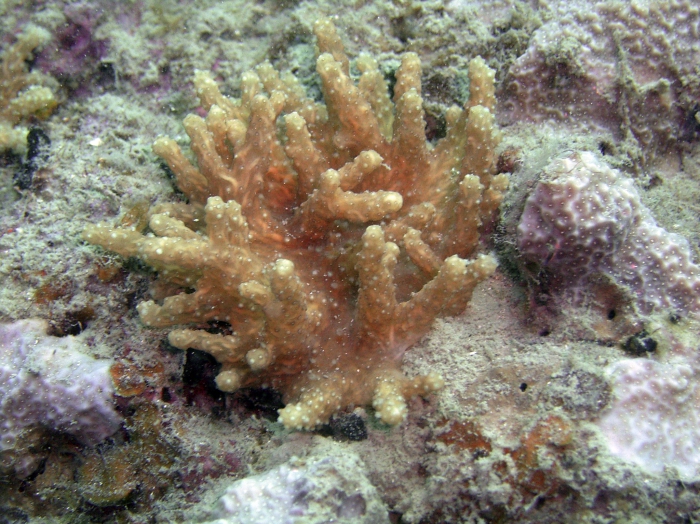
What I want you to know: Sand damage, shading, and persistent tissue recession need attention early.

Explore open brain corals at Bulk Reef SupplyAffiliate link

Photo: Gdiggers · CC BY-SA 3.0 · fit to the card without cutting off the coral

Australian Scolymia (Homophyllia australis) coral identification photo.
Corals · Conditional

Australian Scolymia

Homophyllia australis A colorful solitary coral that turns feeding time into a show.
Adult sizeVaries — see the complete guide
TemperamentVariable; many LPS extend sweepers or mesenterial filaments beyond the daytime colony edge
DietPhotosynthetic with species-specific capacity to capture dissolved or particulate food
Reef safetyReef organism; safe only with appropriate spacing because it can sting, shade, smother, or overgrow neighbors
Care levelIntermediate / conditional
What I want you to know: The price and color do not make it indestructible; protect the flesh and avoid sudden light changes.

Explore Australian Scolymia corals at Bulk Reef SupplyAffiliate link

Photo: Jessica Rosenkrantz · CC BY-SA 4.0 · fit to the card without cutting off the coral

Elegance coral (Catalaphyllia jardinei) coral identification photo.
Corals · Poor first LPS choice

Elegance coral

Catalaphyllia jardinei When healthy and extended, an elegance coral is one of the most impressive animals in a reef tank.
Adult sizeVaries — see the complete guide
TemperamentLong potent tentacles and strong sting
DietPhotosynthetic with species-specific capacity to capture dissolved or particulate food
Reef safetyReef organism; safe only with appropriate spacing because it can sting, shade, smother, or overgrow neighbors
Care levelAdvanced / stability-dependent
What I want you to know: This is not my default first LPS: source, health, placement, and unexplained decline all matter.

Photo: Tappinen · CC BY-SA 3.0 · fit to the card without cutting off the coral

Bubble coral (Plerogyra sinuosa) coral identification photo.BRS
Corals · Conditional

Bubble coral

Plerogyra sinuosa Inflated daytime vesicles give this coral its name and make it look gentler than it is.
Adult sizeVaries — see the complete guide
TemperamentVariable; many LPS extend sweepers or mesenterial filaments beyond the daytime colony edge
DietPhotosynthetic with species-specific capacity to capture dissolved or particulate food
Reef safetyReef organism; safe only with appropriate spacing because it can sting, shade, smother, or overgrow neighbors
Care levelIntermediate / conditional
What I want you to know: Leave room for sweepers and never handle or blast the inflated tissue against its skeleton.

Explore Bubble coral at Bulk Reef SupplyAffiliate link

Photo: Bulk Reef Supply · Used with permission; linked attribution required · BRS image fit to the card without cutting off the coral

Chalice coral (Echinophyllia aspera) coral identification photo.BRS
Corals · Conditional

Chalice coral

Echinophyllia aspera A hobby catch-all for several encrusting or plating LPS corals with dramatic colors.
Adult sizeVaries — see the complete guide
TemperamentVariable; many LPS extend sweepers or mesenterial filaments beyond the daytime colony edge
DietPhotosynthetic with species-specific capacity to capture dissolved or particulate food
Reef safetyReef organism; safe only with appropriate spacing because it can sting, shade, smother, or overgrow neighbors
Care levelIntermediate / conditional
What I want you to know: Use group-level identification unless the source supports the species, and give the growing edge real space.

Explore Chalice coral varieties at Bulk Reef SupplyAffiliate link

Photo: Bulk Reef Supply · Used with permission; linked attribution required · BRS image fit to the card without cutting off the coral

Plate coral (Fungia fungites) coral identification photo.
Corals · Conditional but approachable

Plate coral

Fungia fungites A free-living coral that inflates, moves, and belongs on an open sand bed.
Adult sizeVaries — see the complete guide
TemperamentVariable; many LPS extend sweepers or mesenterial filaments beyond the daytime colony edge
DietPhotosynthetic with species-specific capacity to capture dissolved or particulate food
Reef safetyReef organism; safe only with appropriate spacing because it can sting, shade, smother, or overgrow neighbors
Care levelIntermediate / conditional
What I want you to know: Do not glue it to rock or trap it where tissue rubs against hard edges.

Photo: Stickpen · Public domain · fit to the card without cutting off the coral

Goniopora flowerpot coral (Goniopora stokesi) coral identification photo.BRS
Corals · Conditional; choose aquacultured

Goniopora flowerpot coral

Goniopora stokesi Long flower-like polyps are gorgeous, and modern aquacultured colonies can be far more manageable than the old reputation suggests.
Adult sizeVaries — see the complete guide
TemperamentVariable; many LPS extend sweepers or mesenterial filaments beyond the daytime colony edge
DietPhotosynthetic with species-specific capacity to capture dissolved or particulate food
Reef safetyReef organism; safe only with appropriate spacing because it can sting, shade, smother, or overgrow neighbors
Care levelIntermediate / conditional
What I want you to know: Species, source, nutrients, flow, and feeding still matter; do not call every Goniopora easy.

Explore Goniopora corals at Bulk Reef SupplyAffiliate link

Photo: Bulk Reef Supply · Used with permission; linked attribution required · BRS image fit to the card without cutting off the coral

Acropora millepora (Acropora millepora) coral identification photo.
Corals · Poor first-coral choice

Acropora millepora

Acropora millepora A fast-growing branching Acropora once the tank is truly stable.
Adult sizeVaries — see the complete guide
TemperamentMostly contact, overgrowth, and mesenterial competition; spacing still matters
DietPhotosynthetic with species-specific capacity to capture dissolved or particulate food
Reef safetyReef organism; safe only with appropriate spacing because it can sting, shade, smother, or overgrow neighbors
Care levelAdvanced / stability-dependent
What I want you to know: This coral will expose inconsistent alkalinity, light, flow, pests, and nutrients faster than most beginner corals.

Photo: MDC Seamarc Maldives · CC BY-SA 4.0 · fit to the card without cutting off the coral

Acropora tenuis (Acropora tenuis) coral identification photo.
Corals · Advanced

Acropora tenuis

Acropora tenuis A highly variable Acropora associated with many colorful trade morphs.
Adult sizeVaries — see the complete guide
TemperamentMostly contact, overgrowth, and mesenterial competition; spacing still matters
DietPhotosynthetic with species-specific capacity to capture dissolved or particulate food
Reef safetyReef organism; safe only with appropriate spacing because it can sting, shade, smother, or overgrow neighbors
Care levelAdvanced / stability-dependent
What I want you to know: A trade photo does not guarantee the same color in your lights, nutrients, and chemistry.

Explore Acropora tenuis at Bulk Reef SupplyAffiliate link

Photo: MDC Seamarc Maldives · CC BY-SA 4.0 · fit to the card without cutting off the coral

Montipora capricornis (Montipora capricornis) coral identification photo.
Corals · Intermediate SPS

Montipora capricornis

Montipora capricornis Plating growth creates dramatic shelves quickly in a healthy reef.
Adult sizeVaries — see the complete guide
TemperamentOvergrowth and severe shading as plates expand
DietPhotosynthetic with species-specific capacity to capture dissolved or particulate food
Reef safetyReef organism; safe only with appropriate spacing because it can sting, shade, smother, or overgrow neighbors
Care levelIntermediate / conditional
What I want you to know: Plan for shading and trimming before the plate covers everything below it.

Explore Montipora capricornis corals at Bulk Reef SupplyAffiliate link

Photo: Grendelkhan · CC BY-SA 3.0 · fit to the card without cutting off the coral

Montipora digitata (Montipora digitata) coral identification photo.BRS
Corals · Good first SPS after stability

Montipora digitata

Montipora digitata A branching Montipora that is often a more forgiving first SPS than Acropora.
Adult sizeVaries — see the complete guide
TemperamentMostly contact, overgrowth, and mesenterial competition; spacing still matters
DietPhotosynthetic with species-specific capacity to capture dissolved or particulate food
Reef safetyReef organism; safe only with appropriate spacing because it can sting, shade, smother, or overgrow neighbors
Care levelIntermediate / conditional
What I want you to know: It still needs stable alkalinity, good flow, pest inspection, and room to branch.

Explore Montipora digitata corals at Bulk Reef SupplyAffiliate link

Photo: Bulk Reef Supply · Used with permission; linked attribution required · BRS image fit to the card without cutting off the coral

Montipora setosa (Montipora setosa) coral identification photo.BRS
Corals · Intermediate SPS

Montipora setosa

Montipora setosa Thick orange branches and bumps make this Montipora easy to recognize at the hobby level.
Adult sizeVaries — see the complete guide
TemperamentMostly contact, overgrowth, and mesenterial competition; spacing still matters
DietPhotosynthetic with species-specific capacity to capture dissolved or particulate food
Reef safetyReef organism; safe only with appropriate spacing because it can sting, shade, smother, or overgrow neighbors
Care levelIntermediate / conditional
What I want you to know: Growth form changes with flow and light, so do not force every colony into one visual template.

Explore Montipora setosa corals at Bulk Reef SupplyAffiliate link

Photo: Bulk Reef Supply · Used with permission; linked attribution required · BRS image fit to the card without cutting off the coral

Birdsnest coral (Seriatopora hystrix) coral identification photo.BRS
Corals · Intermediate SPS

Birdsnest coral

Seriatopora hystrix Fine branches and rapid growth can create a beautiful colony in a stable tank.
Adult sizeVaries — see the complete guide
TemperamentMostly contact, overgrowth, and mesenterial competition; spacing still matters
DietPhotosynthetic with species-specific capacity to capture dissolved or particulate food
Reef safetyReef organism; safe only with appropriate spacing because it can sting, shade, smother, or overgrow neighbors
Care levelIntermediate / conditional
What I want you to know: The dense interior can lose flow, collect debris, and show stress quickly after chemistry swings.

Explore Birdsnest corals at Bulk Reef SupplyAffiliate link

Photo: Bulk Reef Supply · Used with permission; linked attribution required · BRS image fit to the card without cutting off the coral

Pocillopora coral (Pocillopora damicornis) coral identification photo.BRS
Corals · Intermediate SPS with spread caveat

Pocillopora coral

Pocillopora damicornis A compact branching SPS that can be hardy and fast-growing once settled.
Adult sizeVaries — see the complete guide
TemperamentMostly contact, overgrowth, and mesenterial competition; spacing still matters
DietPhotosynthetic with species-specific capacity to capture dissolved or particulate food
Reef safetyReef organism; safe only with appropriate spacing because it can sting, shade, smother, or overgrow neighbors
Care levelIntermediate / conditional
What I want you to know: Some colonies spread by releasing planulae, leaving surprise colonies around the tank.

Explore Pocillopora corals at Bulk Reef SupplyAffiliate link

Photo: Bulk Reef Supply · Used with permission; linked attribution required · BRS image fit to the card without cutting off the coral

Stylophora coral (Stylophora pistillata) coral identification photo.BRS
Corals · Good first SPS after stability

Stylophora coral

Stylophora pistillata A chunky branching SPS that is often easier to start with than delicate Acropora.
Adult sizeVaries — see the complete guide
TemperamentMostly contact, overgrowth, and mesenterial competition; spacing still matters
DietPhotosynthetic with species-specific capacity to capture dissolved or particulate food
Reef safetyReef organism; safe only with appropriate spacing because it can sting, shade, smother, or overgrow neighbors
Care levelIntermediate / conditional
What I want you to know: It still depends on stable chemistry, acclimated light, and broad flow.

Explore Stylophora corals at Bulk Reef SupplyAffiliate link

Photo: Bulk Reef Supply · Used with permission; linked attribution required · BRS image fit to the card without cutting off the coral

Cactus coral (Pavona cactus) coral identification photo.
Corals · Intermediate SPS

Cactus coral

Pavona cactus A plating and ridged Pavona that can handle a range of conditions once established.
Adult sizeVaries — see the complete guide
TemperamentCompetitive growing edge plus shading
DietPhotosynthetic with species-specific capacity to capture dissolved or particulate food
Reef safetyReef organism; safe only with appropriate spacing because it can sting, shade, smother, or overgrow neighbors
Care levelIntermediate / conditional
What I want you to know: Its growing edge can sting or overgrow neighbors, and the plates can create shade.

Explore Pavona corals at Bulk Reef SupplyAffiliate link

Photo: Mark Forsling · CC BY-SA 4.0 · fit to the card without cutting off the coral

Macroalgae15 cards
Photo needed
Macroalgae · Strong refugium choice when the chamber, light, flow, and harvest routine are real

Chaetomorpha / chaeto

Chaetomorpha Chaeto is the refugium macroalgae most beginners mean when they say they want nutrient export. It is useful because you can keep the tangled mass out of the display, let it grow, and remove portions of that growth.
Adult sizeVaries — see the complete guide
TemperamentGrowth and containment behavior: Moderate in equipment chambers because loose strands can travel and clog screens, pumps, or drains
DietPhotosynthetic; growth also depends on available nutrients and taxon-specific chemical requirements.
Reef safetyIntentional macroalgae can coexist with reef livestock only when placement, shading, fragmentation, chemistry demand, and grazing are planned.
Care levelBeginner-friendly with a functioning refugium
What I want you to know: It is not a magic green scrubber. If it is not growing, harvesting the same shrinking clump is not exporting much of anything.

Explore Chaetomorpha macroalgae at Bulk Reef SupplyAffiliate link

Photo needed
Macroalgae · Strong for a contained refugium or food culture; conditional in a grazed display

Sea lettuce

Ulva Sea lettuce is a bright green, leafy macroalgae that can grow quickly and makes very obvious harvestable biomass. It can work in a refugium or as occasional food for compatible herbivores.
Adult sizeVaries — see the complete guide
TemperamentGrowth and containment behavior: Moderate because torn or reproductive material can travel throughout the system
DietPhotosynthetic; growth also depends on available nutrients and taxon-specific chemical requirements.
Reef safetyIntentional macroalgae can coexist with reef livestock only when placement, shading, fragmentation, chemistry demand, and grazing are planned.
Care levelBeginner-friendly with containment
What I want you to know: The thin sheets tear easily, move through the system, and may disappear quickly in a display full of grazers.

Explore sea lettuce macroalgae at Bulk Reef SupplyAffiliate link

Photo needed
Macroalgae · Strong display choice when it can be secured and protected from heavy grazing

Dragon’s Breath

Halymenia durvillei Dragon’s Breath is one of the easiest red macroalgae to recognize in the hobby: red, flame-shaped fronds with bright orange tips under suitable light. It can be the star of a display or a slower-growing refugium crop.
Adult sizeVaries — see the complete guide
TemperamentGrowth and containment behavior: Low to moderate; loose fragments can move, but it is usually easier to control than runner-forming algae
DietPhotosynthetic; growth also depends on available nutrients and taxon-specific chemical requirements.
Reef safetyIntentional macroalgae can coexist with reef livestock only when placement, shading, fragmentation, chemistry demand, and grazing are planned.
Care levelBeginner-friendly with herbivore planning
What I want you to know: A beautiful clump can become an expensive snack if you add it to a display with hungry herbivores.

Explore Dragon’s Breath macroalgae at Bulk Reef SupplyAffiliate link

Photo needed
Macroalgae · Strong when the owner chooses display, refugium, or food culture on purpose

Red Ogo

Gracilaria parvispora Red Ogo is a branching Gracilaria that can be grown for display, refugium harvest, or supplemental food. Those are three different jobs, so decide which one matters before you place it.
Adult sizeVaries — see the complete guide
TemperamentGrowth and containment behavior: Low to moderate; fragments can relocate but it does not form Caulerpa-style runners
DietPhotosynthetic; growth also depends on available nutrients and taxon-specific chemical requirements.
Reef safetyIntentional macroalgae can coexist with reef livestock only when placement, shading, fragmentation, chemistry demand, and grazing are planned.
Care levelBeginner-friendly with purpose and placement defined
What I want you to know: If the plan is to feed it to herbivores, expect the display portion to be eaten; keep the growing crop somewhere protected.

Explore Red Ogo macroalgae at Bulk Reef SupplyAffiliate link

Photo needed
Macroalgae · Strong display/refugium candidate when the exact cultured identity is supported

Pom Pom Gracilaria

Gracilaria hayi Pom Pom Gracilaria makes a dense red bush that looks good in a display and can also grow as a harvestable refugium crop. It gives beginners a red-algae option that is not just another loose green ball.
Adult sizeVaries — see the complete guide
TemperamentGrowth and containment behavior: Low to moderate; broken pieces may relocate
DietPhotosynthetic; growth also depends on available nutrients and taxon-specific chemical requirements.
Reef safetyIntentional macroalgae can coexist with reef livestock only when placement, shading, fragmentation, chemistry demand, and grazing are planned.
Care levelBeginner-friendly with identity and grazing checks
What I want you to know: The hobby name is useful, but the final quiz image still has to match the verified Gracilaria hayi source—not just any red branching algae.

Explore Pom Pom Gracilaria at Bulk Reef SupplyAffiliate link

Photo needed
Macroalgae · Good display choice after exact-source and grazer checks

Red grape macroalgae

Botryocladia Red grape macroalgae grows clusters of rounded red vesicles on branching stems, which makes it look completely different from Ogo or Dragon’s Breath. This card stays at Botryocladia genus level because the trade name is used loosely.
Adult sizeVaries — see the complete guide
TemperamentGrowth and containment behavior: Low to moderate; loose pieces can relocate
DietPhotosynthetic; growth also depends on available nutrients and taxon-specific chemical requirements.
Reef safetyIntentional macroalgae can coexist with reef livestock only when placement, shading, fragmentation, chemistry demand, and grazing are planned.
Care levelIntermediate / identity-dependent
What I want you to know: Do not turn a generic red-grape retail photo into a species-level quiz. The vesicles can also break loose when handled roughly.
Photo needed
Macroalgae · Conditional; best after lighting, attachment, and herbivore pressure are understood

Blue Hypnea

Hypnea pannosa Blue Hypnea is really a red macroalgae, even though healthy colonies can show an intense blue-purple sheen. It is a display piece first and a nutrient-export promise never.
Adult sizeVaries — see the complete guide
TemperamentGrowth and containment behavior: Moderate because small branching fragments can lodge elsewhere
DietPhotosynthetic; growth also depends on available nutrients and taxon-specific chemical requirements.
Reef safetyIntentional macroalgae can coexist with reef livestock only when placement, shading, fragmentation, chemistry demand, and grazing are planned.
Care levelIntermediate / display-focused
What I want you to know: Col[Truncated]

Lorem ipsum dolor sit amet, consectetur adipiscing elit. Ut elit tellus, luctus nec ullamcorper mattis, pulvinar dapibus leo.