

Your First Saltwater Aquarium, Week by Week
Once you get your HelloReef kit, you’re ready to get started. While this free guide is not a replacement for the official 50-plus videos included in the course, it will give you a general overview if you’d just like to do it on your own.
Affiliate disclosure: My First Fish Tank may earn a commission from a qualifying purchase at no additional cost to you.

This free guide gives you the big picture. When you purchase the eligible HelloReef kit, you also get the complete course with more than 50 detailed videos that show you the process step by step.
What you will get from this free guide
This page shows you what to work on each week and how to tell when you are ready to move forward. Every weekly guide stands on its own, so you can see what to prepare, what to check, and where to go when you need more help.
This is not a replacement for the complete HelloReef course. The eligible kit includes more than 50 detailed videos that show the exact equipment, demonstrations, and full step-by-step setup.
Your HelloReef aquarium, week by week
Just like the official HelloReef course, this free guide is broken up into six weeks. Below is an overview of what you’ll find in each week. Click on the week you want, and it will take you to that guide.
Build the aquarium before you add water
Choose a safe place for the tank, learn what the main pieces of equipment do, inspect the kit, put everything together dry, and build rockwork that is stable and easy to clean around.
Add saltwater and turn on the equipment
Use the right source water, mix and measure the saltwater, set the temperature and flow, keep the electrical connections safe, and choose a simple lighting schedule.
Cycle the tank and practice the routine
Cycle the aquarium without a fish. While you wait, practice topping off evaporation, making replacement saltwater, recognizing normal early changes, and doing the basic jobs you will repeat after animals arrive.
Add a cleanup crew only when there is a job to do
Look at what is actually growing in the tank, then choose a small cleanup crew for that specific job. Buy healthy animals from a good seller, acclimate them carefully, and do not add a giant package of snails to a brand-new tank with nothing for them to eat.
Choose and add your first clownfish
Choose a healthy captive-bred clownfish or pair, learn what healthy behavior looks like, plan how you will bring them home, feed without dumping extra waste into the tank, and keep up with the routine you practiced during the cycle.
Decide whether the tank is ready for an anemone—or whether you should wait
Look at the tank’s recent stability, your test results, lighting, fish health, and how consistent you have been with maintenance. Then decide whether it is time to add a healthy captive-propagated bubble-tip anemone or wait longer.
How the free guide and complete course fit together
The free six-week series
- Explains what you are trying to accomplish each week and why it matters
- Shows you what to prepare and what to check before moving on
- Helps prevent common beginner mistakes
- Connects you to the right public guides and resources
- Remains useful even if you do not purchase the kit
The complete HelloReef course
- Includes more than 50 detailed videos with the kit
- Shows the exact equipment and complete process
- Provides step-by-step demonstrations
- Includes the complete challenge and bonus-learning experience
- Offers the deepest guidance for this exact aquarium path
Clownfish do not need an anemone
A healthy clownfish can live successfully without an anemone, and a clownfish should never be physically forced into contact with one. If hosting happens, allow it to develop naturally.
A few important questions
Can I finish the course faster than six weeks?
You might finish the physical setup quickly, but you cannot rush the biology. Move forward when your test results and the aquarium tell you it is ready—not simply because another week has passed.
Do I have to add an anemone in Week 6?
No. Actually, you don’t ever have to add an anemone. You can wait as long as you want, or add other animals like coral or macroalgae. An anemone is just that quintessential saltwater aquarium animal that goes so well with a clownfish, but you absolutely don’t have to add an anemone.
Will the free guides contain the entire HelloReef course?
No. The free guides will give you a useful overview, preparation lists, and clear checks along the way. The complete course included with the eligible kit contains the detailed demonstrations, exact equipment process, and more than 50 videos.
Can I begin with a later week?
If this is a brand-new aquarium, start with Week 1 because every week builds on the one before it. If your tank is already running, start with the earliest week you can honestly say is complete. Do not skip ahead just because the aquarium has been wet for a certain number of days.
Still not sure? Explore all three options.
The DeskMate is the smallest path, HelloReef offers the most guidance, and the JBJ RF-45 gives you the most room to grow.
Affiliate disclosure: The BRS shopping links below are affiliate links. My First Fish Tank may earn a commission from a qualifying purchase at no additional cost to you.
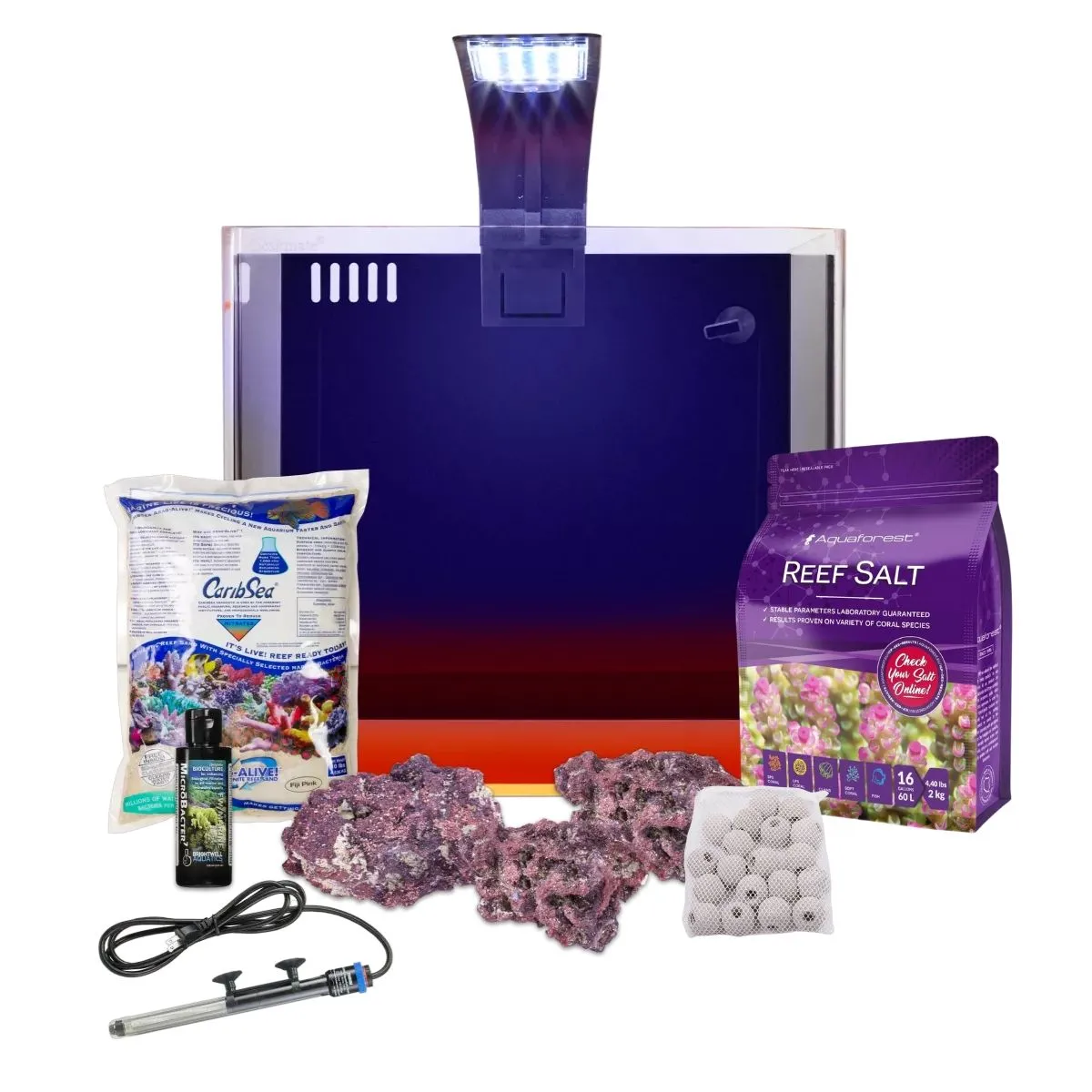
DeskMate 4.8
The smallest-footprint option.
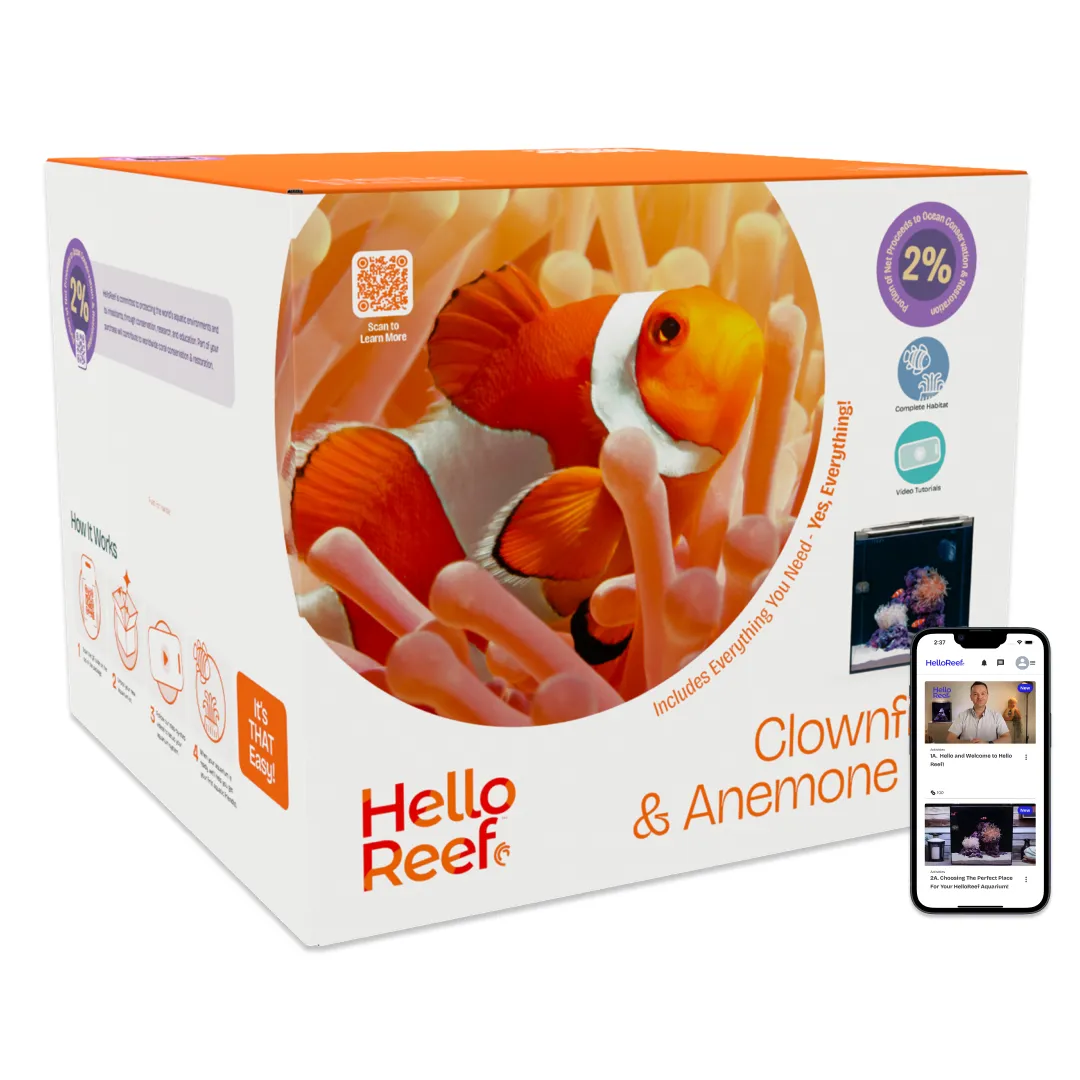
HelloReef 15
The most guided beginner option.
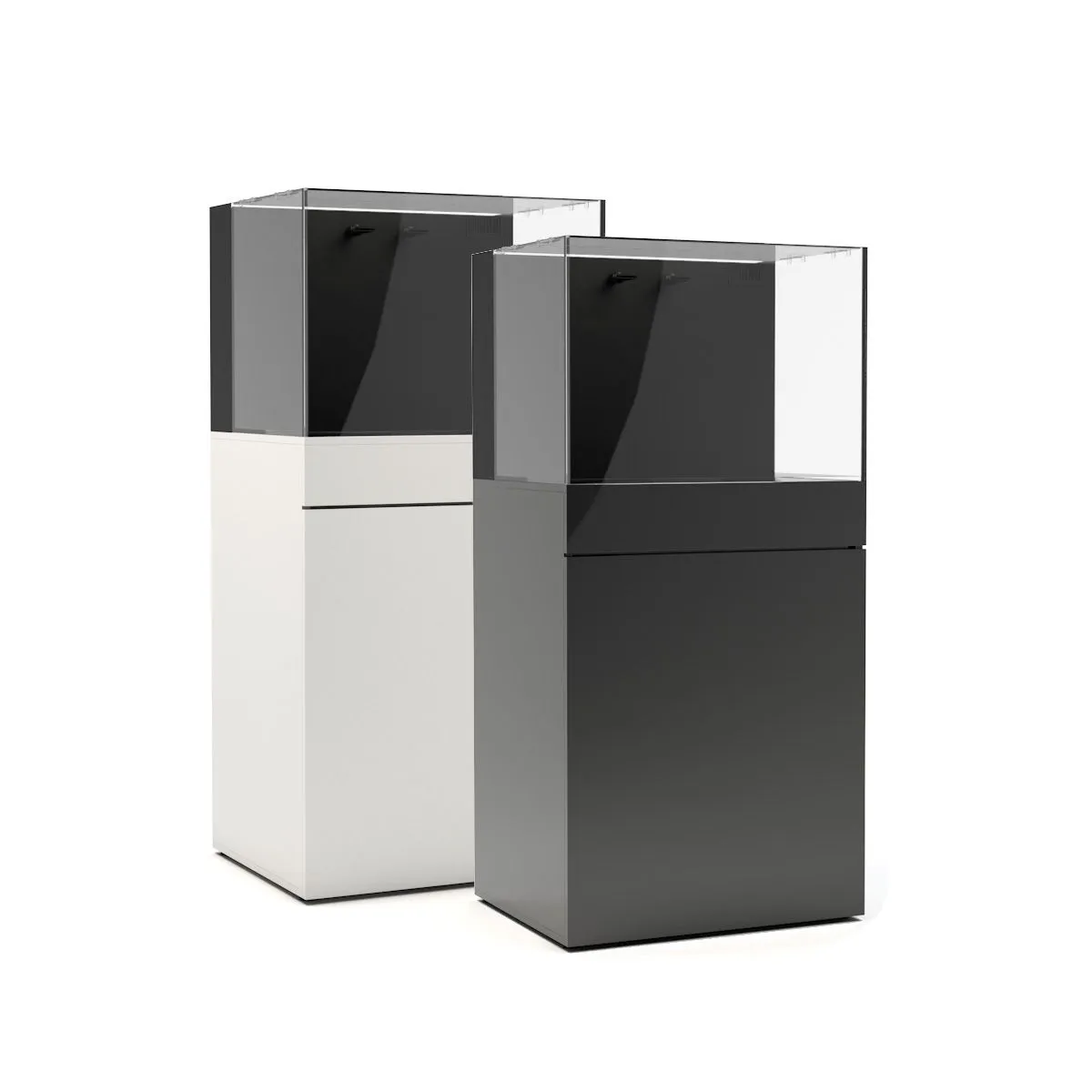
JBJ RF-45
The roomiest option with more flexibility.
Start the routine while the tank is cycling
While you’re waiting for the tank to cycle, it’s a great time to master the maintenance routines. Track the water, learn the normal daily checks, and know how you will handle the first water change before you need it.
 Maintenance Guide LibraryOpen the Maintenance GuidesBuild a practical daily and weekly care routine before livestock arrives.Explore the maintenance guides →
 Beginner Testing GuideReview the Water-Testing GuideLearn what to test, when to test it, and how the results guide your next step.Read the water-testing guide →