

Activated Carbon and GFO: How to Use Each in a Reef Tank
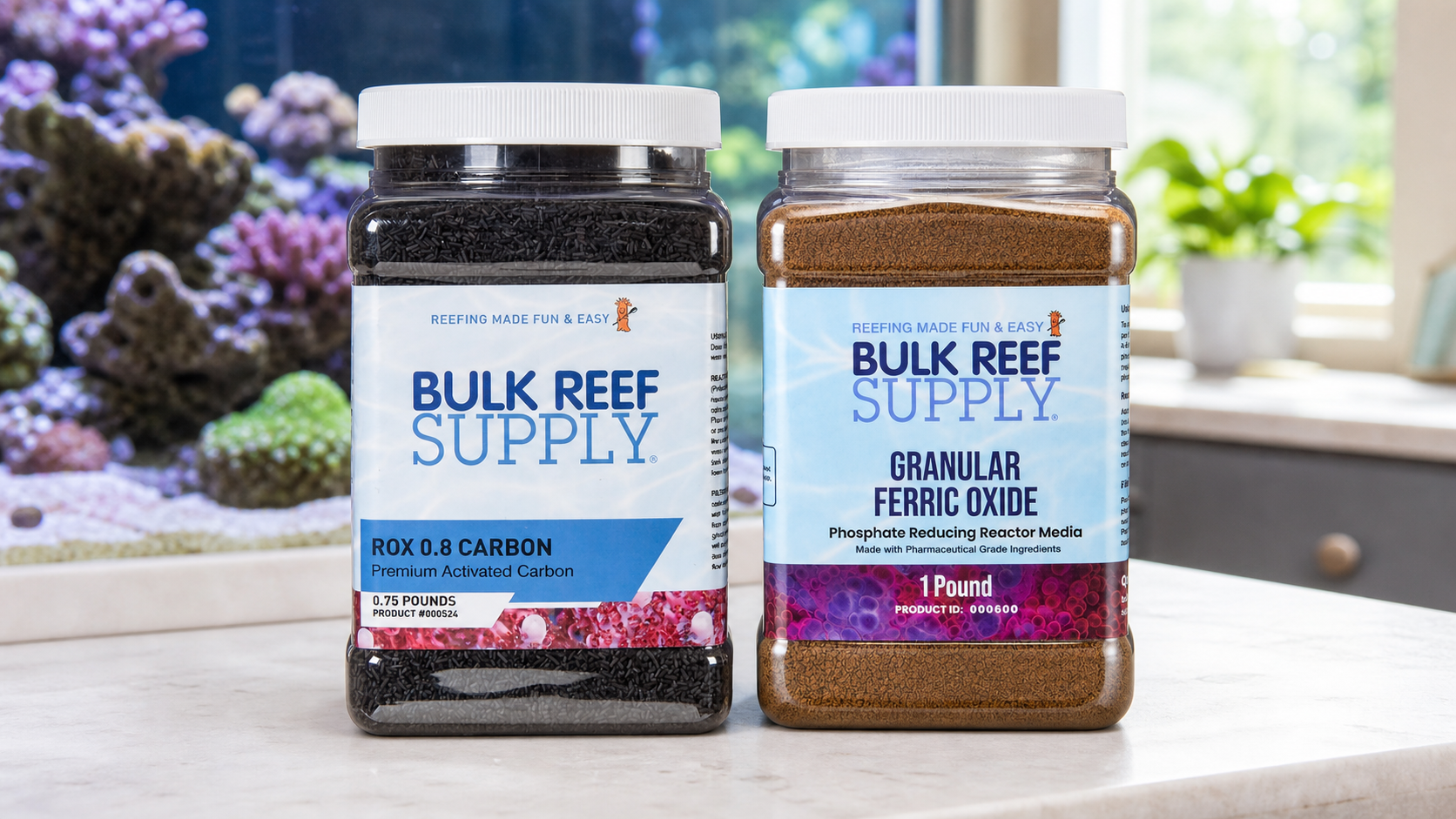
Activated carbon and GFO are often placed beside each other on a shelf, which makes them look like two versions of the same thing. They are not. Carbon is mainly used to remove dissolved organic material, discoloration, odor, and certain contaminants. GFO is a phosphate-removal tool.
That difference matters. I do not want you replacing both media just because a monthly reminder appeared on your phone. Figure out what you are trying to fix, choose the right media, follow the directions on that product, and then watch the tank closely enough to know whether it helped.
You have a reason tied to dissolved organics: yellowing water, odor, an event-specific contaminant, or medication removal when the treatment directions call for it.
You have a confirmed phosphate result and trend that actually needs correction, and simpler causes such as feeding, source water, detritus, and export are already being addressed.
You cannot name the goal, you have not confirmed the measurement, the aquarium is already nutrient-poor, or the only reason is a calendar notification.
What Are You Trying to Fix?
Before you open a container, finish this sentence: I am adding this medium because ______, and I will know it worked when ______.
If you cannot fill in both blanks, wait. Carbon and GFO can be useful, but neither one replaces basic aquarium care. A dirty mechanical filter, a chamber full of detritus, overfeeding, poor source water, or a test result that has not been confirmed should not automatically become a chemical-media problem.
| What you notice | First move | Possible medium | How you judge the result |
|---|---|---|---|
| Water looks yellow or smells different | Check maintenance, trapped waste, dead animals, feeding, and water movement. | Activated carbon may help after the obvious cause is corrected. | Compare water clarity and odor, and confirm the underlying problem does not return. |
| A medication or contaminant needs removal | Follow the medication or product directions, complete the required water change, and verify that carbon is appropriate. | Activated carbon, if the current directions call for it. | Follow the stated treatment-removal process; do not guess from appearance alone. |
| Phosphate is higher than your aquarium’s intended range | Repeat or verify the test, review the trend, and check feeding, source water, detritus, and export. | GFO may be useful if measured control is still needed. | Test on a planned schedule and watch coral and algae response. Stop a rapid or harmful change. |
| Nuisance algae is growing | Identify the organism and the conditions helping it grow. | Neither medium is an automatic diagnosis or cure. | Correct the cause and follow the organism-specific plan. |
| No clear problem | Keep testing and maintaining the aquarium normally. | Usually neither. | A stable aquarium does not need an extra product simply because it exists. |
Activated Carbon: What It Does and When I Would Use It
Activated carbon adsorbs dissolved organic compounds onto an enormous internal surface area. In practical reef-tank terms, that can help polish yellow water, reduce odor, and remove certain dissolved contaminants that mechanical filtration and protein skimming do not capture.
Carbon can also be part of medication removal, but the treatment directions matter. Some medications tell you to remove carbon during treatment because it may remove the medication. After the course is complete, the directions may call for carbon and a water change to remove the remaining treatment. Follow that exact sequence.
When carbon makes sense
- The water has a visible yellow tint after you have corrected the source of accumulating waste.
- There is an odor that normal cleaning, water movement, and waste removal did not solve.
- You are responding to a known contaminant and reliable directions identify activated carbon as part of the response.
- You are removing a completed medication according to the medication label.
- Your specific aquarium system or course includes carbon as part of its normal filtration plan.
When I would not add carbon first
- A fish or coral looks unhealthy and the cause is unknown.
- The aquarium smells because food, a dead animal, or detritus is still decomposing in the system.
- A medication is actively being used and its directions say to remove chemical filtration.
- The only reason is that the calendar says “replace carbon,” but you do not know the product, amount, goal, or result.
How I Would Start With Carbon
Read the current instructions for the exact carbon. Manufacturers do not all give the same rinse method, amount, flow rate, or service life. Some direct you to rinse fines and soak the media so trapped air can escape. Some specify a filter bag in active flow. Others are designed for a reactor or canister.
A media bag should be loose enough for water to move through it instead of around a hard brick of carbon. In a reactor, do not assume faster flow is better. Too much flow can reduce contact time or grind media into dust. Use the product and reactor directions together.
GFO: Use It Slowly and Watch Phosphate
GFO stands for granular ferric oxide. Its job is much narrower than carbon: it binds phosphate. That can be useful when phosphate is confirmed, the trend matters, and the aquarium still needs additional control after the basic sources and export have been addressed.
What I do not want is a beginner seeing algae, adding a large amount of GFO, and trying to force phosphate to zero. Algae can continue growing while a test reads very low because the algae is using nutrients as they become available. Meanwhile, a fast change can stress corals and other animals.
Before you use GFO
- Repeat a surprising phosphate result and confirm the units and testing method.
- Look at the trend, not one number in isolation.
- Review feeding, uneaten food, source water, detritus, mechanical filtration, water changes, skimming, refugium export, and recent changes.
- Decide what result you actually want and how often you will test after adding the media.
- Read the exact GFO instructions. Standard and high-capacity products may use different amounts.
Use a bag or a reactor?
A media bag is simple and may be enough for a small aquarium. It needs to sit where water passes through it, not in a quiet corner where water takes the easier path around it.
A reactor gives you more control over flow through the media, but it also gives you another pump, hose, valve, seal, and leak path to maintain. Many GFO instructions call for only a slight movement at the top of the bed. Vigorous tumbling can grind the media and send fines into the aquarium. Follow the directions for both the GFO and the reactor.
When to Reduce, Replace, or Remove GFO
Test phosphate before the media goes in and again on the schedule you planned. The useful service life is not one universal number. It depends on the product, amount, starting phosphate, water volume, flow, and continuing phosphate input.
- Replace it when phosphate begins rising again and you have confirmed the result, provided continued use is still appropriate.
- Reduce or remove it if phosphate is falling too quickly, reaches the lower boundary of your plan, or corals respond poorly after the change.
- Fix the installation if water is bypassing a bag, the reactor is channeling, the media has clumped, or fines are entering the aquarium.
- Reconsider the plan if phosphate rebounds immediately. More GFO may hide a continuing input without solving it.
Can You Run Carbon and GFO at the Same Time?
You can, but “can” is not the same as “need to.” Make the carbon decision and GFO decision separately. If both have a real job, they can run at the same time. That does not mean they need the same amount, preparation, flow, or replacement date.
I prefer separate media bags or separate reactors when practical because each medium can be adjusted or removed without disturbing the other. If a reactor manufacturer explicitly permits mixed media, follow those instructions. Do not improvise a mixture simply to fill the chamber.
When both media are new, it is also harder to tell which change caused an animal response. If the aquarium is sensitive or the planned change is substantial, changing one thing at a time gives you cleaner information.
How I Use Activated Carbon or GFO
Name the goal
Write down the exact problem. “My tank looks dirty” is not enough. Is the water yellow? Is there a known contaminant? Is phosphate confirmed and rising?
Double-check what you know
For GFO, verify the phosphate result and trend. For carbon, correct obvious waste, maintenance, or livestock problems before expecting media to hide them.
Choose the correct medium
Use carbon for the dissolved-organic or contaminant goal. Use GFO only for the measured phosphate goal. Use neither if the problem does not match.
Read the exact directions
Confirm the product type, amount, preparation, placement, flow, warnings, and replacement guidance. Do not copy the dose from a different brand or product strength.
Prepare the equipment
Inspect the bag, reactor, sponges, tubing, valve, pump, and seals. Plan where the first rinse water will go. Keep media dust out of the display.
Install it where water passes through
Avoid bypass around a bag. Set reactor flow exactly as directed. Keep the return where you can verify flow and catch a leak quickly.
Watch the first restart
Check for dust, cloudiness, leaks, channeling, grinding, trapped air, unusual pump noise, and a sudden animal response. Stay with the aquarium.
Check the tank and write down what happened
Record the date, product, amount, placement, starting condition or phosphate result, follow-up result, and what the animals did. Then decide whether to replace it, use less, remove it, or leave it alone based on what actually happened in the tank.
Stop or cut back if you see:
- Phosphate falling faster or lower than the plan.
- Corals closing, paling, or changing soon after the media was added.
- Carbon or GFO dust entering the display.
- A reactor leaking, grinding media, channeling, or losing flow.
- Cloudy water, unusual heat, or a pump that will not restart correctly.
- The original problem returning immediately after new media is installed.
What Changes for the Three Beginner Tanks
DeskMate 4.8
Small water volume makes every amount and every change matter more. A small, correctly prepared media bag is simpler than adding a reactor. I would not make GFO the first response to algae or one surprising phosphate test.
HelloReef 15
The kit includes activated carbon and the full HelloReef course explains when it enters the setup. Follow that course and the current carbon directions. GFO is separate. It is not something I would automatically add to the kit without a confirmed phosphate problem.
JBJ RF-45
The larger rear chambers give you more placement options, and a reactor may be reasonable if there is a real need. That extra room does not turn carbon or GFO into automatic maintenance. Keep the goal, amount, flow, and monitoring plan specific.
Common Mistakes That Make These Media Less Useful
They do different jobs and may not be needed at the same time.
Identify the algae and work on the reasons it keeps growing.
Standard, high-capacity, pellet, and other media types are not automatically interchangeable.
Water bypasses a dense lump instead of moving through the media.
Excess flow can grind media, release dust, and reduce useful contact.
When the aquarium changes, you need to know the product, amount, date, and result.
What to Do Next
If phosphate is the concern, start with the saltwater aquarium testing guide. If algae is the reason you reached for GFO, use the beginner nuisance-algae guide before turning a symptom into a media dose.
For the rest of the routine, return to the Monthly & Quarterly Maintenance guide, or review the recurring filter-maintenance guide.
Frequently Asked Questions
Do I need activated carbon in every reef tank?
No. Many aquariums use it successfully as regular filtration, but it still needs a defined role, an appropriate product, correct placement, and a replacement plan. Do not add it simply because every aquarium is assumed to need the same media.
Should I run GFO all the time?
Only if a measured phosphate need and the aquarium’s response justify continuous use. Some systems need ongoing help; others do not. Test the trend and reduce or remove the media when the goal is met or the aquarium responds poorly.
Will carbon remove phosphate?
Activated carbon and GFO are different tools. Some carbon products may release very little phosphate, but carbon is not the phosphate-removal decision described here. Use a phosphate-removal product only when your test results show that you actually need it.
Will GFO solve nuisance algae?
Not by itself. GFO can reduce measurable phosphate, but algae control starts with identification and the full cause: light, nutrients, feeding, source water, detritus, competition, grazing, and maintenance.
Can I put carbon and GFO in the same media bag?
You may be able to, but separate bags are easier to prepare, place, monitor, and replace independently. If you mix media, the exact product and filter instructions should explicitly allow it.
How often should I replace activated carbon?
Follow the product directions and the actual goal. Product capacity, amount, water flow, aquarium load, and the reason for use all matter. There is no honest universal replacement date for every carbon and every reef tank.
How do I know GFO is exhausted?
Confirm that phosphate begins rising again while flow through the media remains correct. A calendar estimate can remind you to test, but the verified trend tells you whether the media is still doing its job.
What if phosphate drops too low after adding GFO?
Reduce or remove the media, verify the result, and watch the animals. Do not keep running the same amount merely because the label describes a maximum dose. Your aquarium’s response matters.
- Red Sea REEF-SPEC Carbon product guidance
- Red Sea REEF-SPEC Carbon manual
- Seachem MatrixCarbon directions
- Bulk Reef Supply GFO instructions
- Two Little Fishies PhosBan Reactor instructions
- Brightwell Aquatics Xport PO4 guidance
This article deliberately does not publish one universal carbon dose, GFO dose, phosphate target, flow rate, or replacement interval. Use the current directions for the exact product and equipment in front of you.