

Learn the animals you will actually see in the hobby.
Choose a deck, flip through the cards, and get comfortable recognizing common fish, corals, macroalgae, cleanup-crew animals, and other invertebrates. These cards are a starting point—not the last thing you should read before buying an animal.Fish86 cards
%20by%20Nick%20Hobgood.jpg?width=900)
Ocellaris clownfish
Amphiprion ocellaris A forgiving first fish, especially when you choose a healthy captive-bred animal and do not assume it needs an anemone.Explore more Ocellaris clownfish varieties at Bulk Reef SupplyAffiliate link
Photo: Nick Hobgood · CC BY-SA 3.0 · fit to the card without cutting off the subject
%20by%20Nick%20Hobgood.jpg)

Percula clownfish
Amphiprion percula Very similar to an ocellaris clownfish from a beginner-care standpoint: hardy, recognizable, and usually easy to feed.Explore more Percula clownfish varieties at Bulk Reef SupplyAffiliate link
Photo: ZooFari · Public domain · fit to the card without cutting off the subject

 BRS
BRSClark’s clownfish
Amphiprion clarkii Hardy, but noticeably bolder and more territorial than the classic ocellaris path.Explore more Clarkii clownfish varieties at Bulk Reef SupplyAffiliate link
Photo: Bulk Reef Supply · Used with permission; linked attribution required · BRS image recropped with permission
 BRS
BRSMaroon clownfish
Amphiprion biaculeatus Beautiful and tough, but this is not the clownfish I would pick for a peaceful beginner community.Explore more maroon clownfish varieties at Bulk Reef SupplyAffiliate link
Photo: Bulk Reef Supply · Used with permission; linked attribution required · BRS image recropped with permission
 BRS
BRSTomato clownfish
Amphiprion frenatus Hardy, bright, and full of personality, but it can take over more of the aquarium than a beginner expects.Explore more Tomato clownfish varieties at Bulk Reef SupplyAffiliate link
Photo: Bulk Reef Supply · Used with permission; linked attribution required · BRS image recropped with permission

Blue-green chromis
Chromis viridis A common open-water choice, but buying a group does not guarantee a peaceful long-term school.Photo: Citron · CC BY-SA 3.0 · fit to the card without cutting off the subject


Yellowtail damselfish
Chrysiptera parasema One of the more manageable damsels, but still a damsel: small does not mean passive.Photo: Brian Ong · CC BY-SA 3.0 · fit to the card without cutting off the fish


Azure damselfish
Chrysiptera hemicyanea Colorful, hardy, and usually manageable when the tank has enough rockwork and compatible neighbors.Photo: Haplochromis (Alex Giltjes) · Public domain · fit to the card without cutting off the fish


Domino damselfish
Dascyllus trimaculatus Cute when tiny, far less cute when it grows into the fish controlling the entire aquarium.Photo: Philippe Bourjon via iNaturalist / Wikimedia Commons · CC BY-SA 4.0 · fit to the card without cutting off the fish

Blue damselfish
Chrysiptera cyanea Hardy and bright blue, but not a harmless little community fish.Photo: Brian Gratwicke · CC BY 2.0 · fit to the card without cutting off the fish


Firefish
Nemateleotris magnifica A gentle, beautiful beginner fish that spends time hovering near a bolt-hole.Photo: Rickard Zerpe · CC BY 2.0 · fit to the card without cutting off the fish
_(43372442502).jpg)

Purple firefish
Nemateleotris decora A slightly fancier firefish with the same basic deal: peaceful, shy, and very capable of finding a gap in the lid.Photo: TANAKA Juuyoh · CC BY 2.0 · fit to the card without cutting off the fish


Scissortail dartfish
Ptereleotris evides A graceful open-water dartfish for a calm aquarium with secure cover.Photo: Poco a poco · CC BY-SA 4.0 · fit to the card without cutting off the fish
,_Nosy_Kalakajoro,_Madagascar,_2025-09-14,_DD_109.jpg)

Hi-fin red-banded goby
Stonogobiops nematodes Tiny, fascinating, and best when you actually want to watch a goby-and-shrimp relationship.Photo: Steve Childs · CC BY 2.0 · fit to the card without cutting off the fish

 BRS
BRSYellow watchman goby
Cryptocentrus cinctus A personable bottom-dweller that can be a great first goby, especially if you enjoy the pistol-shrimp partnership.Explore the Yellow watchman goby at Bulk Reef SupplyAffiliate link
Photo: Bulk Reef Supply · Used with permission; linked attribution required · BRS image recropped with permission

Diamond watchman goby
Valenciennea puellaris A tireless sand-sifter that can keep a mature sand bed moving.Photo: No machine-readable author provided. Normann Z assumed (based on copyright claims). · Public domain · fit to the card without cutting off the fish


Yellow clown goby
Gobiodon okinawae A tiny, bright goby that fits a calm nano reef and spends much of its time perched where you can see it.Photo: Totti · CC BY-SA 4.0 · fit to the card without cutting off the fish

 BRS
BRSNeon goby
Elacatinus oceanops Small, useful, captive-bred options are common, and the cleaning behavior is genuinely fun to watch.Explore the Neon goby at Bulk Reef SupplyAffiliate link
Photo: Bulk Reef Supply · Used with permission; linked attribution required · BRS image recropped with permission
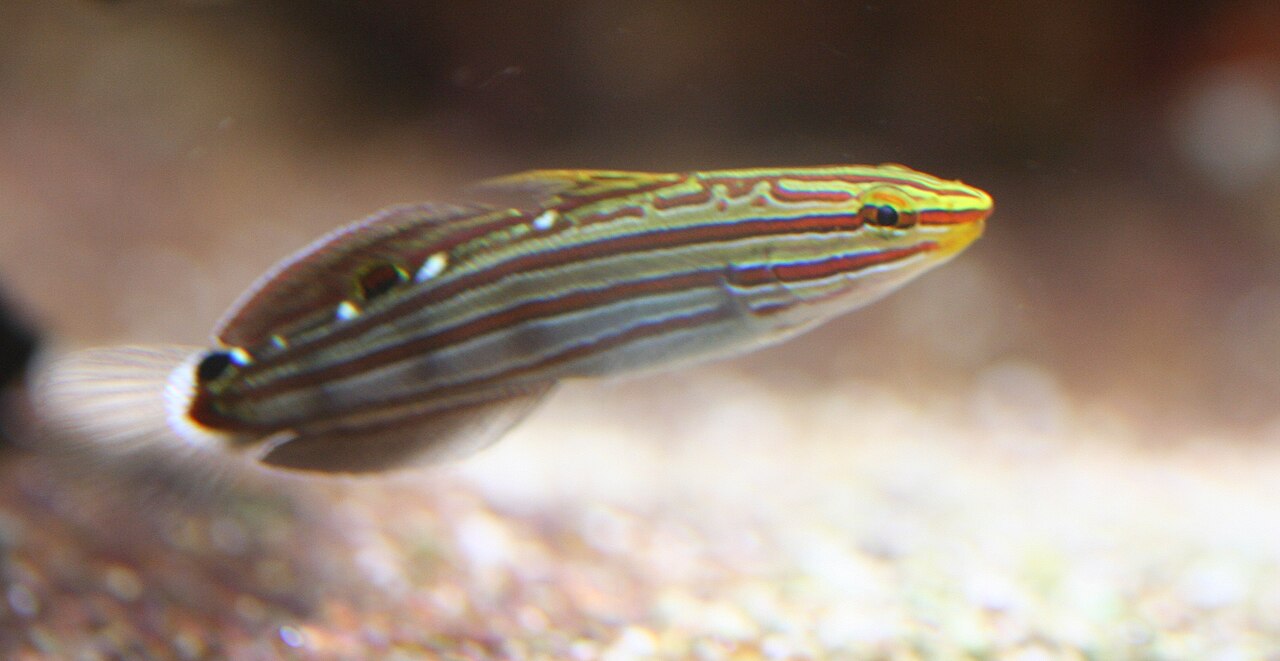
Rainford’s goby
Koumansetta rainfordi A beautiful little grazer for a mature, peaceful tank—not a fish I would use to solve a brand-new algae problem.Photo: Tappinen · CC BY-SA 3.0 · fit to the card without cutting off the fish


Hector’s goby
Koumansetta hectori A subtle, constantly browsing goby that does best when the aquarium already offers natural grazing.Photo: Rob · CC BY 2.0 · fit to the card without cutting off the fish


Lawnmower blenny
Salarias fasciatus A classic algae-grazing personality fish, but it is not an automatic cure for every kind of algae.Photo: Wikimedia Commons contributor · CC BY-SA 4.0 · fit to the card without cutting off the fish


Tailspot blenny
Ecsenius stigmatura Small, funny, and usually a much easier fit than the larger blennies for a beginner reef.Photo: User:Haplochromis · CC BY-SA 3.0 · fit to the card without cutting off the fish


Bicolor blenny
Ecsenius bicolor A great personality fish, but some individuals nip coral or clam mantles.Photo: Brian Gratwicke · CC BY 2.0 · fit to the card without cutting off the fish


Midas blenny
Ecsenius midas A bright, active blenny that swims more like an open-water fish than a typical bottom-perching blenny.Photo: BEDO (Thailand) · CC BY-SA 4.0 · fit to the card without cutting off the fish
.jpg)

Starry blenny
Salarias ramosus A bigger algae-grazing blenny with loads of personality and a need for real feeding after the algae thins out.Photo: Felicia Svedlund · CC BY-SA 3.0 · fit to the card without cutting off the fish


Royal gramma
Gramma loreto Colorful, hardy, and happiest when it gets a cave it can call its own.Photo: Smithsonian Institution from United States · No restrictions · fit to the card without cutting off the fish
.jpg)
 BRS
BRSOrchid dottyback
Pseudochromis fridmani Captive-bred orchid dottybacks are one of the more manageable ways to enjoy this bold fish family.Explore the Orchid dottyback at Bulk Reef SupplyAffiliate link
Photo: Bulk Reef Supply · Used with permission; linked attribution required · BRS image recropped with permission
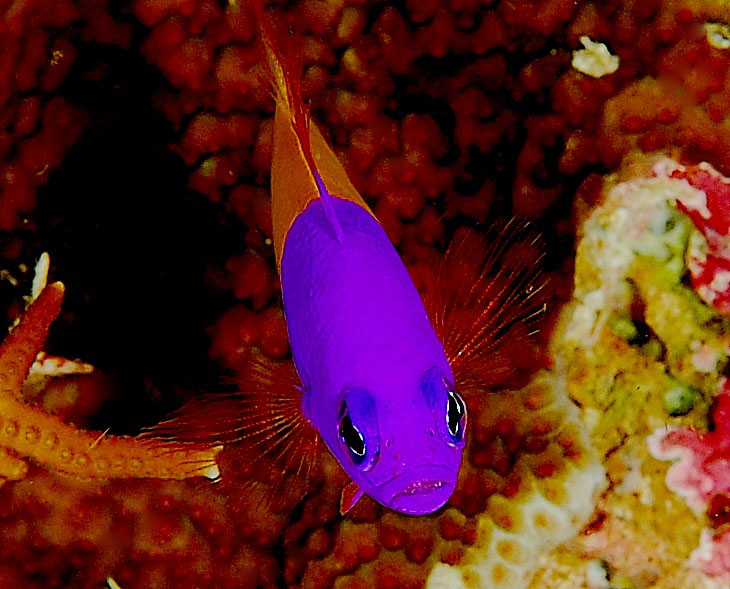
Bicolor dottyback
Pictichromis paccagnellae Bright and hardy, but much more likely to become a problem than its size suggests.Photo: Jenny (JennyHuang) from Taipei · CC BY 2.0 · fit to the card without cutting off the fish

 BRS
BRSPajama cardinalfish
Sphaeramia nematoptera A calm, odd-looking fish that works well in a peaceful beginner community.Explore the Pajama cardinalfish at Bulk Reef SupplyAffiliate link
Photo: Bulk Reef Supply · Used with permission; linked attribution required · BRS image recropped with permission

Banggai cardinalfish
Pterapogon kauderni A bold, easy-to-see cardinalfish; choose captive-bred whenever possible and plan its social arrangement before buying multiples.Photo: Rickard Zerpe · CC BY 2.0 · fit to the card without cutting off the fish
_(43875107345).jpg)
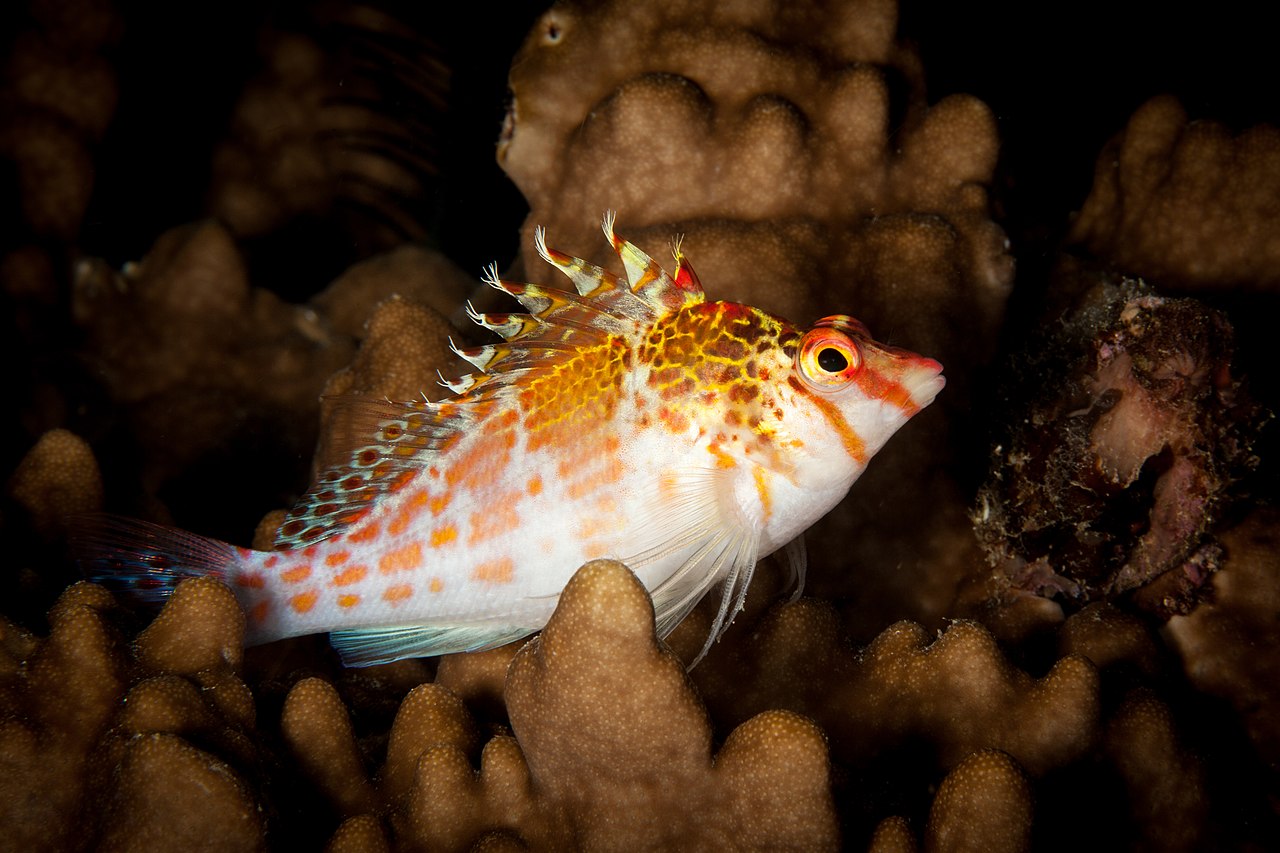
Falco hawkfish
Cirrhitichthys falco A tough, entertaining perch-and-pounce fish for a tank without tiny shrimp.Photo: q phia · CC BY 2.0 · fit to the card without cutting off the fish
.jpg)

Longnose hawkfish
Oxycirrhites typus One of the coolest fish to watch perched in branching rock or coral, but shrimp are part of the risk calculation.Photo: Diego Delso · CC BY-SA 4.0 · fit to the card without cutting off the fish
,_Nosy_Antanimora,_Madagascar,_2025-09-15,_DD_28.jpg)

Coral beauty angelfish
Centropyge bispinosa A hardy dwarf angel with beautiful color, but reef safety is always a calculated risk.Photo: Jenny (JennyHuang) from Taipei · CC BY 2.0 · fit to the card without cutting off the fish


Flame angelfish
Centropyge loriculus Stunning color and constant movement, with the same dwarf-angel warning: some are model citizens and some nip coral.Photo: Andreas März from Darmstadt, Germany · CC BY 2.0 · fit to the card without cutting off the fish
.jpg)

Yellow wrasse
Halichoeres chrysus A bright, active wrasse that is usually one of the easier Halichoeres choices for a reef.Photo: Sushi Girl1995 · CC BY-SA 3.0 · fit to the card without cutting off the fish


Six-line wrasse
Pseudocheilinus hexataenia Hardy, active, and useful in some tanks—but famous for becoming the fish that makes every later addition miserable.Photo: Brian Gratwicke · CC BY 2.0 · fit to the card without cutting off the fish
.jpg)

Leopard wrasse
Macropharyngodon meleagris A gorgeous specialist for a mature reef, not a fish to add because the photo looked irresistible.Photo: Mark Rosenstein · CC BY 3.0 · fit to the card without cutting off the fish


Carpenter’s flasher wrasse
Paracheilinus carpenteri Colorful, active, and generally reef friendly—provided every opening in the lid is covered.Photo: Gdiggers · CC BY-SA 3.0 · fit to the card without cutting off the fish


Yellow-banded possum wrasse
Wetmorella nigropinnata A tiny, secretive wrasse that fits smaller peaceful reefs better than most wrasses.Photo: Jeffrey T. Williams · Copyrighted free use · fit to the card without cutting off the fish


Green mandarin
Synchiropus splendidus Beautiful and peaceful, but the feeding plan—not the purchase price—is what determines whether this fish succeeds.Explore the Blue Mandarin Dragonet at Bulk Reef SupplyAffiliate link
Photo: Luc Viatour · CC BY-SA 3.0 · fit to the card without cutting off the fish


Yellow tang
Zebrasoma flavescens A fantastic grazer and visible centerpiece once you have the swimming room and long-term budget for it.Photo: Luc Viatour · CC BY-SA 3.0 · fit to the card without cutting off the fish


Kole tang
Ctenochaetus strigosus A hardworking bristletooth grazer that is often more manageable than the largest tangs, but it is still an active tang.Photo: KimonBerlin · CC BY-SA 2.0 · fit to the card without cutting off the fish
_(cropped).jpg)

Blue tang
Paracanthurus hepatus The famous blue tang is not a nano fish and not a sensible choice just because it is sold small.Photo: DerHans04 · CC BY-SA 3.0 · fit to the card without cutting off the fish


Foxface rabbitfish
Siganus vulpinus A useful algae grazer with calm behavior and venomous dorsal spines that deserve respect.Photo: Dr. Dwayne Meadows, NOAA/NMFS/OPR · Public domain · fit to the card without cutting off the fish


Copperband butterflyfish
Chelmon rostratus An iconic fish that can be incredibly rewarding—and incredibly difficult to establish on enough food.Photo: Luc Viatour · CC BY-SA 3.0 · fit to the card without cutting off the fish

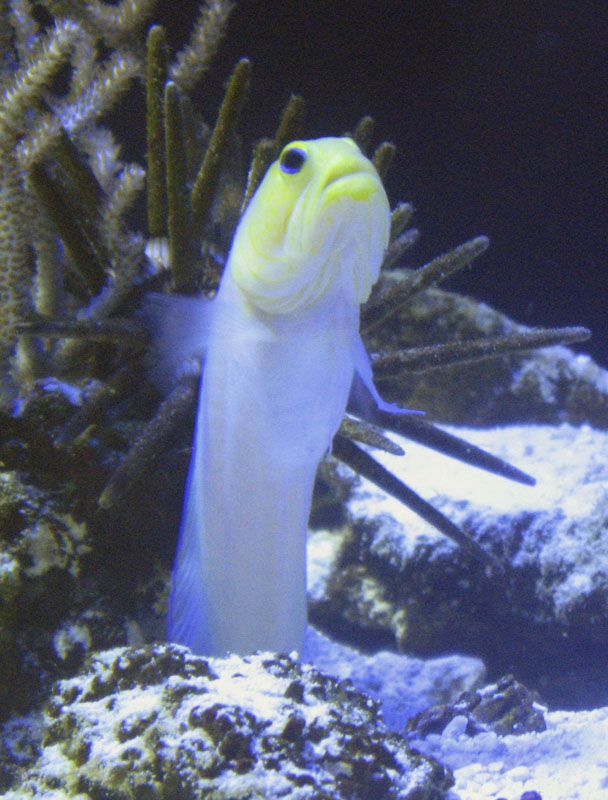
Yellowhead jawfish
Opistognathus aurifrons A burrow-building personality fish for a tank designed around deep sand and a sealed lid.Photo: http://en.wikipedia.org/wiki/Image:Opistognathus_aurifrons.jpg · CC BY-SA 3.0 · fit to the card without cutting off the fish


Valentini puffer
Canthigaster valentini A small puffer with a big personality—and teeth that make snails, shrimp, and coral a real gamble.Photo: Karelj · Public domain · fit to the card without cutting off the fish


Lyretail anthias
Pseudanthias squamipinnis Bright, active, and best in a tank built for frequent feeding and a carefully managed group.Photo: Diego Delso · CC BY-SA 4.0 · fit to the card without cutting off the fish
,_parque_nacional_Ras_Muhammad,_Egipto,_2022-03-28,_DD_98.jpg)

Snowflake moray
Echidna nebulosa One of the more manageable morays, but it still needs a locked-down lid and tankmates too large to swallow.Photo: Brocken Inaglory . Original uploader was Brocken Inaglory · CC BY-SA 3.0 · fit to the card without cutting off the fish

 BRS
BRSYellow assessor
Assessor flavissimus A peaceful cave fish that may hover upside down under ledges—strange behavior that is completely normal for it.Explore the Yellow assessor at Bulk Reef SupplyAffiliate link
Photo: Bulk Reef Supply · Used with permission; linked attribution required · BRS image recropped with permission
 BRS
BRSAiptasia-eating filefish
Acreichthys tomentosus This is one of those fish people usually buy for a job—but you still have to want the fish after the Aiptasia are gone.Explore the Aiptasia-eating filefish at Bulk Reef SupplyAffiliate link
Photo: Bulk Reef Supply · Used with permission; linked attribution required · BRS image recropped with permission
 BRS
BRSCanary blenny
Meiacanthus oualanensis Bright yellow, active, and usually peaceful—the big detail beginners miss is that this is a venomous fang blenny.Explore the Canary blenny at Bulk Reef SupplyAffiliate link
Photo: Bulk Reef Supply · Used with permission; linked attribution required · BRS image recropped with permission
 BRS
BRSChalk bass
Serranus tortugarum A small, hardy Atlantic bass that gives you plenty of color without bringing the usual bass-sized attitude.Explore the Chalk bass at Bulk Reef SupplyAffiliate link
Photo: Bulk Reef Supply · Used with permission; linked attribution required · BRS image recropped with permission
 BRS
BRSLemon damsel
Pomacentrus moluccensis This is one of the calmer damsels, but I still would not pretend that the word damsel suddenly stops mattering.Explore the Lemon damsel at Bulk Reef SupplyAffiliate link
Photo: Bulk Reef Supply · Used with permission; linked attribution required · BRS image recropped with permission
 BRS
BRSNeon dottyback
Pseudochromis aldabraensis The orange-and-blue color is incredible, but this is a fish I would choose only after thinking through every smaller tankmate.Explore the Neon dottyback at Bulk Reef SupplyAffiliate link
Photo: Bulk Reef Supply · Used with permission; linked attribution required · BRS image recropped with permission
 BRS
BRSBrazilian Longsnout Seahorse
Hippocampus reidiAlso called: Brazilian seahorse · Longsnout seahorse
Beautiful, slow-moving, and absolutely not a fish I would drop into a normal fast-paced community tank.Explore the Brazilian Longsnout Seahorse at Bulk Reef SupplyAffiliate link
Photo: Bulk Reef Supply · Used with permission; linked attribution required · BRS image fit to the card without cutting off the fish
 BRS
BRSCinnamon clownfish
Amphiprion melanopusAlso called: Coral Sea clownfish · Red-and-black anemonefish
This is a hardy clownfish, but it grows into a much bolder and more territorial fish than the Ocellaris clownfish most beginners picture.Explore the Cinnamon clownfish at Bulk Reef SupplyAffiliate link
Photo: Bulk Reef Supply · Used with permission; linked attribution required · BRS image fit to the card without cutting off the fish
 BRS
BRSElongate Dottyback
Pseudochromis elongatusAlso called: Floppy-tail dottyback
A small, hardy dottyback that is usually less aggressive than its better-known cousins—but it is still a dottyback with a territory.Explore the Elongate Dottyback at Bulk Reef SupplyAffiliate link
Photo: Bulk Reef Supply · Used with permission; linked attribution required · BRS image fit to the card without cutting off the fish
 BRS
BRSFire clownfish
Amphiprion ephippiumAlso called: Red saddle clownfish · Saddle anemonefish
Hardy and striking, but this is one of the clownfish I would choose only after deciding exactly which other fish will share the tank.Explore the Fire clownfish at Bulk Reef SupplyAffiliate link
Photo: Bulk Reef Supply · Used with permission; linked attribution required · BRS image fit to the card without cutting off the fish
 BRS
BRSHarptail Blenny
Meiacanthus mossambicusAlso called: Harptail fang blenny · Mozambique fang blenny
A peaceful, active blenny that spends more time out in the water column than the classic perch-and-hide blenny.Explore the Harptail Blenny at Bulk Reef SupplyAffiliate link
Photo: Bulk Reef Supply · Used with permission; linked attribution required · BRS image fit to the card without cutting off the fish
 BRS
BRSKamohara Blenny
Meiacanthus kamoharaiAlso called: Kamohara fang blenny · Kamoharai blenny
This is a small, active fang blenny with a ton of personality—and captive-bred fish are usually very willing to eat prepared foods.Explore the Kamohara Blenny at Bulk Reef SupplyAffiliate link
Photo: Bulk Reef Supply · Used with permission; linked attribution required · BRS image fit to the card without cutting off the fish
 BRS
BRSMarine Betta
Calloplesiops altivelisAlso called: Comet · Marine comet
The Marine Betta is slow, shy, and gorgeous. It is not a bully—but it is still a predator with a surprisingly large mouth.Explore the Marine Betta at Bulk Reef SupplyAffiliate link
Photo: Bulk Reef Supply · Used with permission; linked attribution required · BRS image fit to the card without cutting off the fish
 BRS
BRSMcCulloch’s clownfish
Amphiprion mccullochiAlso called: McCullochi clownfish · McCulloch’s anemonefish
This is a hardy captive-bred clownfish, but it belongs to the bolder end of the clownfish spectrum—not the mellow Ocellaris end.Explore the McCulloch’s clownfish at Bulk Reef SupplyAffiliate link
Photo: Bulk Reef Supply · Used with permission; linked attribution required · BRS image fit to the card without cutting off the fish
 BRS
BRSOman clownfish
Amphiprion omanensisAlso called: Oman anemonefish · Dhofar clownfish
Hardy, captive-bred, and genuinely unusual—but it is a fairly large clownfish that becomes more territorial as it settles in.Explore the Oman clownfish at Bulk Reef SupplyAffiliate link
Photo: Bulk Reef Supply · Used with permission; linked attribution required · BRS image fit to the card without cutting off the fish
 BRS
BRSOrange skunk clownfish
Amphiprion sandaracinosAlso called: Eastern skunk anemonefish · Orange anemonefish · Golden anemonefish
One of the gentler clownfish choices, with that unmistakable white stripe running from the mouth all the way down the back.Explore the Orange skunk clownfish at Bulk Reef SupplyAffiliate link
Photo: Bulk Reef Supply · Used with permission; linked attribution required · BRS image fit to the card without cutting off the fish
 BRS
BRSPink skunk clownfish
Amphiprion perideraionAlso called: Pink anemonefish · Pink skunk anemonefish · Skunk clownfish
This is one of the calmer clownfish choices. It stays fairly small, pairs readily, and gives you that classic clownfish personality without quite as much attitude.Explore the Pink skunk clownfish at Bulk Reef SupplyAffiliate link
Photo: Bulk Reef Supply · Used with permission; linked attribution required · BRS image fit to the card without cutting off the fish
 BRS
BRSPink Smith Damsel
Pomacentrus smithiAlso called: Smith’s damselfish · Pink Smith damselfish
Small, hardy, colorful, and easy to feed—this checks a lot of beginner boxes, but it is still a damsel that may become more territorial with age.Explore the Pink Smith Damsel at Bulk Reef SupplyAffiliate link
Photo: Bulk Reef Supply · Used with permission; linked attribution required · BRS image fit to the card without cutting off the fish
 BRS
BRSRandall’s Assessor
Assessor randalliAlso called: Randall’s assessor basslet · Randall’s cave basslet
A quiet little cave fish that may swim sideways or even upside down beneath an overhang. It is unusual behavior, but completely normal for an assessor.Explore the Randall’s Assessor at Bulk Reef SupplyAffiliate link
Photo: Bulk Reef Supply · Used with permission; linked attribution required · BRS image fit to the card without cutting off the fish
 BRS
BRSRed Sea two-band clownfish
Amphiprion bicinctusAlso called: Twoband anemonefish · Red Sea clownfish · Two-banded clownfish
Hardy, captive-bred, and easy to feed—but this is a Clarkii-complex clownfish that gets much more territorial as it matures.Explore the Red Sea two-band clownfish at Bulk Reef SupplyAffiliate link
Photo: Bulk Reef Supply · Used with permission; linked attribution required · BRS image fit to the card without cutting off the fish
 BRS
BRSRegal Damsel
Neopomacentrus cyanomosAlso called: Regal demoiselle · Yellowback damsel · Regal damselfish
A tough, active damsel with a dark shimmering body and bright yellow fins. It handles normal aquarium life well, but it brings a real territorial streak.Explore the Regal Damsel at Bulk Reef SupplyAffiliate link
Photo: Bulk Reef Supply · Used with permission; linked attribution required · BRS image fit to the card without cutting off the fish
 BRS
BRSSaddleback clownfish
Amphiprion polymnusAlso called: Saddle anemonefish · Saddleback anemonefish
This is not the clownfish I would drop into a tiny tank just because it looks unusual. The captive-bred fish is the better path, but it still needs room and can become territorial.Explore the Saddleback clownfish at Bulk Reef SupplyAffiliate link
Photo: Bulk Reef Supply · Used with permission; linked attribution required · BRS image fit to the card without cutting off the fish
 BRS
BRSSharknose Goby
Elacatinus evelynaeAlso called: Sharknose cleaner goby · Caribbean cleaner goby
This is one of the few fish in this batch I can genuinely see working in a small, peaceful reef. It stays tiny and may clean other fish, but tiny does not mean it can live on parasites alone.Explore the Sharknose Goby at Bulk Reef SupplyAffiliate link
Photo: Bulk Reef Supply · Used with permission; linked attribution required · BRS image fit to the card without cutting off the fish
 BRS
BRSSplendid Dottyback
Manonichthys splendensAlso called: Splendid pseudochromis · Splendid basslet
Beautiful fish, but do not let the color pattern make you forget it is still a dottyback. It is hardy and easy to feed, but it can be pushy.Explore the Splendid Dottyback at Bulk Reef SupplyAffiliate link
Photo: Bulk Reef Supply · Used with permission; linked attribution required · BRS image fit to the card without cutting off the fish
 BRS
BRSSpotcinctus clownfish
Amphiprion bicinctusAlso called: Spotcinctus Red Sea two-band · Pearl Eye Spotcinctus
This is a designer Red Sea two-band clownfish, not a separate species. It is hardy and easy to feed, but it gets larger than the classic ocellaris path and can become territorial.Explore the Spotcinctus clownfish at Bulk Reef SupplyAffiliate link
Photo: Bulk Reef Supply · Used with permission; linked attribution required · BRS image fit to the card without cutting off the fish
 BRS
BRSSpringer’s Dottyback
Pseudochromis springeriAlso called: Springeri dottyback · Blue-striped dottyback
This is one of the more manageable dottybacks, especially as a captive-bred fish, but it is still a dottyback. Give it rockwork, hiding places, and tankmates that will not be bullied.Explore the Springer’s Dottyback at Bulk Reef SupplyAffiliate link
Photo: Bulk Reef Supply · Used with permission; linked attribution required · BRS image fit to the card without cutting off the fish
 BRS
BRSStriped Blenny
Meiacanthus grammistesAlso called: Striped fangblenny · Grammistes blenny · Striped poison-fang blenny
This is an active, beautiful blenny that spends much more time out in the open than many blennies. It is also a venomous fang blenny, and that is not a detail I want you to miss.Explore the Striped Blenny at Bulk Reef SupplyAffiliate link
Photo: Bulk Reef Supply · Used with permission; linked attribution required · BRS image fit to the card without cutting off the fish
 BRS
BRSStriped Dottyback
Pseudochromis sankeyiAlso called: Sankey’s dottyback · Striped pseudochromis · Black-and-white dottyback
If you love dottybacks but do not love the reputation that comes with them, this is one of the more reasonable options. It is still territorial, but generally less intense than many of its relatives.Explore the Striped Dottyback at Bulk Reef SupplyAffiliate link
Photo: Bulk Reef Supply · Used with permission; linked attribution required · BRS image fit to the card without cutting off the fish
 BRS
BRSSunrise Dottyback
Pseudochromis flavivertexAlso called: Sunrise pseudochromis · Yellowback dottyback · Yellowback pseudochromis
The blue body and yellow stripe are fantastic, but this is still a dottyback. It is easy to feed and captive-bred, yet it can be much bolder and more territorial than its size suggests.Explore the Sunrise Dottyback at Bulk Reef SupplyAffiliate link
Photo: Bulk Reef Supply · Used with permission; linked attribution required · BRS image fit to the card without cutting off the fish
 BRS
BRSTiger Goby
Tigrigobius macrodonAlso called: Tiger reef goby · Formerly Elacatinus macrodon
This is a genuinely useful little nano-reef option. It stays small, is peaceful with other species, and gives you a very different striped look without needing a large aquarium.Explore the Tiger Goby at Bulk Reef SupplyAffiliate link
Photo: Bulk Reef Supply · Used with permission; linked attribution required · BRS image fit to the card without cutting off the fish
 BRS
BRSTransparent Cave Goby
Fusigobius pallidusAlso called: Pallid goby · Transparent goby · Pale sand goby
This is one of those fish that looks subtle in a photo and much more interesting in person. Under aquarium light, you can see the orange spots, blue sheen, and even parts of its internal structure.Explore the Transparent Cave Goby at Bulk Reef SupplyAffiliate link
Photo: Bulk Reef Supply · Used with permission; linked attribution required · BRS image fit to the card without cutting off the fish
 BRS
BRSWhite Spotted Pygmy Filefish
Rudarius ercodesAlso called: Whitespotted pygmy filefish · Pygmy leatherjacket · Dwarf filefish
This is a genuinely unusual little fish. It stays small, changes color with its mood and surroundings, and can work in a peaceful aquarium without demanding a huge tank.Explore the White Spotted Pygmy Filefish at Bulk Reef SupplyAffiliate link
Photo: Bulk Reef Supply · Used with permission; linked attribution required · BRS image fit to the card without cutting off the fish
 BRS
BRSYellowline Goby
Elacatinus figaroAlso called: Yellow line goby · Yellowline cleaner goby · Brazilian cleaner goby
This is a small captive-bred cleaner goby that is easy to feed and fun to watch. It can pick parasites from larger fish, but it will also eat the frozen and prepared foods you offer.Explore the Yellowline Goby at Bulk Reef SupplyAffiliate link
Photo: Bulk Reef Supply · Used with permission; linked attribution required · BRS image fit to the card without cutting off the fish
 BRS
BRSMisbar Blood Orange Clownfish
Amphiprion biaculeatus × Amphiprion ocellarisAlso called: Blood Orange clownfish · Maroon × Ocellaris hybrid · Misbar Blood Orange
This captive-bred hybrid combines a female Maroon Clownfish with a male Ocellaris. You get a striking red-orange fish that is usually easier to manage than a full-size maroon, but it is not just an Ocellaris with a different paint job.Explore the Misbar Blood Orange Clownfish at Bulk Reef SupplyAffiliate link
Photo: Bulk Reef Supply · Used with permission; linked attribution required · BRS image fit to the card without cutting off the fish
 BRS
BRSElectric Indigo Dottyback
Pseudochromis fridmani × Pseudochromis sankeyiAlso called: Electric Indigo pseudochromis · Indigo hybrid dottyback · Fridmani × Sankeyi hybrid
This captive-bred hybrid has a turquoise-blue top, a strong black center stripe, and a white belly. It is one of the more reasonable dottybacks, but “more reasonable” does not mean completely peaceful.Explore the Electric Indigo Dottyback at Bulk Reef SupplyAffiliate link
Photo: Bulk Reef Supply · Used with permission; linked attribution required · BRS image fit to the card without cutting off the fish
 BRS
BRSHybrid Storm Clownfish
Amphiprion percula × Amphiprion ocellarisAlso called: Percula × Ocellaris hybrid · Storm hybrid clownfish · Picasso Percula × Storm Ocellaris
This is a captive-bred cross between a Picasso Percula and a Storm Ocellaris. The white body and orange-red markings are dramatic, and those colored areas often darken as the fish matures.Explore the Hybrid Storm Clownfish at Bulk Reef SupplyAffiliate link
Photo: Bulk Reef Supply · Used with permission; linked attribution required · BRS image fit to the card without cutting off the fish
 BRS
BRSAiptasia Eating Filefish
Acreichthys tomentosusAlso called: Aiptasia-eating filefish · Bristletail filefish · Matted filefish
This is the filefish people buy when Aiptasia starts winning. It is captive-bred, stays fairly small, and has a slow, odd swimming style that makes it fun to watch even after the pest problem is under control.Explore the Aiptasia Eating Filefish at Bulk Reef SupplyAffiliate link
Photo: Bulk Reef Supply · Used with permission; linked attribution required · BRS image fit to the card without cutting off the fish
Corals & anemones72 cards
 BRS
BRSPulsing Xenia
Xenia umbellata One of the most recognizable motion corals, and one of the least predictable from tank to tank.Explore Pulsing Xenia corals at Bulk Reef SupplyAffiliate link
Photo: Bulk Reef Supply · Used with permission; linked attribution required · BRS image fit to the card without cutting off the coral
 BRS
BRSKenya tree coral
Capnella imbricata A hardy soft coral that can drop branches and create new colonies without asking permission.Explore Kenya tree corals at Bulk Reef SupplyAffiliate link
Photo: Bulk Reef Supply · Used with permission; linked attribution required · BRS image fit to the card without cutting off the coral
 BRS
BRSToadstool leather coral
Sarcophyton glaucum A classic first leather coral that becomes a real centerpiece once it settles in and opens.Explore toadstool leather corals at Bulk Reef SupplyAffiliate link
Photo: Bulk Reef Supply · Used with permission; linked attribution required · BRS image fit to the card without cutting off the coral
 BRS
BRSFinger leather coral
Sclerophytum flexibile A branching leather that adds movement and height without demanding SPS-level precision.Explore finger leather corals at Bulk Reef SupplyAffiliate link
Photo: Bulk Reef Supply · Used with permission; linked attribution required · BRS image fit to the card without cutting off the coral
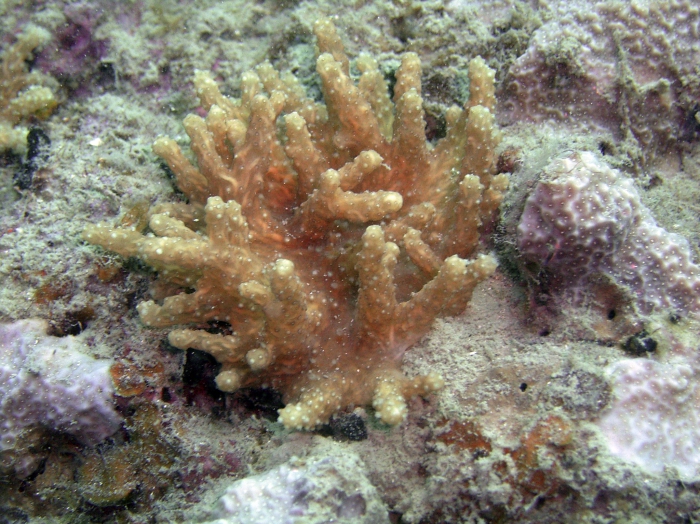
Cabbage leather coral
Sinularia brassica Tough, textured, and usually straightforward when flow keeps its folded surface clean.Photo: Leen van Ofwegen via WoRMS · CC BY-NC-SA 4.0 · fit to the card without cutting off the coral

Devil’s hand leather coral
Lobophytum pauciflorum A durable leather with a bold shape and very manageable basic care.Explore Devil’s hand leather coral at Bulk Reef SupplyAffiliate link
Photo: David Witherall · CC BY 3.0 · fit to the card without cutting off the coral

Blue clove polyps
Clavularia viridis Tiny blue polyps can look harmless right up until they are growing through every gap in the rockwork.Explore clove polyps at Bulk Reef SupplyAffiliate link
Photo: PilarMeca · CC BY-SA 3.0 · fit to the card without cutting off the coral

Waving hand coral
Anthelia glauca Soft, waving polyps create constant motion and can be easy to keep in a stable reef.Explore waving hand coral at Bulk Reef SupplyAffiliate link
Photo: Fernando Herranz Martín · GPL · fit to the card without cutting off the coral

Organ pipe coral
Tubipora musica It looks like a soft coral when open, but the red pipe-like skeleton underneath makes it easy to recognize.Photo: Frédéric Ducarme · CC BY-SA 4.0 · fit to the card without cutting off the coral

Corky sea finger
Briareum asbestinum A Caribbean gorgonian-style soft coral with tan polyps and an upright, branching shape.Photo: Fernándo Herranz Martín · GPL · fit to the card without cutting off the coral
 BRS
BRSZoanthids
Zoanthus Colorful, adaptable, and easy to collect—which is exactly why a few polyps can turn into fifty named morphs in a hurry.Explore zoanthid corals at Bulk Reef SupplyAffiliate link
Photo: Bulk Reef Supply · Used with permission; linked attribution required · BRS image fit to the card without cutting off the coral
.jpg?width=900)
Giant Palythoa
Palythoa grandis Large individual polyps make this an impressive colony, but bigger polyps do not make handling casual.Photo: Nhobgood Nick Hobgood · CC BY-SA 3.0 · fit to the card without cutting off the coral

Discosoma mushroom coral
Discosoma One of the easiest ways to add color to a lower-light area of a beginner reef.Explore a Discosoma mushroom coral at Bulk Reef SupplyAffiliate link
Photo: Emőke Dénes · CC BY-SA 4.0 · fit to the card without cutting off the coral
.jpg?width=900)
Florida Ricordea
Ricordea florida A colorful mushroom with round bubble-like vesicles and a generally manageable growth habit.Explore Florida Ricordea at Bulk Reef SupplyAffiliate link
Photo: Nhobgood ( talk ) Nick Hobgood · CC BY-SA 3.0 · fit to the card without cutting off the coral
 BRS
BRSYuma Ricordea
Ricordea yuma Beautiful and similar to Florida Ricordea at first glance, but often less forgiving during shipping and acclimation.Explore Yuma Ricordea at Bulk Reef SupplyAffiliate link
Photo: Bulk Reef Supply · Used with permission; linked attribution required · BRS image fit to the card without cutting off the coral
 BRS
BRSRhodactis mushroom coral
Rhodactis A textured mushroom group that ranges from easy fuzzy colonies to expensive bounce morphs.Explore Rhodactis mushroom corals at Bulk Reef SupplyAffiliate link
Photo: Bulk Reef Supply · Used with permission; linked attribution required · BRS image fit to the card without cutting off the coral
 BRS
BRSElephant ear mushroom
Amplexidiscus fenestrafer A huge corallimorph that can become the dominant animal in a small aquascape.Explore an elephant ear mushroom at Bulk Reef SupplyAffiliate link
Photo: Bulk Reef Supply · Used with permission; linked attribution required · BRS image fit to the card without cutting off the coral
.jpg?width=900)
Wall hammer coral
Fimbriaphyllia ancora Classic anchor-shaped tentacles and big movement make this a favorite LPS centerpiece.Photo: Nhobgood Nick Hobgood · CC BY-SA 3.0 · fit to the card without cutting off the coral
 BRS
BRSBranching hammer coral
Fimbriaphyllia paraancora The branching version is easier to divide and often easier to manage when one head is damaged.Explore branching hammer corals at Bulk Reef SupplyAffiliate link
Photo: Bulk Reef Supply · Used with permission; linked attribution required · BRS image fit to the card without cutting off the coral
 BRS
BRSFrogspawn coral
Fimbriaphyllia divisa Big bubbly tentacles create the same kind of movement people love in hammer corals.Explore frogspawn corals at Bulk Reef SupplyAffiliate link
Photo: Bulk Reef Supply · Used with permission; linked attribution required · BRS image fit to the card without cutting off the coral
 BRS
BRSTorch coral
Euphyllia glabrescens Long moving tentacles make a torch coral impossible to ignore.Explore Torch coral varieties at Bulk Reef SupplyAffiliate link
Photo: Bulk Reef Supply · Used with permission; linked attribution required · BRS image fit to the card without cutting off the coral
 BRS
BRSDuncan coral
Duncanopsammia axifuga One of the best first LPS corals because feeding response and new heads are easy to observe.Explore Duncan coral at Bulk Reef SupplyAffiliate link
Photo: Bulk Reef Supply · Used with permission; linked attribution required · BRS image fit to the card without cutting off the coral
 BRS
BRSCandy cane coral
Caulastraea furcata A branching LPS with separate fleshy heads that makes growth and damage easy to see.Explore Candy cane coral at Bulk Reef SupplyAffiliate link
Photo: Bulk Reef Supply · Used with permission; linked attribution required · BRS image fit to the card without cutting off the coral

Blastomussa wellsi
Blastomussa wellsi Large fleshy polyps and lower-light tolerance make this a beautiful, slower-growing LPS option.Photo: Benzoni, F. · CC BY 3.0 · fit to the card without cutting off the coral
 BRS
BRSBlastomussa merleti
Blastomussa merleti Smaller individual polyps create a dense colony that can fit into shaded parts of the aquascape.Explore Blastomussa merleti corals at Bulk Reef SupplyAffiliate link
Photo: Bulk Reef Supply · Used with permission; linked attribution required · BRS image fit to the card without cutting off the coral
 BRS
BRSAcan lord coral
Micromussa lordhowensis A very popular fleshy LPS that comes in endless color patterns and usually shows a strong feeding response.Explore Acan lord corals at Bulk Reef SupplyAffiliate link
Photo: Bulk Reef Supply · Used with permission; linked attribution required · BRS image fit to the card without cutting off the coral
 BRS
BRSFavites brain coral
Favites abdita A compact brain coral that can look peaceful all day and become much more competitive after lights out.Explore Favites coral varieties at Bulk Reef SupplyAffiliate link
Photo: Bulk Reef Supply · Used with permission; linked attribution required · BRS image fit to the card without cutting off the coral
 BRS
BRSLobophyllia brain coral
Lobophyllia hemprichii Large fleshy lobes make this a dramatic sand-bed or lower-rock coral.Explore Lobophyllia corals at Bulk Reef SupplyAffiliate link
Photo: Bulk Reef Supply · Used with permission; linked attribution required · BRS image fit to the card without cutting off the coral

Open brain coral
Trachyphyllia geoffroyi A solitary fleshy coral that belongs on a stable, unobstructed lower area—not balanced on sharp rock.Explore open brain corals at Bulk Reef SupplyAffiliate link
Photo: Gdiggers · CC BY-SA 3.0 · fit to the card without cutting off the coral

Australian Scolymia
Homophyllia australis A colorful solitary coral that turns feeding time into a show.Explore Australian Scolymia corals at Bulk Reef SupplyAffiliate link
Photo: Jessica Rosenkrantz · CC BY-SA 4.0 · fit to the card without cutting off the coral

Elegance coral
Catalaphyllia jardinei When healthy and extended, an elegance coral is one of the most impressive animals in a reef tank.Photo: Tappinen · CC BY-SA 3.0 · fit to the card without cutting off the coral
 BRS
BRSBubble coral
Plerogyra sinuosa Inflated daytime vesicles give this coral its name and make it look gentler than it is.Explore Bubble coral at Bulk Reef SupplyAffiliate link
Photo: Bulk Reef Supply · Used with permission; linked attribution required · BRS image fit to the card without cutting off the coral
 BRS
BRSChalice coral
Echinophyllia aspera A hobby catch-all for several encrusting or plating LPS corals with dramatic colors.Explore Chalice coral varieties at Bulk Reef SupplyAffiliate link
Photo: Bulk Reef Supply · Used with permission; linked attribution required · BRS image fit to the card without cutting off the coral

Plate coral
Fungia fungites A free-living coral that inflates, moves, and belongs on an open sand bed.Photo: Stickpen · Public domain · fit to the card without cutting off the coral
 BRS
BRSGoniopora flowerpot coral
Goniopora stokesi Long flower-like polyps are gorgeous, and modern aquacultured colonies can be far more manageable than the old reputation suggests.Explore Goniopora corals at Bulk Reef SupplyAffiliate link
Photo: Bulk Reef Supply · Used with permission; linked attribution required · BRS image fit to the card without cutting off the coral

Acropora millepora
Acropora millepora A fast-growing branching Acropora once the tank is truly stable.Photo: MDC Seamarc Maldives · CC BY-SA 4.0 · fit to the card without cutting off the coral

Acropora tenuis
Acropora tenuis A highly variable Acropora associated with many colorful trade morphs.Explore Acropora tenuis at Bulk Reef SupplyAffiliate link
Photo: MDC Seamarc Maldives · CC BY-SA 4.0 · fit to the card without cutting off the coral

Montipora capricornis
Montipora capricornis Plating growth creates dramatic shelves quickly in a healthy reef.Explore Montipora capricornis corals at Bulk Reef SupplyAffiliate link
Photo: Grendelkhan · CC BY-SA 3.0 · fit to the card without cutting off the coral
 BRS
BRSMontipora digitata
Montipora digitata A branching Montipora that is often a more forgiving first SPS than Acropora.Explore Montipora digitata corals at Bulk Reef SupplyAffiliate link
Photo: Bulk Reef Supply · Used with permission; linked attribution required · BRS image fit to the card without cutting off the coral
 BRS
BRSMontipora setosa
Montipora setosa Thick orange branches and bumps make this Montipora easy to recognize at the hobby level.Explore Montipora setosa corals at Bulk Reef SupplyAffiliate link
Photo: Bulk Reef Supply · Used with permission; linked attribution required · BRS image fit to the card without cutting off the coral
 BRS
BRSBirdsnest coral
Seriatopora hystrix Fine branches and rapid growth can create a beautiful colony in a stable tank.Explore Birdsnest corals at Bulk Reef SupplyAffiliate link
Photo: Bulk Reef Supply · Used with permission; linked attribution required · BRS image fit to the card without cutting off the coral
 BRS
BRSPocillopora coral
Pocillopora damicornis A compact branching SPS that can be hardy and fast-growing once settled.Explore Pocillopora corals at Bulk Reef SupplyAffiliate link
Photo: Bulk Reef Supply · Used with permission; linked attribution required · BRS image fit to the card without cutting off the coral
 BRS
BRSStylophora coral
Stylophora pistillata A chunky branching SPS that is often easier to start with than delicate Acropora.Explore Stylophora corals at Bulk Reef SupplyAffiliate link
Photo: Bulk Reef Supply · Used with permission; linked attribution required · BRS image fit to the card without cutting off the coral

Cactus coral
Pavona cactus A plating and ridged Pavona that can handle a range of conditions once established.Explore Pavona corals at Bulk Reef SupplyAffiliate link
Photo: Mark Forsling · CC BY-SA 4.0 · fit to the card without cutting off the coral
 BRS
BRSPectinia coral
Pectinia sp.Also called: Space Invader Pectinia · Comb coral · Lettuce coral
Pectinia grows in thin, wavy folds that can look almost sculpted. The Space Invader variety is the one most people recognize, with bright yellow eyes sitting against a neon-green base.Explore the Pectinia coral at Bulk Reef SupplyAffiliate link
Photo: Bulk Reef Supply · Used with permission; linked attribution required · BRS image fit to the card without cutting off the coral
 BRS
BRSCespitularia coral
Cespitularia sp.Also called: Blue Cespitularia · Vargas Cespitularia · Blue Xenia
Cespitularia is a soft coral with shimmering stalks and tiny polyps. It can look fantastic under reef lighting, and it is generally much easier to keep than the delicate appearance suggests.Explore the Cespitularia coral at Bulk Reef SupplyAffiliate link
Photo: Bulk Reef Supply · Used with permission; linked attribution required · BRS image fit to the card without cutting off the coral
 BRS
BRSMontipora spongodes
Montipora spongodesAlso called: Spongodes Montipora · ORA Spongodes · Branching-plating Montipora
Spongodes is a Montipora that cannot quite decide whether it wants to plate, encrust, or branch, so it does all three. That mixed growth pattern makes a mature colony especially interesting.Explore the Montipora spongodes at Bulk Reef SupplyAffiliate link
Photo: Bulk Reef Supply · Used with permission; linked attribution required · BRS image fit to the card without cutting off the coral
 BRS
BRSAcropora granulosa
Acropora granulosaAlso called: Granulosa Acropora · Raspberry Granulosa · Bottlebrush Acropora
Acropora granulosa develops smooth, closely packed branches and can grow into a beautiful table. Its color can shift between green, pink, and purple depending on the light and the stability of the aquarium.Explore the Acropora granulosa at Bulk Reef SupplyAffiliate link
Photo: Bulk Reef Supply · Used with permission; linked attribution required · BRS image fit to the card without cutting off the coral
 BRS
BRSPorites coral
Porites sp.Also called: Sand Dollar Porites · Encrusting Porites · Finger coral
Porites can grow as an encrusting sheet, a mound, or finger-like branches depending on the species. The Sand Dollar variety grows as a colorful encrusting mat over the rock.Explore the Porites coral at Bulk Reef SupplyAffiliate link
Photo: Bulk Reef Supply · Used with permission; linked attribution required · BRS image fit to the card without cutting off the coral
 BRS
BRSPsammocora coral
Psammocora sp.Also called: Kelly Green Psammocora · Sandpaper coral · Wrinkle coral
Psammocora starts by encrusting the rock and can eventually build thick, uneven branches. When the polyps pull in, the surface has the rough texture that gives it the sandpaper-coral nickname.Explore the Psammocora coral at Bulk Reef SupplyAffiliate link
Photo: Bulk Reef Supply · Used with permission; linked attribution required · BRS image fit to the card without cutting off the coral
 BRS
BRSNepthea coral
Nepthea sp.Also called: Nepthea leather coral · Tree coral · Branching soft coral
Nepthea is a branching soft coral covered in fine polyps. It moves gently with the water and gives you that flowing, natural look without asking for the precision of an SPS-dominant aquarium.Explore the Nepthea coral at Bulk Reef SupplyAffiliate link
Photo: Bulk Reef Supply · Used with permission; linked attribution required · BRS image fit to the card without cutting off the coral
 BRS
BRSHydnophora coral
Hydnophora sp.Also called: Green Hydnophora · Horn coral · Velvet horn coral
Hydnophora has a bright, almost fuzzy surface when its tissue is inflated, then pulls back to reveal a very recognizable skeleton. It is often grouped with SPS corals even though it behaves like an LPS coral in several important ways.Explore the Hydnophora coral at Bulk Reef SupplyAffiliate link
Photo: Bulk Reef Supply · Used with permission; linked attribution required · BRS image fit to the card without cutting off the coral
 BRS
BRSAcropora echinata
Acropora echinataAlso called: Hawkins’ Blue Echinata · Echinata Acropora · Bottlebrush Acropora
Acropora echinata forms delicate, short branches and can develop turquoise, aquamarine, and ultraviolet color. It is a beautiful coral, but it is not forgiving of a tank that is still swinging around.Explore the Acropora echinata at Bulk Reef SupplyAffiliate link
Photo: Bulk Reef Supply · Used with permission; linked attribution required · BRS image fit to the card without cutting off the coral
 BRS
BRSGalaxea coral
Galaxea sp.Also called: Galaxy coral · Tooth coral · Crystal coral
Galaxea is bright, fast-growing, and covered in tiny flower-like polyps. It can be a very manageable coral from a water-quality standpoint, but the space around it matters just as much as the light above it.Explore the Galaxea coral at Bulk Reef SupplyAffiliate link
Photo: Bulk Reef Supply · Used with permission; linked attribution required · BRS image fit to the card without cutting off the coral
 BRS
BRSCyphastrea coral
Cyphastrea sp.Also called: Meteor Shower Cyphastrea · Encrusting Cyphastrea · Meteor coral
Cyphastrea grows as a thin mat over rock and can bring a lot of color into a lower-light part of the aquascape. Meteor Shower is the familiar version with a blue-green base and bright orange or pink polyps.Explore the Cyphastrea coral at Bulk Reef SupplyAffiliate link
Photo: Bulk Reef Supply · Used with permission; linked attribution required · BRS image fit to the card without cutting off the coral
 BRS
BRSMontipora confusa
Montipora sp.Also called: Confusa Montipora · ORA Confusa · Ridged plating Montipora
Confusa is a plating Montipora with raised ridges, a green base, and a purple growing edge. A mature colony may plate outward and also throw up short branches, which gives it a much rougher look than a smooth Montipora cap.Explore the Montipora confusa at Bulk Reef SupplyAffiliate link
Photo: Bulk Reef Supply · Used with permission; linked attribution required · BRS image fit to the card without cutting off the coral
 BRS
BRSAcropora nana
Acropora nanaAlso called: Purple Nana Acropora · Nana Acro · Purple-tip Acropora
Acropora nana grows thin branches with bright tips and tightly packed polyps. Under strong reef lighting, the Purple Nana variety can develop deep purple ends over a tan or cream-colored base.Explore the Acropora nana at Bulk Reef SupplyAffiliate link
Photo: Bulk Reef Supply · Used with permission; linked attribution required · BRS image fit to the card without cutting off the coral
 BRS
BRSAcropora insignis
Acropora insignisAlso called: Ant Insignis · Micronesian Ant Insignis · Insignis Acropora
Acropora insignis is a branching SPS coral that comes from shallow, brightly lit reef habitat. The BRS specimen is maricultured near Ant Atoll in Micronesia rather than grown entirely inside a land-based aquarium.Explore the Acropora insignis at Bulk Reef SupplyAffiliate link
Photo: Bulk Reef Supply · Used with permission; linked attribution required · BRS image fit to the card without cutting off the coral
 BRS
BRSLeptoseris coral
Leptoseris sp.Also called: Shattered Light Leptoseris · Wrinkle coral · Encrusting Leptoseris
Leptoseris is an encrusting stony coral that can fill in the shaded rock where many other corals struggle. The surface grows in thin ridges and folds, so a colony can look almost like a glowing contour map.Explore the Leptoseris coral at Bulk Reef SupplyAffiliate link
Photo: Bulk Reef Supply · Used with permission; linked attribution required · BRS image fit to the card without cutting off the coral
 BRS
BRSBubble-tip anemone
Entacmaea quadricolorAlso called: BTA · Bulb-tip anemone · Rose bubble-tip anemone
Bubble-tip anemones are the anemones most beginners recognize, and they can be incredible animals in the right tank. The catch is that they move, they sting, and they get to choose their own location after you add them.Explore the Bubble-tip anemone at Bulk Reef SupplyAffiliate link
Photo: Bulk Reef Supply · Used with permission; linked attribution required · BRS image fit to the card without cutting off the animal
 BRS
BRSGrube’s gorgonian
Pinnigorgia flavaAlso called: Grube’s sea rod · Photosynthetic gorgonian · Pinnigorgia gorgonian
Grube’s gorgonian grows thin, flexible branches covered in small polyps. Because it is photosynthetic, it is a much more realistic first gorgonian than the brightly colored non-photosynthetic species that need frequent feeding.Explore the Grube’s gorgonian at Bulk Reef SupplyAffiliate link
Photo: Bulk Reef Supply · Used with permission; linked attribution required · BRS image fit to the card without cutting off the animal
 BRS
BRSPlatygyra coral
Platygyra sp.Also called: Maze brain coral · Brain coral · Firewater Platygyra
Platygyra is a maze-pattern brain coral with winding valleys across its surface. It can handle a useful range of light, but it still needs stable water and enough open space to grow without constant contact from neighboring corals.Explore the Platygyra coral at Bulk Reef SupplyAffiliate link
Photo: Bulk Reef Supply · Used with permission; linked attribution required · BRS image fit to the card without cutting off the animal
 BRS
BRSAsterospicularia coral
Asterospicularia sp.Also called: Blue soft coral · Asterospicularia · Star-polyp soft coral
Asterospicularia is a branching soft coral with tiny star-shaped polyps and a blue-gray cast under reef lighting. This card stays at genus level because the BRS listing does not identify the exact species.Explore the Asterospicularia coral at Bulk Reef SupplyAffiliate link
Photo: Bulk Reef Supply · Used with permission; linked attribution required · BRS image fit to the card without cutting off the animal
 BRS
BRSRumphella gorgonian
Rumphella sp.Also called: Photosynthetic gorgonian · Pink sea fan · Branching gorgonian
Rumphella is a branching, photosynthetic gorgonian that adds height and movement without the constant feeding schedule of a non-photosynthetic sea fan. The exact species is not stated on the BRS listing, so this card stays at genus level.Explore the Rumphella gorgonian at Bulk Reef SupplyAffiliate link
Photo: Bulk Reef Supply · Used with permission; linked attribution required · BRS image fit to the card without cutting off the animal
 BRS
BRSBlue Lagoon Acan
Micromussa sp.Also called: Acan coral · Acan lord · Micromussa coral
Blue Lagoon Acan is a trade-name Micromussa with large, fleshy polyps and bright bands of color. “Acan” is still the name most hobbyists use, but the BRS page does not give an exact species, so this identification stays at genus level.Explore the Blue Lagoon Acan at Bulk Reef SupplyAffiliate link
Photo: Bulk Reef Supply · Used with permission; linked attribution required · BRS image fit to the card without cutting off the animal
 BRS
BRSStylocoeniella coral
Stylocoeniella sp.Also called: Twisted Metal Stylocoeniella · Encrusting SPS · Stylocoeniella
Stylocoeniella is an encrusting SPS that spreads across the surface beneath it. Its tiny polyps give the colony a textured look, and it can work lower in a reef than many people expect from an SPS coral.Explore the Stylocoeniella coral at Bulk Reef SupplyAffiliate link
Photo: Bulk Reef Supply · Used with permission; linked attribution required · BRS image fit to the card without cutting off the animal
 BRS
BRSSinularia leather coral
Sinularia sp.Also called: Finger leather coral · Glow Stick Sinularia · Leather coral
Sinularia is a hardy leather coral that grows upward in soft, branching lobes. It is a good option when you want movement and height without adding another stony coral to the tank.Explore the Sinularia leather coral at Bulk Reef SupplyAffiliate link
Photo: Bulk Reef Supply · Used with permission; linked attribution required · BRS image fit to the card without cutting off the animal
 BRS
BRSElephant skin coral
Pachyseris sp.Also called: Elephant skin coral · Corduroy coral · Pachyseris coral
Elephant skin coral grows in ridged, plating layers that look very different from a branching SPS. The trade name is useful for recognition, but the BRS listing does not state an exact species, so this card stays at genus level.Explore the Elephant skin coral at Bulk Reef SupplyAffiliate link
Photo: Bulk Reef Supply · Used with permission; linked attribution required · BRS image fit to the card without cutting off the animal
 BRS
BRSCauliflower coral
Nephtheidae sp.Also called: Cookies & Cream Cauliflower · Cauliflower soft coral · Nephtheid soft coral
This soft coral really does look a little like a head of cauliflower when its polyps pull in. BRS identifies it only as Nephtheidae sp., so that is as specific as this card gets.Explore the Cauliflower coral at Bulk Reef SupplyAffiliate link
Photo: Bulk Reef Supply · Used with permission; linked attribution required · BRS image fit to the card without cutting off the coral
 BRS
BRSPurple & yellow scroll coral
LPS coral; species not stated by BRSAlso called: Scroll coral · Plating scroll coral · Purple and yellow scroll
This coral can grow in plates, cups, or scroll-like shapes, which makes it look very different as the colony gets larger. BRS does not state a species, so this card stays at the trade-group level.Explore the Purple & yellow scroll coral at Bulk Reef SupplyAffiliate link
Photo: Bulk Reef Supply · Used with permission; linked attribution required · BRS image fit to the card without cutting off the coral
 BRS
BRSFavia / Dipsastraea brain coral
Dipsastraea spp. (often sold as Favia)Also called: Favia coral · Moon coral · Closed brain coral
Favia is still used all over the hobby, even though many of the corals sold under that name now belong in Dipsastraea. For a beginner, the useful lesson is the shape, the nighttime feeding behavior, and the space this coral needs—not pretending every trade name gives us a perfect species ID.Explore the Favia / Dipsastraea brain coral at Bulk Reef SupplyAffiliate link
Photo: Bulk Reef Supply · Used with permission; linked attribution required · BRS image fit to the card without cutting off the coral
 BRS
BRSYellow polyps
Hydrozoanthus gracilisAlso called: Colonial yellow polyps · Yellow button polyps · Golden polyps
Yellow polyps are bright, easy to recognize, and often very willing to grow. That can be exactly what a new hobbyist wants—until the colony reaches a rock or coral you did not want it to cover.Explore the Yellow polyps at Bulk Reef SupplyAffiliate link
Photo: Bulk Reef Supply · Used with permission; linked attribution required · BRS image fit to the card without cutting off the coral
Macroalgae & marine plants18 cards
 BRS
BRSChaetomorpha / chaeto
ChaetomorphaChaeto is the refugium macroalgae most beginners mean when they say they want nutrient export. It is useful because you can keep the tangled mass out of the display, let it grow, and remove portions of that growth.Explore Chaetomorpha / chaeto at Bulk Reef SupplyAffiliate link
Photo: Bulk Reef Supply · Used with permission; linked attribution required · full specimen fit to the card without cutting off the macroalgae
 BRS
BRSSea lettuce
UlvaSea lettuce is a bright green, leafy macroalgae that can grow quickly and makes very obvious harvestable biomass. It can work in a refugium or as occasional food for compatible herbivores.Explore Sea lettuce at Bulk Reef SupplyAffiliate link
Photo: Bulk Reef Supply · Used with permission; linked attribution required · full specimen fit to the card without cutting off the macroalgae
 BRS
BRSDragon’s Breath
Halymenia durvilleiDragon’s Breath is one of the easiest red macroalgae to recognize in the hobby: red, flame-shaped fronds with bright orange tips under suitable light. It can be the star of a display or a slower-growing refugium crop.Explore Dragon’s Breath at Bulk Reef SupplyAffiliate link
Photo: Bulk Reef Supply · Used with permission; linked attribution required · full specimen fit to the card without cutting off the macroalgae
 BRS
BRSRed Ogo
Gracilaria parvisporaRed Ogo is a branching Gracilaria that can be grown for display, refugium harvest, or supplemental food. Those are three different jobs, so decide which one matters before you place it.Explore Red Ogo at Bulk Reef SupplyAffiliate link
Photo: Bulk Reef Supply · Used with permission; linked attribution required · full specimen fit to the card without cutting off the macroalgae
 BRS
BRSPom Pom Gracilaria
Gracilaria hayiPom Pom Gracilaria makes a dense red bush that looks good in a display and can also grow as a harvestable refugium crop. It gives beginners a red-algae option that is not just another loose green ball.Explore Pom Pom Gracilaria at Bulk Reef SupplyAffiliate link
Photo: Bulk Reef Supply · Used with permission; linked attribution required · full specimen fit to the card without cutting off the macroalgae

Red grape macroalgae
BotryocladiaRed grape macroalgae grows clusters of rounded red vesicles on branching stems, which makes it look completely different from Ogo or Dragon’s Breath. This card stays at Botryocladia genus level because the trade name is used loosely.Photo: Coughdrop12 · CC BY-SA 4.0 · full specimen fit to the card without cutting off the macroalgae
Blue Hypnea
Hypnea pannosaBlue Hypnea is really a red macroalgae, even though healthy colonies can show an intense blue-purple sheen. It is a display piece first and a nutrient-export promise never.Red Titan
Titanophora weberaeRed Titan is a broad, ruffled red display macroalgae that can look more like an ornamental plant than a refugium crop. It earns a card because its shape teaches a different growth pattern than Gracilaria or Halymenia.Dragon’s Tongue
Halymenia elongataDragon’s Tongue grows broad, branching red blades that add movement without looking like a ball of refugium algae. It is mainly here as a display choice and a comparison to Dragon’s Breath.
Halimeda opuntia
Halimeda opuntiaHalimeda opuntia builds chains of calcified green segments and can create a very different reef look from soft, waving macroalgae. It is a display animal that also adds to the system’s calcification demand.Photo: Nick Hobgood · CC BY-SA 3.0 · full specimen fit to the card without cutting off the macroalgae

Money plant Halimeda
Halimeda discoideaMoney plant Halimeda grows larger coin-like calcified blades on upright stems. It is an attractive display macroalgae, not a substitute for understanding nutrient or calcium demand.Photo: Coughdrop12 · CC BY-SA 4.0 · full specimen fit to the card without cutting off the macroalgae

Codium / dead man’s fingers
CodiumCodium forms dark green, spongy branches that look nothing like Chaeto, Ulva, or Halimeda. The hobby name covers more than one Codium, so this stays a genus-level teaching card.Photo: Philippe Bourjon · CC BY-SA 3.0 · full specimen fit to the card without cutting off the macroalgae

Shaving brush algae
Penicillus capitatusShaving brush algae grows a white-green calcified stalk with a brush of fine filaments at the top. It belongs in the sand, not wedged between rocks like a coral frag.Photo: W. Strickling · CC BY-SA 4.0 · full specimen fit to the card without cutting off the macroalgae

Mermaid’s fan
Udotea flabellumMermaid’s fan grows a broad calcified green fan from the sand and gives a small display an instantly tropical look. It is a specialty plant, not a beginner refugium crop.Photo: James St. John · CC BY 2.0 · full specimen fit to the card without cutting off the macroalgae

Caulerpa (restricted in California)
CaulerpaCaulerpa is included because beginners will see it online and need to understand why it is different. It grows through runners and fragments, can be extremely difficult to contain, and the entire genus is prohibited in California except for specified research exceptions.Photo: B. Navez · CC BY-SA 3.0 · full specimen fit to the card without cutting off the macroalgae
 BRS
BRSRed mangrove
Rhizophora mangleAlso called: Red mangrove propagule · American mangrove · Mangrove seedling
Red mangrove is a true plant, not a macroalgae, but it belongs here because reef keepers grow it in refugiums and open-top displays. The roots sit in water or substrate while the leaves and growing tip must remain above the surface.Explore the Red mangrove at Bulk Reef SupplyAffiliate link
Photo: Bulk Reef Supply · Used with permission; linked attribution required · BRS image fit to the card without cutting off the organism
 BRS
BRSCoralline algae
Corallinales and related calcifying red algaeAlso called: Pink coralline · Purple coralline · Crustose coralline algae
Coralline algae is the hard pink, purple, or red crust that slowly covers mature reef surfaces. It is not one species, and the bottled BRS product contains several genera, so this is intentionally a group-level card.Explore the Coralline algae at Bulk Reef SupplyAffiliate link
Photo: Bulk Reef Supply · Used with permission; linked attribution required · BRS image fit to the card without cutting off the organism
 BRS
BRSMixed live phytoplankton
Nannochloropsis, Tetraselmis, Isochrysis & Thalassiosira spp.Also called: Live phyto · Mixed microalgae culture · Reef phytoplankton
Live phytoplankton is a culture of microscopic algae, not a decorative plant you add to the aquascape. This BRS-listed blend contains four types and is used as food for filter feeders and other tiny animals in the reef.Explore the Mixed live phytoplankton at Bulk Reef SupplyAffiliate link
Photo: Bulk Reef Supply · Used with permission; linked attribution required · BRS image fit to the card without cutting off the product
Cleanup crew & invertebrates25 cards
 BRS
BRSStocky cerith snail
Cerithium sp.Also called: Cerith snail · Stocky cerith · Reef cerith
Cerith snails are small, steady workers that graze the glass and rock, then work around the upper sand bed and tight spaces. They are useful because they do several small cleanup jobs instead of specializing in only one.Explore the Stocky cerith snail at Bulk Reef SupplyAffiliate link
Photo: Bulk Reef Supply · Used with permission; linked attribution required · BRS image fit to the card without cutting off the animal
 BRS
BRSZebra turbo snail
Turbo sp. / Trochus sp.Also called: Zebra turbo · Zebra trochus · Turbo snail
Zebra turbo snails are strong algae grazers, especially when green hair algae is the job. They are much more powerful than their slow movement suggests and can cover a surprising amount of rock.Explore the Zebra turbo snail at Bulk Reef SupplyAffiliate link
Photo: Bulk Reef Supply · Used with permission; linked attribution required · BRS image fit to the card without cutting off the animal
 BRS
BRSWhite-leg hermit crab
Clibanarius sp.Also called: White leg hermit · White-legged hermit crab · Dwarf white-leg hermit
White-leg hermits stay fairly small and spend most of the day picking through the rock and sand for algae and scraps. They are easy to recognize once you know to look for the pale legs under the shell.Explore the White-leg hermit crab at Bulk Reef SupplyAffiliate link
Photo: Bulk Reef Supply · Used with permission; linked attribution required · BRS image fit to the card without cutting off the animal
 BRS
BRSDerasa clam
Tridacna derasaAlso called: Smooth giant clam · Southern giant clam · Sand clam
Derasa is one of the more approachable giant clams, but “approachable” is relative. It belongs on the sand bed, grows very large, and depends on strong reef lighting plus stable calcium and alkalinity.Explore the Derasa clam at Bulk Reef SupplyAffiliate link
Photo: Bulk Reef Supply · Used with permission; linked attribution required · BRS image fit to the card without cutting off the animal
 BRS
BRSSquamosa clam
Tridacna squamosaAlso called: Fluted giant clam · Scaly clam · Fluted clam
Squamosa clams are easy to recognize by the large fluted scutes on the shell. They usually live on the sand and need less light than a Crocea or Maxima clam, but they are still large, photosynthetic animals that demand stable reef chemistry.Explore the Squamosa clam at Bulk Reef SupplyAffiliate link
Photo: Bulk Reef Supply · Used with permission; linked attribution required · BRS image fit to the card without cutting off the animal
 BRS
BRSHippopus clam
Hippopus hippopusAlso called: Horse-hoof clam · Bear-paw clam · Strawberry clam
Hippopus has a thick, heavy shell and a mantle that stays inside the shell edge instead of spilling over it. That makes it look very different from the Tridacna clams beside it in this deck.Explore the Hippopus clam at Bulk Reef SupplyAffiliate link
Photo: Bulk Reef Supply · Used with permission; linked attribution required · BRS image fit to the card without cutting off the animal
 BRS
BRSCrocea clam
Tridacna croceaAlso called: Boring giant clam · Crocus clam · Ultra Crocea
Crocea is the smallest commonly kept Tridacna clam, but it has some of the strongest lighting needs. It attaches firmly to rock and can show brilliant blue, green, purple, or gold mantle patterns.Explore the Crocea clam at Bulk Reef SupplyAffiliate link
Photo: Bulk Reef Supply · Used with permission; linked attribution required · BRS image fit to the card without cutting off the animal
 BRS
BRSGigas clam
Tridacna gigasAlso called: Giant clam · True giant clam · Giant Tridacna
Gigas is the true giant clam. Juveniles look manageable, but this species can grow to several feet and become far too large for a normal home aquarium.Explore the Gigas clam at Bulk Reef SupplyAffiliate link
Photo: Bulk Reef Supply · Used with permission; linked attribution required · BRS image fit to the card without cutting off the animal
 BRS
BRSBlue plating photosynthetic sponge
Porifera; species not statedAlso called: Blue plating sponge · Photosynthetic sponge · Plating sponge
This blue sponge grows in smooth plates that can look a little like a Montipora from across the room. BRS does not name the species, so the card identifies it as a sponge group rather than pretending the trade name is a scientific ID.Explore the Blue plating photosynthetic sponge at Bulk Reef SupplyAffiliate link
Photo: Bulk Reef Supply · Used with permission; linked attribution required · BRS image fit to the card without cutting off the organism
 BRS
BRSTigriopus copepods
Tigriopus californicusAlso called: Tigger-Pods · Red copepods · Tigriopus pods
Tigriopus are large, reddish copepods with a jerky swimming motion that gets the attention of mandarins, seahorses, pipefish, and other picky eaters. They can be added as food or seeded into a refugium.Explore the Tigriopus copepods at Bulk Reef SupplyAffiliate link
Photo: Bulk Reef Supply · Used with permission; linked attribution required · BRS image fit to the card without cutting off the organism
 BRS
BRSApocyclops copepods
Apocyclops panamensisAlso called: Apocalypse Pods · Apocyclops pods · Warm-water copepods
Apocyclops are medium-size copepods that reproduce quickly in warm saltwater. The younger pods hide in the rockwork, while adults spend more time in the water column where fish and corals can catch them.Explore the Apocyclops copepods at Bulk Reef SupplyAffiliate link
Photo: Bulk Reef Supply · Used with permission; linked attribution required · BRS image fit to the card without cutting off the organism
 BRS
BRSTisbe copepods
Tisbe biminiensisAlso called: Tisbee Pods · Tisbe pods · Benthic copepods
Tisbe are tiny, mostly nocturnal copepods that spend much of their time tucked inside rock and macroalgae. Their small size lets them reach food and hiding places that larger pods cannot.Explore the Tisbe copepods at Bulk Reef SupplyAffiliate link
Photo: Bulk Reef Supply · Used with permission; linked attribution required · BRS image fit to the card without cutting off the organism
 BRS
BRSBaby brine shrimp
Artemia sp.Also called: Nano brine shrimp · Artemia nauplii · Newly hatched brine shrimp
Baby brine shrimp are newly hatched Artemia used as live food. Their movement triggers a strong feeding response, and the small size works well for juvenile fish and many filter-feeding animals.Explore the Baby brine shrimp at Bulk Reef SupplyAffiliate link
Photo: Bulk Reef Supply · Used with permission; linked attribution required · BRS image fit to the card without cutting off the organism
 BRS
BRSMixed live copepod culture
Tigriopus californicus, Tisbe biminiensis, Apocyclops panamensis & Oithona colcarvaAlso called: EcoPods · Mixed pods · Four-species copepod culture
A mixed copepod culture combines pod species that use different parts of the aquarium. Some hide in crevices, some spend more time in the water column, and together they give fish and corals more than one kind of live food.Explore the Mixed live copepod culture at Bulk Reef SupplyAffiliate link
Photo: Bulk Reef Supply · Used with permission; linked attribution required · BRS image fit to the card without cutting off the culture
 BRS
BRSAstraea snail
Lithopoma tectumAlso called: Astraea turbo snail · American star snail · West Indian star shell
Astraea snails are steady little film-algae grazers. Their job is simple: they spend most of their time working across rock and glass where you can actually see the algae they are eating.Explore the Astraea snail at Bulk Reef SupplyAffiliate link
Photo: Bulk Reef Supply · Used with permission; linked attribution required · BRS image fit to the card without cutting off the animal
 BRS
BRSBanded trochus snail
Tectus fenestratusAlso called: Trochus snail · Banded top snail · Pyramid snail
Trochus snails are one of my favorite first cleanup-crew animals because their job is easy to understand. Give them real film algae on the rock and glass, then let the amount of food in the tank decide whether you need more.Explore the Banded trochus snail at Bulk Reef SupplyAffiliate link
Photo: Bulk Reef Supply · Used with permission; linked attribution required · BRS image fit to the card without cutting off the animal
 BRS
BRSBlue-leg hermit crab
Clibanarius tricolorAlso called: Dwarf blue-leg hermit · Blue-legged hermit crab · Caribbean blue-leg hermit
Blue-leg hermits are small, busy omnivores that reach into the rockwork for algae and scraps. They are fun to watch, but activity alone does not mean your aquarium needs a large group of them.Explore the Blue-leg hermit crab at Bulk Reef SupplyAffiliate link
Photo: Bulk Reef Supply · Used with permission; linked attribution required · BRS image fit to the card without cutting off the animal
 BRS
BRSCerith snail
Cerithium spp.Also called: Cerith · Cerithium snail · Reef cerith snail
Cerith snails are useful generalists. They work across the rock, glass, and upper surface of the sand, and you may notice them most after the lights go out.Explore the Cerith snail at Bulk Reef SupplyAffiliate link
Photo: Bulk Reef Supply · Used with permission; linked attribution required · BRS image fit to the card without cutting off the animal
 BRS
BRSNerite snail
Nerita spp.Also called: Checkered nerite · Reef nerite snail · Nerita snail
Nerite snails are small film grazers that spend a lot of time on glass and other hard surfaces. They are a nice option when the tank has a real crop of film algae but does not need a large bulldozing snail.Explore the Nerite snail at Bulk Reef SupplyAffiliate link
Photo: Bulk Reef Supply · Used with permission; linked attribution required · BRS image fit to the card without cutting off the animal
 BRS
BRSPeppermint shrimp
Lysmata boggessiAlso called: Caribbean peppermint shrimp · Veined peppermint shrimp · Aiptasia-eating shrimp
The right peppermint shrimp may eat Aiptasia and will also scavenge leftover food. The important words there are may and right—identity and individual appetite both matter.Explore the Peppermint shrimp at Bulk Reef SupplyAffiliate link
Photo: Bulk Reef Supply · Used with permission; linked attribution required · BRS image fit to the card without cutting off the animal
 BRS
BRSPincushion urchin
Lytechinus variegatusAlso called: Variegated urchin · Green sea urchin · Reef pincushion urchin
A pincushion urchin can be an excellent algae grazer in an established aquarium. It is also much stronger than a snail, so you need to plan for the animal as well as the algae you want it to eat.Explore the Pincushion urchin at Bulk Reef SupplyAffiliate link
Photo: Bulk Reef Supply · Used with permission; linked attribution required · BRS image fit to the card without cutting off the animal
 BRS
BRSSexy shrimp
Thor amboinensisAlso called: Dancing shrimp · Anemone shrimp · Squat shrimp
Sexy shrimp are tiny ornamental shrimp that wave their abdomens and often gather around anemones or coral colonies. They are great identification animals, but they are not a cleanup solution.Explore the Sexy shrimp at Bulk Reef SupplyAffiliate link
Photo: Bulk Reef Supply · Used with permission; linked attribution required · BRS image fit to the card without cutting off the animal
 BRS
BRSTuxedo urchin
Mespilia globulusAlso called: Royal urchin · Globe urchin · Blue tuxedo urchin
Tuxedo urchins are compact, colorful grazers that can work across rockwork in an established reef. Like other urchins, they may decorate themselves with loose shells, rubble, or even a frag that was not secured.Explore the Tuxedo urchin at Bulk Reef SupplyAffiliate link
Photo: Bulk Reef Supply · Used with permission; linked attribution required · BRS image fit to the card without cutting off the animal
 BRS
BRSMaxima clam
Tridacna maximaAlso called: Small giant clam · Rugose giant clam · Elongate giant clam
A maxima clam is a beautiful photosynthetic showpiece, not a cleanup animal. It needs strong light, stable chemistry, careful placement, and a tank that is mature enough to stay steady from one day to the next.Explore the Maxima clam at Bulk Reef SupplyAffiliate link
Photo: Bulk Reef Supply · Used with permission; linked attribution required · BRS image fit to the card without cutting off the clam
BRSBlue plating photosynthetic sponge
Species not stated by BRSAlso called: Blue plating sponge · Photosynthetic reef sponge
This is not a coral, even though the plating shape can make it look a little like one. It is a photosynthetic sponge with a very simple non-negotiable rule: keep it underwater during acclimation, placement, and any future move.Explore the Blue plating photosynthetic sponge at Bulk Reef SupplyAffiliate link
Photo: Bulk Reef Supply · Used with permission; linked attribution required · BRS image fit to the card without cutting off the sponge