Saltwater aquarium gear guide
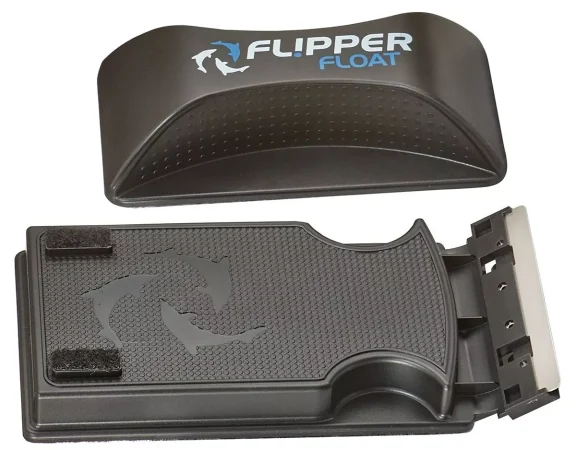
My number one magnetic algae scraper is the Flipper Float. It is the only magnetic scraper I currently use, and I use one on every aquarium I own. But a magnet cannot reach every corner, so the best cleaning setup pairs it with a quality handheld scraper.

Flipper Float Magnetic Algae Scraper
It flips between a scrubber and scraper without making me reach into the aquarium. The floating wet side, low profile, and three available sizes make it the magnetic cleaner I trust across my tanks.
Best for: Frequent cleaning of accessible glass or acrylic viewing panels.
Buy the right model: Nano supports panels up to 1/4 inch, Standard up to 1/2 inch, and Max up to 1 inch.
Four aquarium algae scrapers compared
These tools are not interchangeable. The two magnetic cleaners make routine panel cleaning fast, while the two handheld scrapers reach corners, back panels, the waterline, and areas where a magnet cannot travel.
| Algae scraper | Type | My pick for | Tank material | Main trade-off |
|---|---|---|---|---|
| Flipper Float | Magnetic scrubber and scraper | Best overall magnetic cleaner | Glass or acrylic with the correct blade | Cannot reach every corner or obstruction |
| Continuum AquaBlade | Handheld scraper | Best handheld quality and reach | Choose glass or acrylic version | You may want more than one handle length |
| Flipper Platinum | Handheld card-blade scraper | Flexible shapes and tight areas | Glass or acrylic with a safe blade | Plastic card blades peel and wear relatively quickly |
| Mag-Float 125 | Floating magnetic cleaner | Lightweight film algae only | This model is for glass | Abrasive mesh cannot remove established calcareous algae |
A magnet is not your entire algae-scraping kit
I use the Flipper Float for fast, frequent cleaning, but I still keep a handheld scraper nearby. Rockwork, pumps, silicone seams, tight corners, and the back panel can block a magnetic cleaner. A small handheld scraper gives you control in those areas, while a longer handle reaches deep panels without putting your entire arm in the aquarium.
My practical setup: Buy one properly sized Flipper Float, then add a small or medium AquaBlade. Add a longer AquaBlade only if your aquarium depth or back panel makes the extra reach useful.
How I chose these aquarium algae scrapers
I have used all four styles. I ranked them by how they work during real maintenance: control, reach, panel safety, blade quality, ease of retrieval, and whether they solve a job the other tools cannot.
This is the only magnetic scraper I currently keep on my tanks. I use it across my aquarium systems and prefer its flip-to-scrape design.
I prefer its solid build and blade quality. The available handle lengths let me choose control, reach, or both.
The heavy-duty handle is good, and the card holder is clever. The downside is that thin plastic cards and replacement blades can peel or wear.
I have used this traditional floating magnetic design. It works, but the Flipper Float is the magnetic tool I personally choose today.
1. Flipper Float Magnetic Aquarium Algae Cleaner
My experience: I use the Flipper Float on every aquarium I own. It is my favorite and the only magnetic algae scraper I currently use.
Scrub routine film, then flip to scrape harder buildup
Nano, Standard, and Max
Glass and acrylic with the correct blade
- The wet side floats if it disconnects, which makes retrieval much easier.
- The low-profile wet side fits into more places than many bulky magnets.
- The scrubber handles soft film algae; the blade handles harder deposits.
- Choose magnet strength by panel thickness—not just aquarium gallons.
What to know first: The stainless-steel blade is for glass only. Use the acrylic-safe plastic blade on acrylic, and keep every cleaning surface away from the sand bed.
My verdict: This is not a legacy recommendation. It is my current, everyday magnetic algae scraper and the first one I would buy.
2. Continuum AquaBlade Aquarium Scraper

My experience: This is the handheld scraper design I prefer. It feels more substantial, offers good control, and comes in several useful lengths.
Choose control for corners or reach for deep panels
Handheld, 15, 24, and 35 inches
Stainless steel for glass; plastic for acrylic
- The small version is excellent for corners and close, controlled work.
- A longer handle reaches back panels without putting your arm into the tank.
- The solid handle resists the flex common in cheaper long scrapers.
- Replacement blades are available when the edge becomes dull.
What to know first: One length does not solve every job. I would start with a small or medium option, then add a long handle only if your aquarium depth requires it.
My verdict: Pair an AquaBlade with the Flipper Float. The magnetic cleaner handles routine work; the AquaBlade handles the places the magnet misses.
3. Flipper Platinum Hand Scraper

My experience: The handle is heavy-duty and useful, but the plastic card-style blade is the weak point. I have found that thin blades can peel and need replacement.
Use a standard plastic card or cut a custom blade shape
18 inches
Accepts standard card-sized plastic
- The fiberglass shaft feels solid and does not flex like a cheap scraper.
- A gift card or similar smooth plastic card can become the replacement blade.
- Cards can be trimmed for rounded panels or awkward corners.
- A stainless-steel replacement blade is available for glass-only use.
What to know first: The replaceable plastic edge is convenient, but it is also consumable. Inspect it for peeling, rough edges, or trapped grit before it touches the panel.
My verdict: This is a decent, versatile hand tool, but I prefer the AquaBlade for overall quality and blade performance.
4. Mag-Float 125 Magnetic Glass Cleaner

My experience: I have used Mag-Float cleaners. They are fine for lightweight film algae, but they are a tool you can quickly outgrow once harder deposits begin forming.
A floating magnetic pad—not a scraping blade
Up to 125 gallons
Up to 3/8 inch
- The floating inner magnet is easy to retrieve if it disconnects.
- The abrasive mesh side removes light film algae without getting your hands wet.
- It does not have an integrated glass or acrylic scraping blade.
- Once hard, calcium-based algae builds up, the mesh pad is no longer enough.
What to know first: This exact model is intended for glass and is best treated as a lightweight film cleaner. Calcareous algae and other hard deposits require a Flipper with the correct blade or a separate glass- or acrylic-safe handheld scraper.
My verdict: The Mag-Float works for early film algae, but most reef keepers will quickly want a true scraping blade. I would skip directly to the Flipper Float unless you only need the lightest routine cleaning.
The fastest way to scratch an aquarium panel
A scraper does not usually cause a scratch by itself. The real danger is a grain of sand or shell trapped between the tool and the panel. Inspect the wet side and blade before every use, keep magnetic cleaners above the substrate, and move sand away from the bottom edge before scraping.
Glass: Stainless steel can remove hard deposits, but keep it flat and away from silicone seams. Acrylic: Use only an acrylic-safe plastic blade or pad, apply light pressure, and stop if the tool chatters or collects debris.
Which aquarium algae scrapers should you buy?
| Tool | Best for | Avoid when | Material | My priority | Buy |
|---|---|---|---|---|---|
| Flipper Float | Everyday magnetic cleaning | You need to reach behind rockwork or into tight corners | Glass or acrylic with correct blade | Buy first | Check BRS price |
| Continuum AquaBlade | Corners, hard deposits, back panels, and reach | You want hands-off magnetic cleaning | Choose glass or acrylic blade | Best companion tool | Check BRS price |
| Flipper Platinum | Custom card shapes and a sturdy handle | You do not want to inspect and replace plastic card blades | Glass or acrylic with safe blade | Useful alternative | Check BRS price |
| Mag-Float 125 | Lightweight film algae | You have calcareous algae or want a real scraping blade | Glass only for this model | Limited starter option | Check BRS price |
Saltwater aquarium algae scraper FAQ
Do I need both a magnetic and handheld algae scraper?
That is the setup I recommend. A magnetic cleaner makes routine film-algae removal fast, while a handheld tool reaches corners, the back panel, the sand line, and areas blocked by equipment or rockwork.
Which Flipper Float size should I buy?
Match it to the aquarium panel thickness. The Nano is rated for panels up to 1/4 inch, the Standard up to 1/2 inch, and the Max up to 1 inch. Do not choose solely from aquarium gallons.
Can I use a stainless-steel scraper on acrylic?
No. Use an acrylic-safe plastic blade or pad. Acrylic scratches much more easily, and even a plastic blade can cause damage if sand becomes trapped beneath it.
How often should I clean the viewing panels?
Clean light film algae before it becomes a hard deposit. Frequent light cleaning requires less pressure and reduces the need to scrape aggressively.
Can I leave a magnetic scraper inside the aquarium?
I prefer to remove, rinse, inspect, and dry the wet side after use. That makes it easier to catch trapped grit, worn pads, or corrosion before the next cleaning.
Keep the rest of the maintenance routine simple
If algae returns immediately, the scraper is treating the view—not the cause. Use the beginner nuisance algae guide to identify the growth, then follow the saltwater aquarium maintenance guides for the routine behind a cleaner tank.