Updated August 2026
If you are building a beginner nano reef, buy the CaribSea LifeRock Nano Reef Kit. Its two small arches and one original LifeRock piece give you useful shapes without forcing oversized rock into a small aquarium. For a tank around 15 gallons or smaller, I would start with one kit and consider adding a 10-pound Nano LifeRock box so I have more pieces to choose from.

CaribSea LifeRock Nano Reef Kit
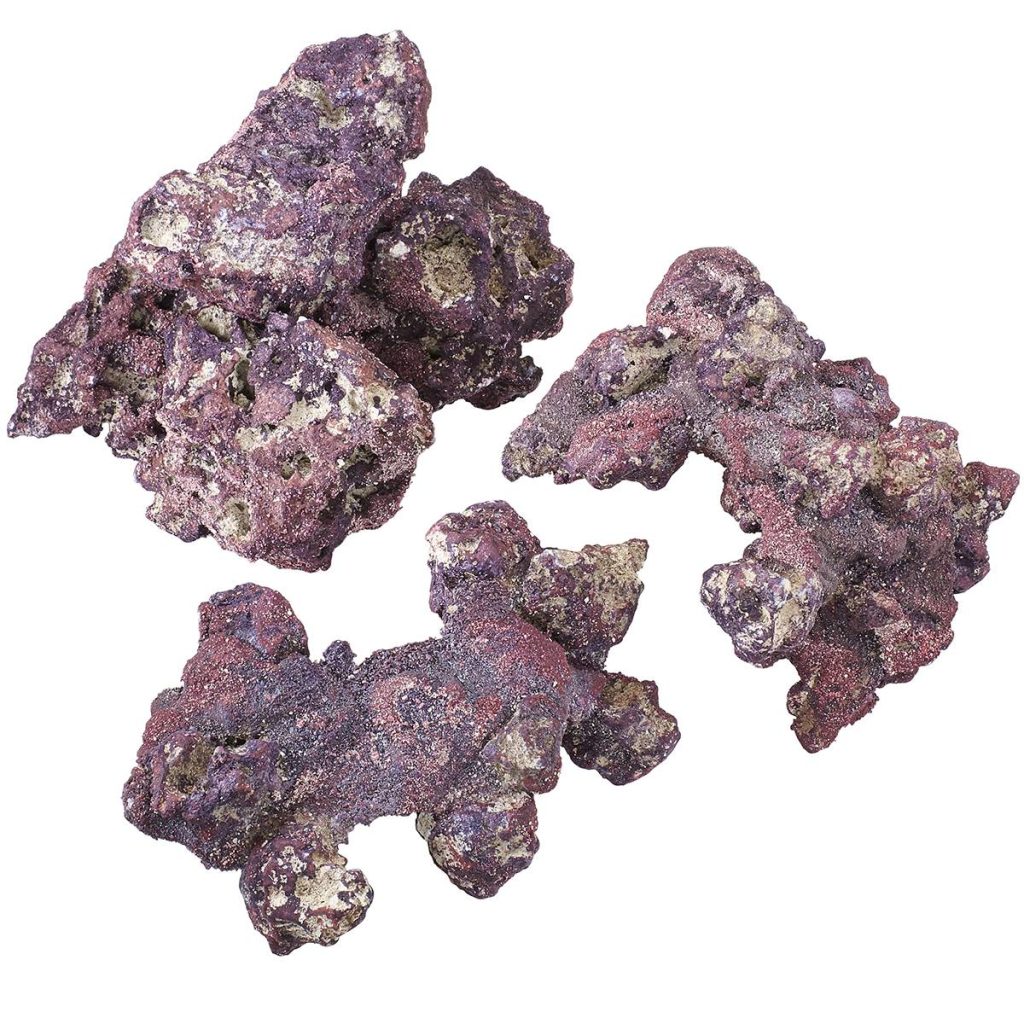
This is the easiest starting point for the small aquariums I recommend most often. You get two nano arches plus one small original LifeRock piece, all with the purple coralline-style appearance I prefer.
Best for: HelloReef-size tanks and other beginner aquariums around 15 gallons or smaller.
The six reef-rock options I recommend
These are dry aquascaping rocks, not established ocean-harvested live rock. The three brands all work as useful biological surface area after the aquarium cycles. The real buying decision is shape, size, color, density, and how much work you want to do before the rock fits your tank.
| Rock | My pick for | Appearance | Material | Package |
|---|---|---|---|---|
| CaribSea Nano Reef Kit | Best beginner nano kit | Purple coralline look | Man-made aragonitic rock | 2 arches + 1 small rock |
| CaribSea Nano LifeRock Box | Best extra pieces for a nano tank | Purple coralline look | Man-made aragonitic rock | 10-pound box |
| CaribSea Nano Arches | Best open preformed shapes | Purple coralline look | Man-made aragonitic rock | 4 nano arches |
| MarcoRocks Reef Saver | Most economical | Natural white stone | Land-quarried calcium carbonate | Sold by the pound |
| MarcoRocks MR Coralline | Quarried rock with instant color | Organic purple pigment | Land-quarried calcium carbonate | 20-pound box |
| AquaForest AF Rock | Lightweight rock that is easier to shape | Natural light stone | Artificial porous rock | 22- or 40-pound option |
Choose the brand first, then buy more shapes than you need
I prefer the purple CaribSea LifeRock appearance, so that is the family I would use for most beginner tanks. Buy the Nano Reef Kit for the basic structure, then add Nano LifeRock pieces or Nano Arches if you need more choices. For a larger aquarium such as the JBJ RF-45, use the kit as one part of the aquascape and add more CaribSea shapes from the same product family.
You can technically mix brands, but matching one brand keeps the color and texture more consistent. Buy extra rock before you build. You will create a better aquascape when you can reject pieces that do not fit instead of forcing every rock into the display.
How I chose these reef rocks
I have personally built aquascapes with all six options. They all become useful aquarium rock after the tank cycles, so I ranked them by how easy the pieces are to use in the small beginner tanks I recommend, how the finished aquascape looks, and how much cutting or breaking is normally required.
The included arches and small original piece are sized for nano tanks and give a beginner an immediate starting structure.
I like this as the extra box that gives me more small pieces and more ways to finish the Nano Reef Kit.
The nano size creates open swim-throughs without the oversized proportions of the regular arches.
It is versatile and economical, but the dense, often larger pieces can be frustrating to break down for a nano tank.
It keeps the natural quarried-rock foundation while adding the purple look I prefer.
It is an artificial, porous alternative that is lighter and easier to cut and combine than dense Reef Saver pieces.
1. CaribSea LifeRock Nano Reef Kit
My experience: I have used CaribSea LifeRock for years and recommend this kit because its shapes match the small tanks most beginners are actually building.
A useful aquascape before you start breaking rock
2 nano arches + 1 small original piece
Nano reefs around 15 gallons or smaller
- The arches immediately create open swim-throughs and room for water movement.
- The purple coating gives the tank a mature coralline-style look on day one.
- The pieces are man-made aragonitic rock rather than ocean-harvested live rock.
- Pair one kit with a Nano LifeRock box when you want more building options.
What to know first: Every piece is unique. The kit may not create a complete aquascape by itself, and a grazing urchin or strong scraper can remove areas of the purple coating over time.
My verdict: This is the first box I would buy for a HelloReef-size aquarium or another beginner nano reef.
2. CaribSea Nano LifeRock Dry Rock — 10 Pounds

My experience: These are the smaller LifeRock pieces I would combine with the Nano Reef Kit so I can test several layouts before gluing anything.
More pieces create more choices
10 pounds of unique nano pieces
Fill gaps and finish a small aquascape
- Smaller pieces are easier to arrange in a nano tank than full-size dry rock.
- The color and texture match the Nano Reef Kit and Nano Arches.
- The varied pieces give you more places for coral without requiring one giant structure.
What to know first: The exact shapes vary from box to box. Buy for options, not because you expect the box to match a product photo exactly.
My verdict: Buy this with one Nano Reef Kit when you want the most flexible CaribSea starting pile for a small aquarium.
3. CaribSea LifeRock Nano Arches

My experience: I like the nano arches because the standard CaribSea arches are simply too large for many of the beginner tanks I recommend.
Easy swim-throughs and better circulation
4 unique nano arches
Open foundations and caves
- The arches create negative space instead of a dense wall of rock.
- Open shapes allow water to move around and beneath the aquascape.
- Four pieces give you several ways to build height or separate islands.
What to know first: Rock can break during shipping. A broken arch is still usable—repair it or create a different shape with reef-safe super glue and epoxy.
My verdict: Choose the Nano Arches when an airy aquascape matters more than having a box of random rock shapes.
4. MarcoRocks Reef Saver Dry Rock
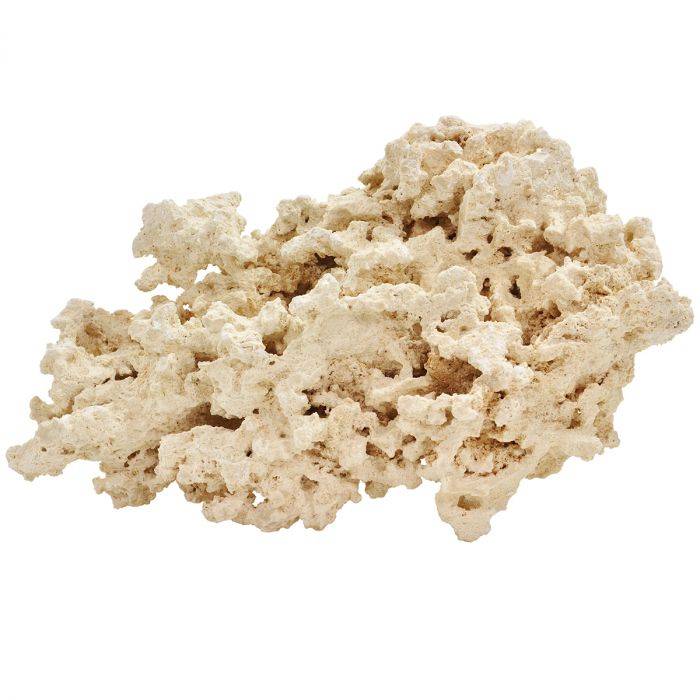
My experience: I have used a lot of Reef Saver. It is versatile and affordable, but the pieces can be dense, heavy, and difficult to break into nano-scale shapes.
The budget choice for larger builds
By the pound
Land-quarried ancient reef rock
- You can buy the amount you need instead of committing to a fixed box.
- The irregular shapes interlock well and can be glued or mortared together.
- It begins white and develops a more natural patina as the aquarium matures.
- It is my economical choice for a larger tank where big pieces are useful.
What to know first: For a nano tank, expect to use eye protection, gloves, a hammer, and a chisel—and some pieces may still refuse to break where you want them to.
My verdict: Buy Reef Saver when cost matters and the aquarium is large enough to use its denser, larger shapes.
5. MarcoRocks MR Coralline Rock — 20-Pound Box

My experience: This gives me the same kind of natural quarried-rock foundation as Reef Saver without starting the aquarium with bright white stone.
MarcoRocks with an immediate coralline look
20-pound box
Reef-safe organic purple pigment
- The pieces are naturally varied and fit together well.
- The purple finish makes a new aquascape look less stark.
- The rock remains dry and pest-free rather than arriving as ocean live rock.
What to know first: Like regular Reef Saver, the pieces may be too large or dense for a small tank. A 20-pound box also gives you less control than buying Reef Saver by the pound.
My verdict: Choose MR Coralline when you want MarcoRocks but strongly prefer a purple aquascape from the beginning.
6. AquaForest AF Rock Base Shapes

My experience: I have used AquaForest rock and like how much easier it is to cut and combine than the densest MarcoRocks pieces.
Lightweight artificial rock for custom builds
22- or 40-pound package
Artificial porous calcium-carbonate rock
- The lighter structure is easier to shape and arrange.
- The porous material provides extensive surface area after the aquarium cycles.
- It can be combined into larger structures with compatible aquascaping cement.
What to know first: The package sizes are better suited to a larger build or a reefer who wants a substantial pile of material. It does not have CaribSea’s purple coating.
My verdict: Choose AquaForest when you want an engineered rock that is easier to shape than dense quarried stone.
Broken rock is building material, not a ruined order
Dry aquarium rock is heavy and fragile, so pieces can break during shipping. I do not treat that as the end of the aquascape. A broken arch or chunk can become a better custom piece, and reef-safe super glue, epoxy, mortar, or a combination can rebuild the shape you wanted.
Build the aquascape outside the aquarium first. Leave room around the glass for an algae scraper, keep the structure stable without relying on the sand bed, and preserve open channels for fish and water flow.
Which dry reef rock should you buy?
For a beginner nano reef, start with the CaribSea Nano Reef Kit. Add the Nano LifeRock box when you need more choices, or choose Nano Arches when you specifically want more open spans. Use the comparison below for the exceptions. On a phone, swipe inside the table to see every column.
| Rock | Best for | Avoid it when | Color | Origin | Package | Current option |
|---|---|---|---|---|---|---|
| CaribSea Nano Reef Kit | Most beginner nano reefs | You need enough rock for a larger tank | Purple | Man-made aragonitic rock | 2 arches + 1 small piece | Check BRS price |
| CaribSea Nano LifeRock | Extra nano pieces and layout options | You specifically need arches | Purple | Man-made aragonitic rock | 10 pounds | Check BRS price |
| CaribSea Nano Arches | Open swim-throughs and circulation | You want random natural pieces | Purple | Man-made aragonitic rock | 4 arches | Check BRS price |
| MarcoRocks Reef Saver | Economical larger aquascapes | You need small, easy-to-break nano pieces | White | Land-quarried calcium carbonate | By the pound | Check BRS price |
| MarcoRocks MR Coralline | Quarried rock with instant color | A 20-pound box is too much or too dense | Purple | Land-quarried calcium carbonate | 20 pounds | Check BRS price |
| AquaForest AF Rock | Custom structures that are easier to shape | You want the purple CaribSea look | Light natural | Artificial porous rock | 22 or 40 pounds | Check BRS price |
Rock shapes, package contents, prices, and availability can change. Product photos show examples rather than the exact unique pieces you will receive.
Dry rock for reef tanks: common questions
What is the best dry rock for a beginner nano reef?
My top recommendation is the CaribSea LifeRock Nano Reef Kit because the two arches and one small original piece are already sized for a small aquarium. I would pair it with a 10-pound Nano LifeRock box when I want more choices.
Is CaribSea LifeRock actually live rock?
It arrives dry. CaribSea describes it as man-made aragonitic rock infused with spored bacteria, but it is not mature ocean-harvested live rock. The aquarium still needs to complete its normal cycling process before livestock is added.
How much rock does a reef tank need?
Do not force a pound-per-gallon rule onto the aquascape. Buy enough pieces to build a stable structure with coral space, fish shelter, open sand, and water-flow channels. I recommend buying extra rock so you can choose the best pieces and leave the rest out.
Can I mix CaribSea, MarcoRocks, and AquaForest rock?
Yes. All three can function as reef-aquarium rock after the tank cycles. I usually stick with one brand because the color and texture look more intentional, then mix shapes from within that product family.
Will the purple color come off CaribSea LifeRock?
It can. Grazing animals such as urchins and aggressive scraping can remove areas of the artificial coating. That does not make the rock unusable, and real coralline algae may eventually grow over exposed areas in a healthy reef aquarium.
Can I repair an arch that breaks during shipping?
Yes. Reef-safe super glue gel, epoxy, and aquascaping mortar can reconnect broken pieces or turn them into a different structure. Test the repaired rock outside the aquarium and make sure it is stable before adding sand or livestock.
Should the rock touch the aquarium glass?
Leave enough space to clean the viewing panels and move a magnetic algae scraper safely. The structure should also allow water to move around and behind it instead of creating inaccessible detritus traps.
Should I build the aquascape before adding sand?
Yes. Build and secure the main structure on the bare tank bottom or a stable protective base before adding sand around it. That prevents burrowing animals or shifting sand from undermining the rock.
Build the aquascape before the tank gets wet
Use the reef-tank aquascaping guide to plan stable islands and swim-throughs, then choose reef-safe glue and epoxy for the final structure. When the rock is ready, return to the complete Gear Guide library.