22 Things I Wish I Knew Before Starting a Saltwater Aquarium
The practical lessons I learned the expensive way—so you can choose a manageable tank, protect your livestock, and build a routine you can actually maintain.
The short answer
If I could start over, I would build a smaller, simpler aquarium around a repeatable weekly routine. I would buy reliable water-making and testing gear early, add livestock slowly, and stop changing things every time the tank looked imperfect.
- Choose the kind of aquarium you can maintain—not the biggest one you can afford.
- Plan the total system and recurring costs before buying the tank.
- Expect the first year to be a learning period, not a straight line to perfection.
- Stability and patience beat constant tinkering.
Substantially updated August 2026
Affiliate disclosure: This article contains affiliate links. If you buy through one of them, My First Fish Tank may earn a commission at no extra cost to you. Recommendations are based on my firsthand experience and editorial judgment.
I started in this hobby knowing far less than I realized. More than two decades later, I have built tiny desktop aquariums, larger reef systems, freshwater tanks, beginner teaching systems, and plenty of experiments that did not go exactly as planned.
The expensive mistakes were rarely one dramatic disaster. They were usually small decisions made too quickly: buying before planning, adding livestock before I understood the system, or changing several things at once because I wanted an immediate result.
These are the lessons I would give myself before buying that first saltwater aquarium.
Three manageable beginner paths
Choose how much guidance and customization you want
These are three practical ways to begin. HelloReef reduces the most equipment guesswork. DeskMate has the smallest footprint and lowest entry price. The NUVO Fusion 15 gives you more room to choose your own equipment.

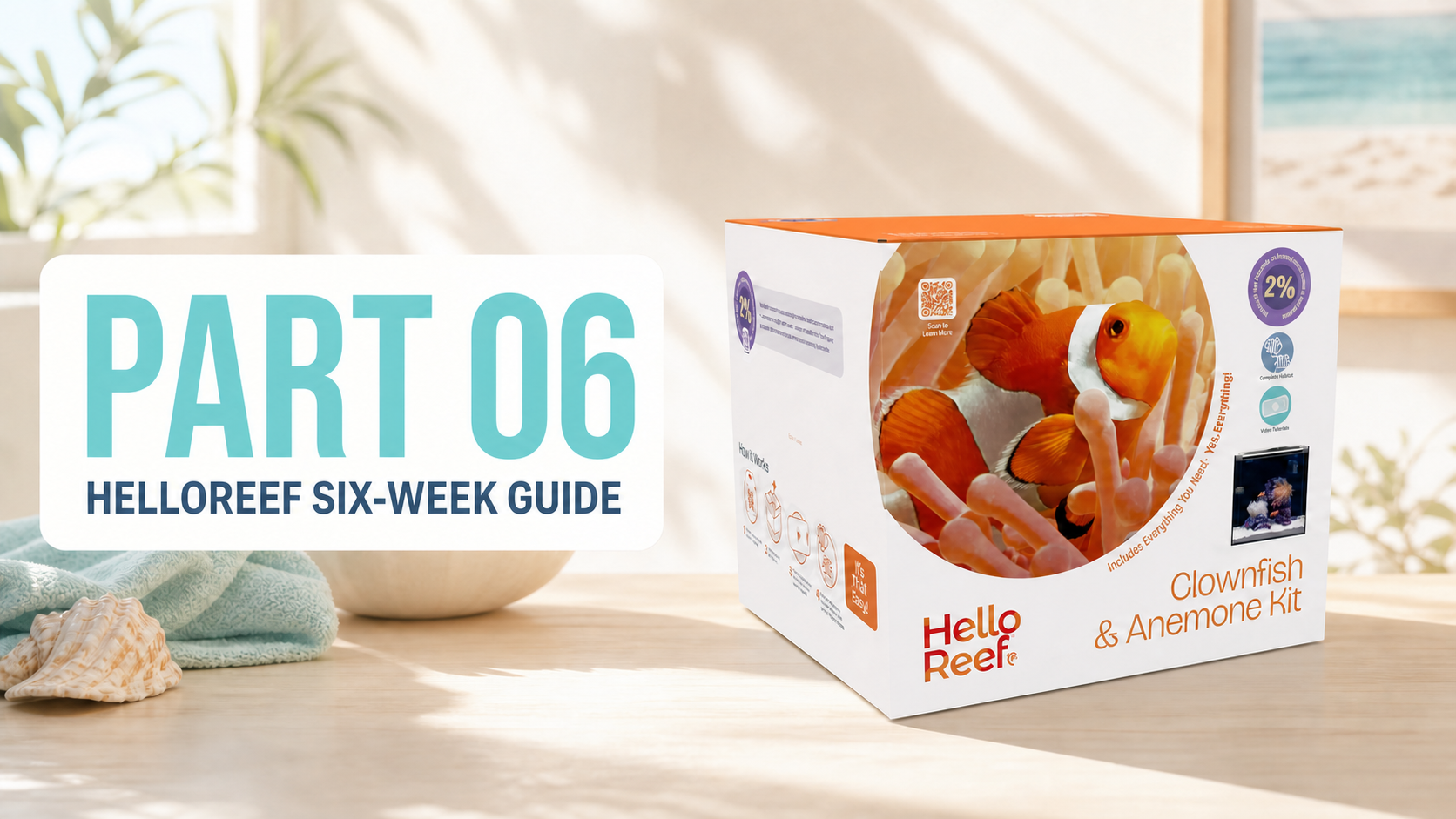
HelloReef 15
Best for: A guided start with fewer compatibility decisions.
Tradeoff: Less freedom to choose every component individually.

DeskMate 4.8
Best for: The smallest footprint and lower upfront cost.
Tradeoff: Tiny water volume is less forgiving of missed maintenance.

NUVO Fusion 15
Best for: More flexibility and room to customize.
Tradeoff: You must make more equipment choices yourself.
Before you buy the tank
Plan for the aquarium you can live with
1. Saltwater aquariums can be easy or complicated
Saying “saltwater aquariums are hard” is like saying the piano is hard. Playing a simple song and performing Rachmaninoff are not the same project. A lightly stocked fish-only tank, a beginner soft-coral reef, and a demanding SPS system can have completely different costs and care requirements.
Decide what you want to keep before you buy the aquarium. The livestock determines the lighting, flow, filtration, testing, and time commitment.
2. Bigger tanks are not automatically easier
More water volume can slow down some changes, but every maintenance job gets larger too. There is more glass to clean, more water to mix, more livestock to observe, and more equipment to maintain. A tank you can care for every week is better than a “dream tank” that turns every water change into a chore.
3. The tank is only part of the budget
Your real startup cost includes the aquarium, stand, light, heater and controller, return pump, wavemaker, rock, sand, salt, water source, testing tools, and livestock. Then come recurring costs: food, test reagents, filter media, replacement parts, electricity, and the inevitable upgrades.
Budget the complete first year before you fall in love with a tank price. I once heard travel advice to lay out all your clothes and money, then pack half the clothes and twice the money. That is surprisingly useful aquarium advice too.
4. “All-in-one” does not always mean complete
In aquarium language, an all-in-one—or AIO—usually means the filtration chamber is built into the aquarium. It does not guarantee that the package includes every pump, light, heater, lid, or accessory you need. Read the included-equipment list carefully.
5. Leave room around the aquarium
You need space to remove filter media, clean pumps, reach the rear chamber, route cords safely, and wipe away salt creep. A tank that fits perfectly into a tight opening can become miserable to maintain. Maintenance access is part of the aquarium design.
6. Livestock can be a very long commitment
Clownfish and other well-cared-for marine fish can live for many years, sometimes decades. More than 20 years ago, I visited a fish store in Seattle that had a clownfish over 20 years old. That completely changed the way I thought about these animals. Corals and anemones are not disposable decorations either. Buy livestock with the expectation that it may remain in your care for a very long time.

Build the foundation
Make the routine easier before the tank gets hard
7. Buy the RO/DI system early
I spent too much time lugging water before accepting that making purified water at home is simply easier. An RO/DI system gives you control over the source water and makes regular water changes far more convenient.
Choose a system based on your source-water quality, water pressure, and how much water you need—not only the advertised gallons per day.

8. Learn to mix and test saltwater consistently
Use a reliable salinity tester, calibrate it as directed, and follow the salt manufacturer’s mixing instructions. Consistent process matters more than chasing an arbitrary “perfect” number from memory.
Keep a simple log so you can recognize trends. Our recommended saltwater parameters guide explains which numbers matter and how often I would test them.
9. A repeatable maintenance plan beats motivation
Decide which day you will test, change water, clean the glass, replace mechanical filtration, and inspect pumps. A small routine performed every week is more useful than an ambitious cleaning day that happens once every few months. Use the saltwater aquarium maintenance guide to build a routine around your own tank.
10. You need a power-outage plan before the outage
When water stops moving, gas exchange becomes the immediate concern. Keep a battery-powered air pump or another tested backup method ready, know how long it runs, and make sure another person can find and operate it.

11. Vacations still require a human
Automation helps, but it does not notice every strange noise, leak, failed top-off, or fish behaving abnormally. I learned this when an auto top-off failed while I was away and my son heard the tank making an unusual noise. For longer trips, give a trusted person a short checklist and your emergency contact information.
12. Make changes one at a time
I love tinkering, and my early tanks paid the price. If you change the light schedule, flow, feeding, filtration, and water-change routine at once, you will not know which change helped or hurt. Make one measured adjustment, record it, and give the system time to respond.
The first year
Go slowly enough to understand what the tank is telling you
13. Cycling is the beginning, not the finish line
A completed nitrogen cycle means the biological filter can process a measured ammonia source. It does not mean the aquarium is mature, stable, or ready for every animal on your wish list. Add livestock gradually so the system—and your experience—can catch up.
14. Quarantine reduces risk; it does not create certainty
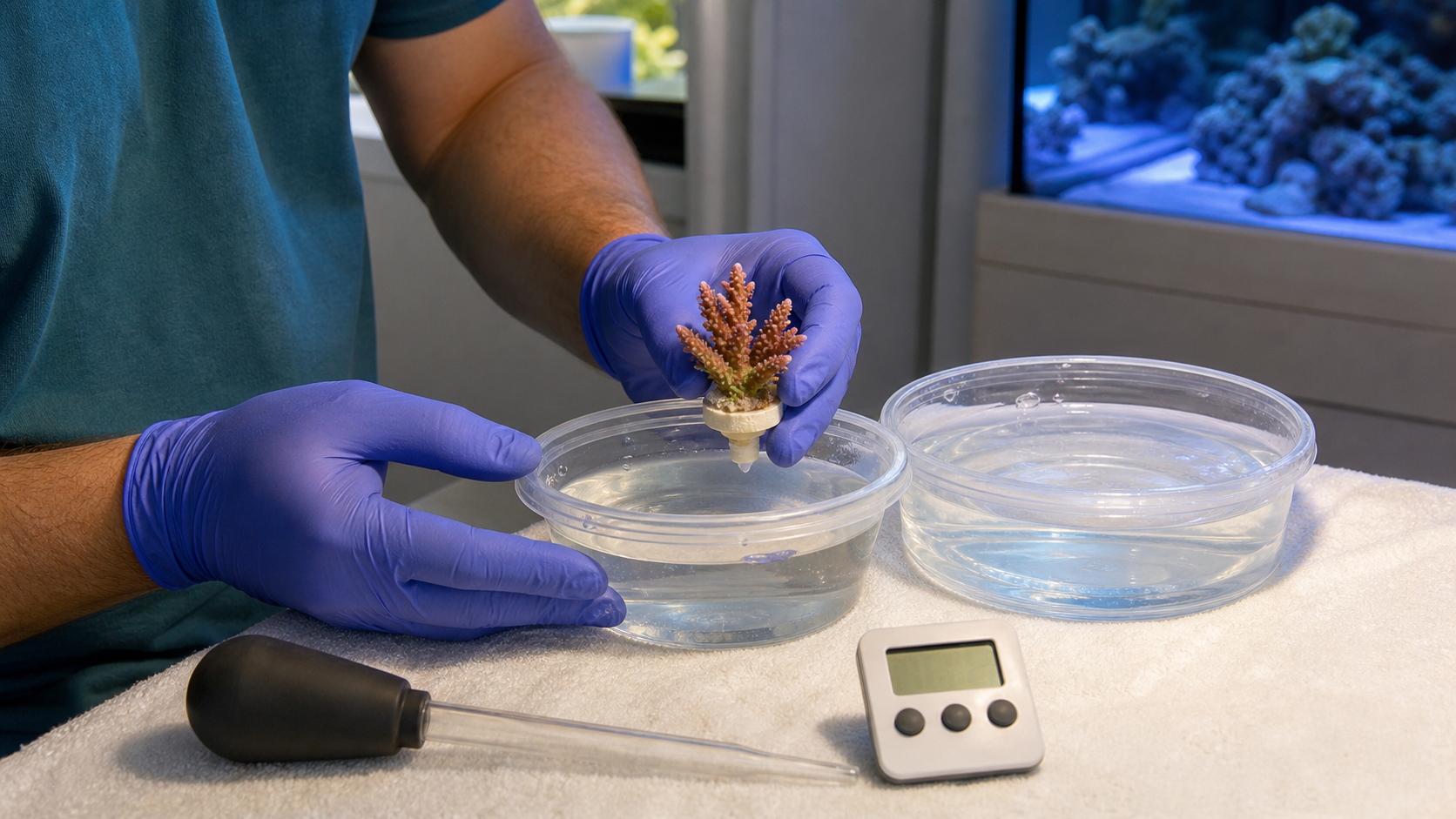
A thoughtful quarantine process gives you time to observe new fish and reduces the chance of introducing disease to the display. Coral inspection and dipping can reduce pest risk. Neither process is magic, but both are much easier than trying to solve a preventable problem in a stocked reef.
Use our coral dipping and quarantine guide as a starting point, then adapt the protocol to the animal.
15. Bad-looking weeks are part of a young aquarium
Algae, cloudy water, changing nutrients, and awkward-looking rock are common during the first year. Do not treat every ugly stage as an emergency. Confirm that livestock is safe, test the relevant parameters, and fix the cause with small changes. When you need help identifying the problem, start with the saltwater aquarium troubleshooting library.
16. Corals need stability—not sterile water
I once treated a spotless aquarium as the goal. Corals need light, flow, and available nutrients within a stable range. Stripping the water and then reacting to every test result can create the swings you were trying to avoid.
17. Fish compatibility matters more than the shopping list
A fish that fits physically may still be territorial, predatory, incompatible with corals, or unsuitable for the aquarium’s shape. Plan the full stocking order before buying the first fish, then use our saltwater fish compatibility and stocking guide to check the sequence.
18. Feeding is part of filtration
Food supports the animals, but uneaten food and waste affect nutrient levels. Start with small portions, watch what is actually consumed, and adjust filtration and maintenance to the bioload. “Feed less” and “filter more” are not universal answers; observe the tank. When you are ready to choose foods, compare the saltwater fish foods I actually use.
Stay in the hobby
Expect mistakes—and learn without panicking
19. You will make mistakes
I still make them. The useful response is to protect the animals, document what happened, and change the process that allowed it. One mistake does not mean you are bad at the hobby; repeating it without learning is the problem.
20. Patience is measured in weeks and months
Biology moves on its own schedule. Coral growth, aquarium maturity, and the resolution of nuisance algae often take far longer than beginners expect. If the livestock is safe, patience can be an active decision: observe, test, maintain, and avoid introducing another variable.
21. Good advice explains the “why”
You will hear absolute opinions from hobbyists, stores, forums, and creators. Look for advice that identifies the goal, explains the mechanism, acknowledges tradeoffs, and fits your specific aquarium. Welcoming teachers are usually more useful than the loudest person in the room.
22. Build the aquarium you actually want
Not every saltwater aquarium has to become a high-end coral collection. A fish-only tank, soft-coral reef, macroalgae display, anemone aquarium, or simple mixed reef can all be beautiful. Choose the system whose animals, look, cost, and maintenance you genuinely enjoy.
Choose your next step
If you are still planning the system, compare the equipment I use in the Gear Guide Library. If you already own the aquarium, the Beginner Guide Library will walk you through setup, cycling, and the first livestock decisions.