Beginner Corals: How to Choose Your First Coral
Corals are the reason many of us get into reef tanks in the first place. My goal is not to hand you a random “easy coral” list. It is to help you choose a healthy coral that actually fits your light, flow, aquascape, maintenance routine, and experience.

The short answer
Start With a Common Aquacultured Coral That Fits Your Aquarium
A healthy mushroom, Green Star Polyps on an isolated rock, or a selected leather coral can be an excellent first choice. A Duncan can be a good next step once the tank and your maintenance routine are stable. The name on a top-ten list matters less than whether the exact coral has the right home in your tank.
For me, coral is the heart of this hobby. These are animals that can grow into colonies and be propagated again and again. That is incredibly cool—and it also means we should treat buying one as a real responsibility. Starting with forgiving, aquacultured corals gives you room to learn without treating the animal as disposable.
Eight Characteristics of a Good Beginner Coral
Corals are stationary marine invertebrates, not plants. Many reef-building corals receive a large share of their energy from symbiotic algae living in their tissue, but that does not mean every coral has the same light, feeding, or water-quality needs.
Hardy
A good first coral gives you some room to learn and will also be somewhat tolerant of small mistakes. I would avoid non-photosynthetic corals and other animals that need constant specialized feeding when you are still building your routine.
Common and identifiable
A common aquacultured frag is usually a better first purchase than a rare coral with a questionable history. If it’s well known in this hobby, then there will be a lot of information and knowledge to help you be successful.
Tolerant of beginner mistakes
Consistency still matters more than chasing a perfect number. Beginner-friendly corals may tolerate small fluctuations, but none of them benefit from large, repeated swings in temperature, salinity, alkalinity, or nutrients.
Simple feeding needs
I would begin with a photosynthetic coral that does not require constant target feeding. Supplemental food can be useful, but it should support a healthy tank—not compensate for bad light, placement, or water quality.
Manageable aggression
Corals compete for space. Some sting, some shade, and some spread across the rock. A first coral should have a location where its adult colony and nighttime behavior will not become an immediate problem.
Ships and acclimates well
Aquacultured corals are often already adapted to aquarium life. Buy from a trustworthy source, minimize time in the bag, and follow the seller’s guidance for that exact coral.
Grows at a useful pace
Visible growth is rewarding, but “fast-growing” is a double-edged sword. Green Star Polyps and Xenia can teach you a lot while also taking over the rockwork if you do not isolate them.
No obvious pest or disease problem
No coral is pest-proof. Choose a clean, healthy-looking specimen and have an inspection, dip, rinse, and observation plan before the bag ever reaches your display.
Before you compare corals
Make Sure the Aquarium Can Support the Coral
There is no magic tank age. A six-month-old tank that swings all over the place is not automatically safer than a younger tank with stable conditions and a careful owner. And by stability, I’m talking about stable water parameters, a stable lighting schedule, stable salinity, and a stable flow pattern.

Test Consistently
Know what your temperature, salinity, alkalinity, nitrate, and phosphate are doing over time.
Open the Test Kit Guide
Match the Light
Know the exact light, the coral’s location, and how you will avoid shocking it with a sudden change.
Open the Lighting Guide
Plan the Flow
Give the coral useful water movement without folding its tissue, burying it in sand, or trapping debris.
Open the Wavemaker Guide
Protect Salinity
Evaporation can change salinity quickly in a nano tank. Use a reliable tester and replace evaporation with fresh water.
Open the Salinity GuideAt the store or online
How to Choose a Healthy Coral Specimen
My honest recommendation would be to purchase a healthy aquacultured coral from a trusted online source. Then all of this work will be done for you. But if you do purchase from a local fish store, here are the things to look for when choosing a healthy coral to bring home.
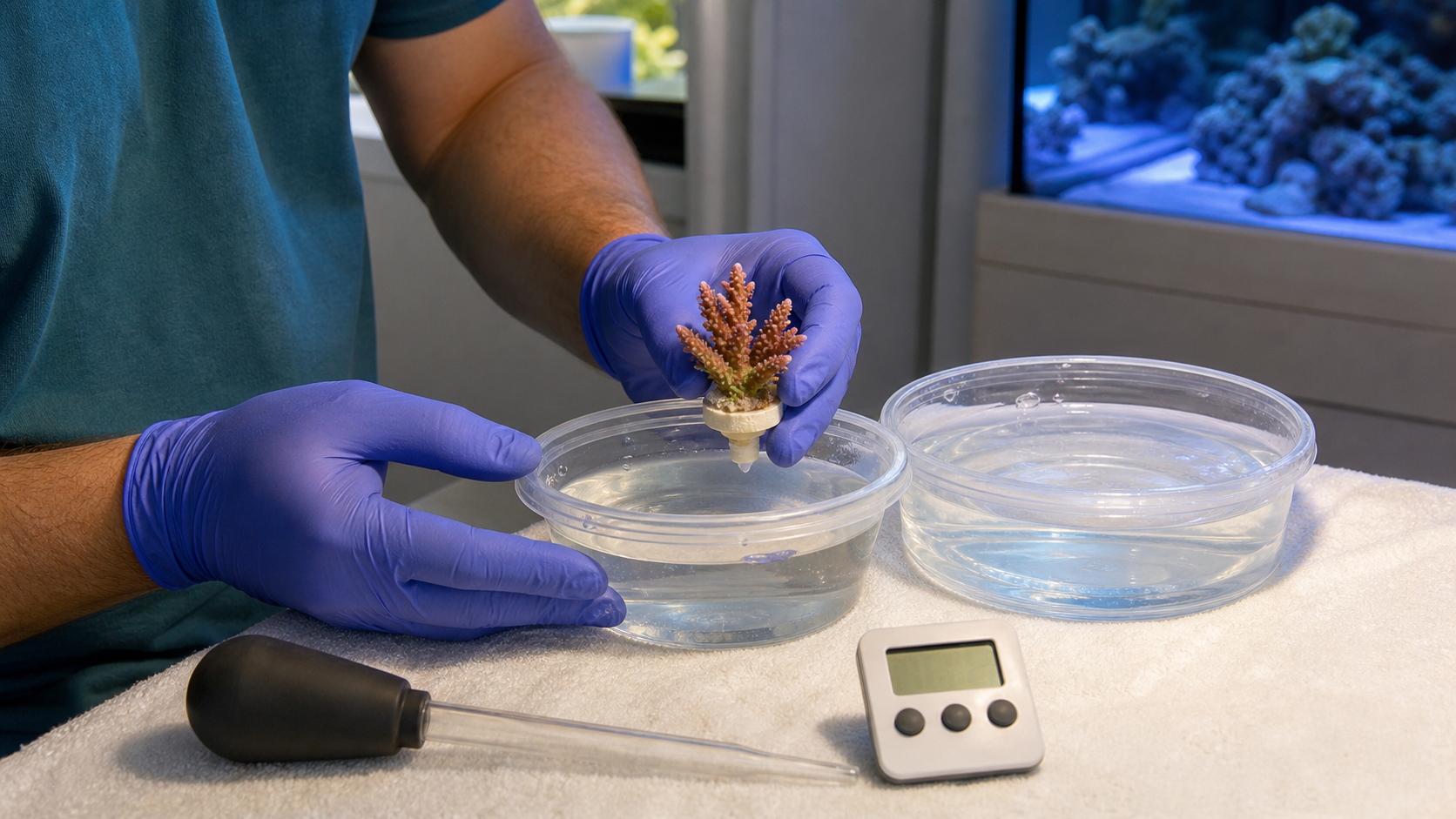
How to Dip and Quarantine New Coral
Learn how to inspect, dip, rinse, quarantine, and observe new coral—and why a coral dip cannot replace quarantine or remove every pest.
Read the Coral Dip and Quarantine GuideThe original top ten, reconsidered
Ten Beginner Corals and the Tradeoff With Each One
I have kept the spirit—and the photographs—of my original list. What changed is the honesty around it. These are not ranked from universally easiest to hardest. Some are excellent first choices; some are conditional; and a few are better saved until you have more experience.
| Coral | My current take | Why people like it | Biggest warning |
|---|---|---|---|
| Mushroom coral | Strong first option | Colorful, common, and often forgiving. | “Mushroom” includes different animals and growth habits. |
| Green Star Polyps | Good with a plan | Hardy, visible movement, fast growth. | It can cover the main rockwork; isolate it. |
| Toadstool or leather | Strong first option | Hardy, aquacultured, great movement. | It grows large, shades neighbors, and periodically sheds. |
| Duncan | Good next step | Large polyps and observable feeding response. | It is a stony coral and deserves a stable routine. |
| Blastomussa | Good next step | Bright fleshy polyps with manageable aggression. | Protect its tissue from excessive light, flow, and debris. |
| Micromussa sold as an “Acan” | Identity matters | Huge color variety and satisfying colony growth. | The trade name alone is not an exact care profile. |
| Zoanthids | Safety plan required | Colorful, common, and easy to frag. | Potential palytoxin exposure and fast spread. |
| Branching hammer or frogspawn | More conditional | Beautiful movement and branching growth. | Needs space, healthy tissue, stability, and careful sourcing. |
| “Scoly” or “Favia” trade groups | Research the exact coral | Outstanding color and patterns. | Old trade names can hide different identities and care needs. |
| Elegance coral | Usually later | Large, dramatic tissue and movement. | Sourcing, health, space, placement, and stability all matter. |

1. Green Star Polyps
Green Star Polyps are colorful, hardy, and one of the easiest corals to watch respond to flow. I still recommend them—with one major condition: put them on a removable island where they cannot immediately take over the main aquascape.

2. “Scoly” Trade-Name Corals
These can be spectacular centerpiece corals, but I would not buy one simply because an old list calls it beginner-friendly. Confirm the current identification, seller conditions, tissue health, substrate or placement needs, and what happens when the coral fully inflates.

3. “Favia” and Brain-Coral Trade Groups
The colors are fantastic, but the common name is not enough to tell you exactly what you own. Ask for the best identification possible and leave room for growth and nighttime stinging reach.

4. Toadstool or Selected Leather Coral
A healthy aquacultured leather remains one of my favorite beginner choices. Give it room to become a much larger animal. Do not panic when a leather periodically closes and sheds a waxy outer layer before reopening.
5. Branching Frogspawn or Hammer Coral
These are some of my favorite corals because the movement is hard to beat. I no longer treat them as an automatic first purchase. Choose a healthy branching specimen, protect the tissue, and leave real space for inflation and stinging reach.

6. Elegance Coral
Elegance corals are dramatic, beautiful animals. They also need careful sourcing, a suitable placement, room, and a stable system. I would not make this the default first coral just because it appeared in my original top ten.

7. Duncan Coral
Duncans have large, visible polyps and a feeding response that is easy to observe. I like them once you can keep the basic tank and maintenance routine stable. Leave room for the branching colony to grow.

8. Micromussa Sold as an “Acan”
The color variety is huge, and a healthy colony can be very rewarding. “Acan” is a trade name, not a complete care sheet. Confirm the identity, seller conditions, placement, and room around the fleshy polyps.

9. Zoanthids
The endless colors and easy frag availability explain their popularity. Plan for spread—and learn palytoxin safety before you buy, handle, frag, scrub, heat, or otherwise disturb zoanthids or Palythoa.

10. Blastomussa
Blastos offer bright fleshy polyps without the reach of some more aggressive LPS corals. Protect the tissue from excessive light, flow, contact, and trapped debris based on the exact specimen.
Two products I actually use
Feeding and Mounting the Coral
I do not think a beginner needs a cabinet full of coral additives. If I feed a powdered coral food, I use BRS Reef Chili. When I mount a frag, I use the super-glue, epoxy, super-glue sandwich described in my epoxy and glue guide.

BRS Reef Chili
I use Reef Chili for coral and filter feeders. Start small, watch the tank’s nutrient response, and do not use food to solve poor placement or unstable water.
Check Reef Chili Price at BRS
BRS Extra Thick Gel Super Glue
This is my go-to for mounting frags. I pair the sticky gel with a small amount of epoxy for structure, then use another layer of gel against the rock.
Check the Glue Price at BRSImportant safety note
Zoanthid and Palythoa Safety Is Not Optional
Some zoanthids and Palythoa may contain palytoxin. Do not boil, bake, pressure-wash, scrub with hot water, or carelessly frag rock or coral that may contain them. Wear appropriate eye and skin protection, keep children and pets away, wash up carefully, and get immediate professional help if exposure is suspected.
Read the CDC’s documented palytoxin exposure report before deciding this is the first coral for you.
Keep going
Helpful Guides for Your Next Steps
Once you choose a coral, these three guides will help you keep the tank stable, stay on top of maintenance, and plan whatever animal comes next.

Recommended Saltwater Parameters
Review the salinity, temperature, alkalinity, nitrate, phosphate, and other ranges I use—and why stability matters more than chasing one perfect number.
View the Water Parameters
How to Do a Saltwater Aquarium Water Change
Follow my step-by-step routine for mixing replacement water, siphoning the tank, refilling safely, and restarting every piece of equipment.
Open the Water-Change Guide
Saltwater Aquarium Livestock Guides
Browse my fish, coral, anemone, cleanup crew, macroalgae, and invertebrate guides before choosing the next animal for your tank.
Browse the Livestock Guides